
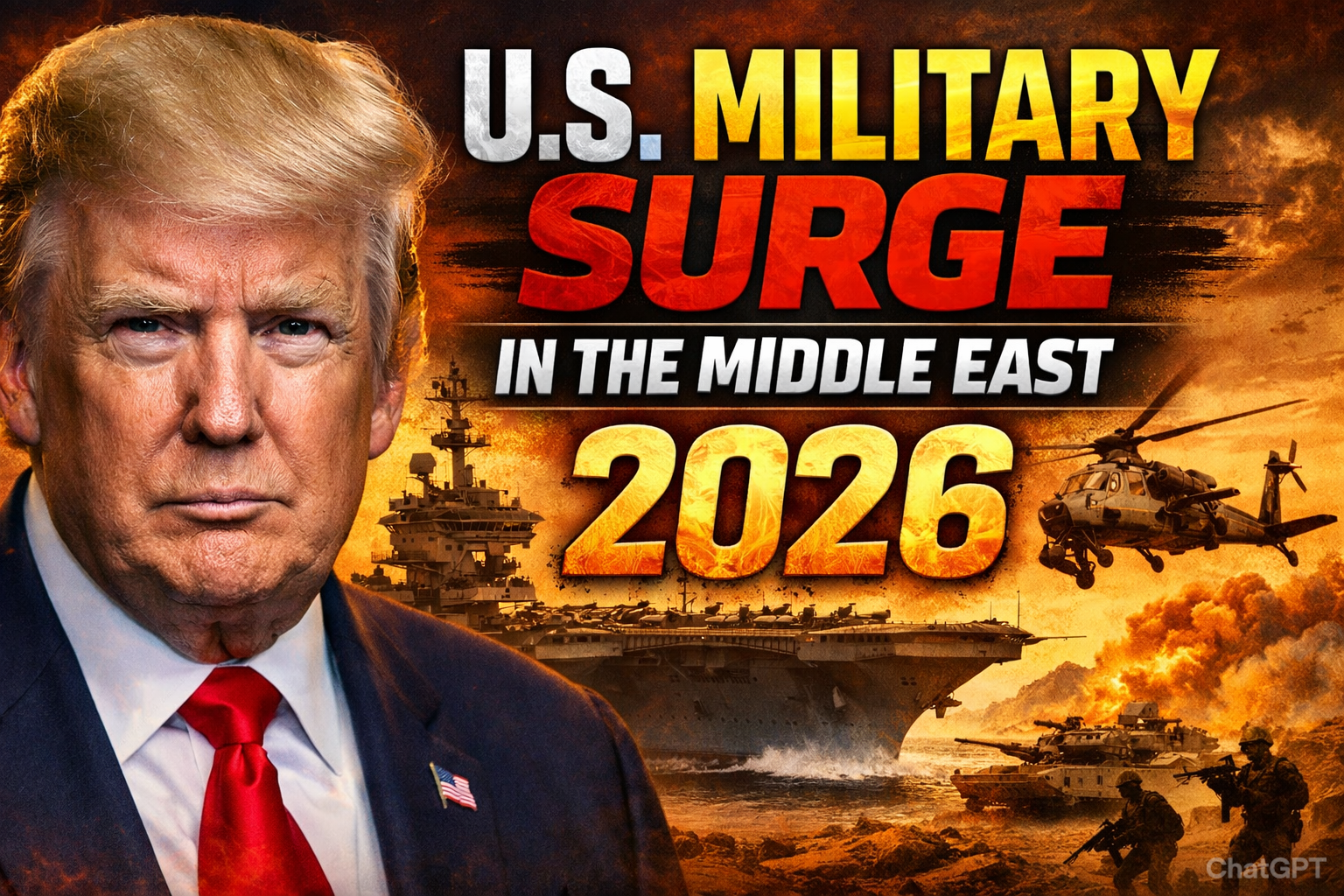
President Donald Trump’s return to the White House has ushered in a bold military posture in the Middle East, marked by unprecedented deployments amid escalating tensions with Iran. This surge, blending deterrence with readiness for action, reshapes regional dynamics and ripples through global energy markets.
Background on Regional Tensions
Tensions in the Middle East reached a boiling point in early 2026, fueled by Iran’s brutal crackdown on widespread protests that erupted late last year. Demonstrators demanding democratic reforms faced violent suppression, with reports of thousands killed and many more detained. This internal unrest, coupled with Iran’s nuclear ambitions and proxy activities, prompted swift U.S. action under Trump’s administration.
The buildup began in late January, as U.S. Central Command repositioned forces to signal strength. Iranian leaders decried the moves as aggressive posturing, while neighboring states expressed fears of broader conflict. This context frames Trump’s strategy: protect U.S. interests, support allies, and deter Tehran from further escalation.
Trump’s Strategic Vision
Trump’s approach echoes his first-term “maximum pressure” campaign but amplifies it with visible force. He publicly described the deployments as an “armada,” emphasizing readiness without immediate commitment to strikes. Officials stress deterrence—protecting American personnel, deterring Iranian aggression, and backing partners like Israel and Gulf states.
Public statements from the White House highlight demands: halt protester killings, abandon nuclear restarts, and cease support for militias. This carrot-and-stick method pairs military might with diplomatic warnings, aiming to force concessions. Critics argue it risks miscalculation, but supporters see it as restoring U.S. credibility after years of perceived retreat.
Key Deployments and Assets
The surge features a multifaceted array of naval, air, and ground forces. Leading the effort, the USS Abraham Lincoln carrier strike group arrived in late January, carrying thousands of sailors, F/A-18 Super Hornets, EA-18G Growlers, E-2 Hawkeyes, and F-35C Lightning IIs. Accompanying destroyers like USS Frank E. Petersen Jr., USS Michael Murphy, and USS Spruance provide missile defense and strike capabilities.
Air assets include relocated F-15E Strike Eagles and F-35 stealth fighters shifted from European bases to regional hubs. Multi-day aerial drills with partners like Bahrain focus on drone interception and rapid dispersal. Ground forces at bases across the region bolster missile defenses, ensuring layered protection.
Dual Carrier Operations Explained
Preparations for a second carrier, the USS George H.W. Bush, mark a rare dual-carrier presence—the first in the Middle East since recent years. Finishing drills off Virginia, it could join the Lincoln soon, doubling airpower projection. Each carrier hosts around 60-70 aircraft, enabling sustained operations over vast areas.
This setup overwhelms adversaries with simultaneous threats from multiple vectors. It enhances deterrence by complicating Iranian calculations—targeting one leaves the other free to respond. Logistically, it strains resources but underscores commitment, with support from cruisers, submarines, and tankers.
Table of Major Deployed Assets
| Asset Type | Key Units | Capabilities |
|---|---|---|
| Aircraft Carriers | USS Abraham Lincoln, USS George H.W. Bush | Air strikes, command/control |
| Destroyers/Cruisers | USS Petersen Jr., Murphy, Spruance | Missile defense, anti-ship |
| Fighter Jets | F-15E Strike Eagles, F-35s | Stealth strikes, air superiority |
| Support Aircraft | E-2 Hawkeye, MH-60 Seahawks | Surveillance, anti-submarine |
These assets form a formidable network, ready for defense or offense.
Iranian Response and Risks
Iran views the buildup as provocative, vowing asymmetric retaliation via proxies or missiles. Tehran has mobilized its own forces, conducting drills and threatening Straits of Hormuz disruptions. State media accuses the U.S. of imperialism, rallying domestic support amid protests.
Escalation risks loom large: a misfired missile or proxy attack could spiral. Yet, some analysts see the surge forcing Iran’s hand toward negotiations. Regional players like the UAE affirm neutrality, refusing overflight for strikes, highlighting diplomatic tightropes.
Impact on Global Oil Markets
The Middle East supplies over a quarter of world oil, with the Strait of Hormuz handling 20% of seaborne trade. Deployment fears have spiked volatility—Brent crude jumped 15% in January alone, hitting multi-year highs. Traders eye potential blockades, which could halve global supply flows.
Even without conflict, insurance premiums for tankers have doubled, and shipping reroutes add costs. OPEC+ struggles to offset disruptions, pressuring prices toward $100+ per barrel. U.S. shale producers benefit short-term, but consumers face pump hikes.
Economic Ramifications Breakdown
| Factor | Short-Term Effect | Long-Term Projection |
|---|---|---|
| Oil Price Spike | +15-25% rise | Sustained $90-110/barrel |
| Shipping Costs | Tanker insurance x2 | Rerouting adds 10-20 days |
| Global GDP Impact | -0.5% drag | Recession risk if prolonged |
| U.S. Energy Exports | Boost for shale/LNG | Strategic leverage grows |
These shifts strain economies, from European heating bills to Asian manufacturing.
Ally Reactions and Diplomacy
Gulf allies quietly welcome protection but urge restraint to avoid oil shocks. Israel, facing Iranian threats, coordinates closely, with reports of joint planning. The UK deploys Typhoons for defense, signaling NATO solidarity.
Broader diplomacy involves calls for de-escalation—China and Russia back Iran rhetorically, while Europe pushes talks. Trump’s team leverages the surge for leverage, hinting at sanctions relief for compliance.
Historical Comparisons
This mirrors 2019-2020 tensions, when carriers responded to tanker attacks. Unlike then, current moves tie directly to Iran’s domestic crisis, blending regime change signals with deterrence. Past surges deterred without war, but nuclear shadows add stakes.
The dual-carrier tactic recalls Cold War shows of force, projecting power without invasion. Lessons from Iraq/Afghanistan emphasize avoiding quagmires, focusing on air/naval dominance.
Future Scenarios
Optimistic paths see Iran backing down, protests toppling hardliners, and oil stabilizing. Pessimistic ones involve limited strikes, proxy wars, or Hormuz closures—pushing oil past $150. Mid-range: prolonged standoff with rotations, exhausting budgets.
Trump’s unpredictability—bluster followed by deals—could yield breakthroughs. Military readiness buys time for diplomacy, but fatigue risks if deployments drag.
Broader Geopolitical Shifts
The surge reasserts U.S. primacy, countering China’s regional inroads. It deters Russia too, tied to Ukraine parallels. Energy security emerges central, with U.S. exports filling gaps.
Domestically, it rallies Trump’s base but draws war-weary criticism. Congress eyes funding, balancing hawkishness with isolationism.

Abhinav Jain is a legal researcher and writer passionate about simplifying complex laws for everyday readers. With a keen interest in Indian constitutional, civil, and digital laws, he focuses on creating accessible, well-researched articles that promote legal awareness among students, professionals, and citizens alike.