
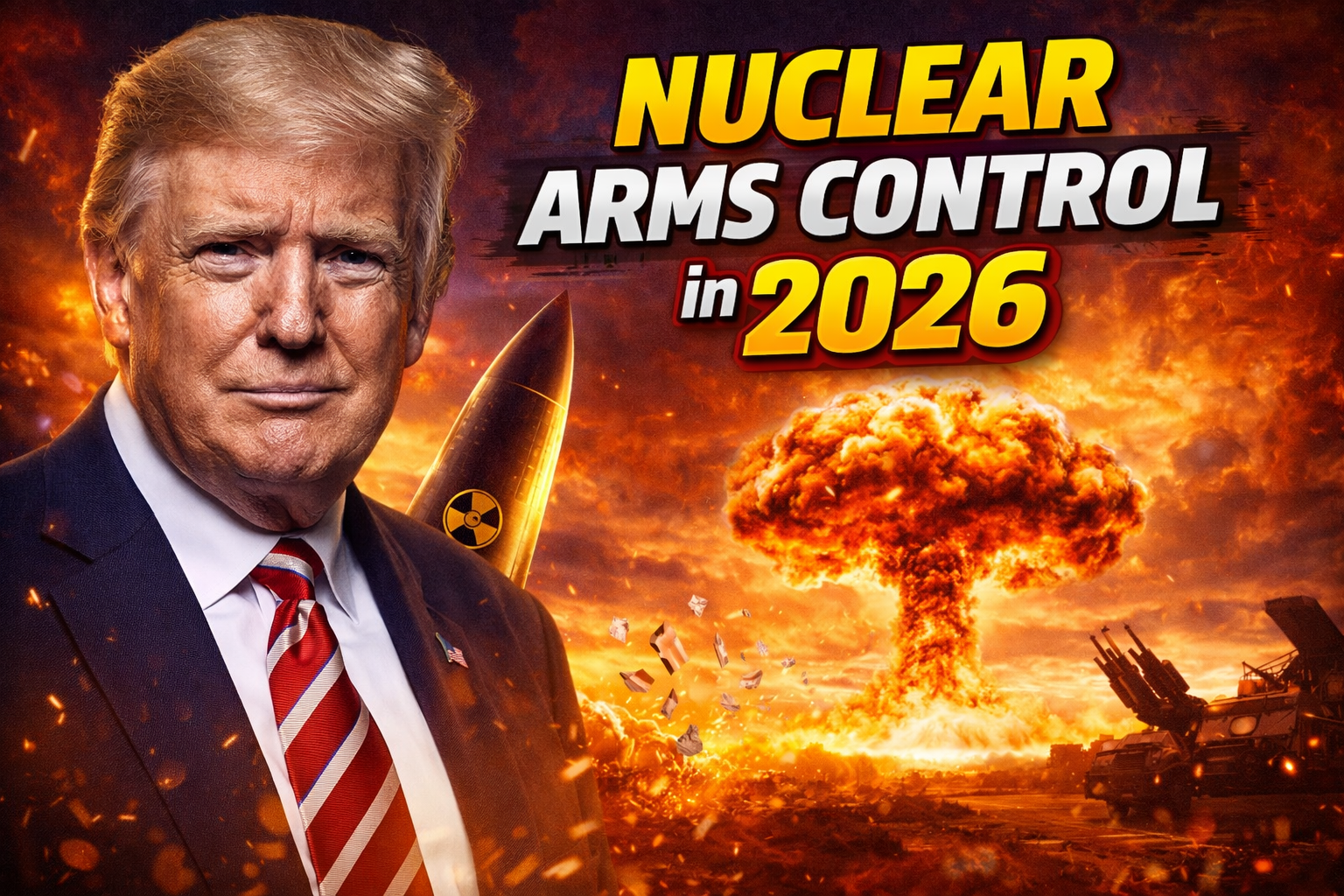
Nuclear arms control faces unprecedented challenges as the New START treaty expired earlier this year, removing the last major constraints on U.S. and Russian nuclear arsenals. This development heightens global security risks amid rising tensions with China and other nuclear states.
The dawn of 2026 marked a pivotal moment in international relations with the quiet end of the New START treaty between the United States and Russia. For over five decades, such agreements provided a framework of transparency and limits on strategic nuclear weapons, fostering a fragile stability during the Cold War and beyond. Without these guardrails, the world now enters an era of unconstrained nuclear competition, where miscalculations could lead to catastrophic consequences.
This article explores the risks unleashed by the treaty’s expiry, analyzes the evolving global nuclear dynamics, and considers pathways to mitigate threats. As nuclear arsenals expand unchecked, the stakes for humanity have never been higher, demanding urgent diplomatic innovation.
Background on New START Treaty
New START, signed in 2010 and extended in 2021, was the cornerstone of bilateral nuclear arms control. It capped each side at 1,550 deployed strategic warheads, 700 deployed delivery vehicles, and 800 deployed and non-deployed launchers. Rigorous verification measures, including on-site inspections and data exchanges, ensured compliance and built mutual trust.
Russia suspended participation in 2023 amid the Ukraine conflict, halting inspections while claiming adherence to numerical limits. The treaty officially lapsed on February 5, 2026, leaving no successor in place. This follows a pattern of eroding arms control, from the 2002 Anti-Ballistic Missile Treaty withdrawal to the Intermediate-Range Nuclear Forces Treaty’s collapse in 2019.
The treaty’s end symbolizes the breakdown of post-Cold War cooperation, exacerbated by geopolitical rivalries and modernized arsenals. Without it, both nations lose critical insights into each other’s capabilities, increasing uncertainty.
Immediate Risks Post-Expiry
The most pressing danger is the absence of verification, which previously prevented worst-case planning. Nations must now assume adversaries operate at maximum capacity, prompting preemptive buildups. U.S. officials warn this opacity could fuel an arms race reminiscent of the 1980s.
Russia’s doctrinal shifts, lowering the threshold for nuclear use, compound these risks. Combined with suspended notifications on missile movements, even routine tests risk being misread as attacks. Early 2026 saw heightened alerts after unexplained launcher activities, underscoring the fragility.
Economically, unconstrained expansion strains budgets. The U.S. plans to modernize its triad—bombers, submarines, and missiles—at a projected annual cost exceeding $60 billion through 2030. Russia and others face similar pressures, diverting funds from pressing domestic needs.
Global Nuclear Landscape Shifts
The bipolar U.S.-Russia dynamic has given way to multipolarity, with China’s arsenal surging past 500 warheads and aiming for parity by decade’s end. India, Pakistan, North Korea, and others modernize rapidly, while Iran edges closer to breakout capability.
Non-proliferation efforts falter. The Nuclear Non-Proliferation Treaty review conference in April 2026 yielded no breakthroughs, as nuclear states resisted transparency demands. Regional flashpoints—like the Indo-Pacific and Middle East—amplify proliferation incentives for allies such as South Korea or Saudi Arabia.
Global stockpiles now exceed 12,000 warheads, with over 3,700 deployed. Modernization trends show hypersonic delivery systems and lower-yield tactical weapons proliferating, blurring lines between conventional and nuclear conflict.
Key Nuclear Arsenals Overview
| Nation | Total Warheads (est.) | Deployed Strategic | Modernization Focus | Key Concerns |
|---|---|---|---|---|
| United States | 5,000 | 1,770 | Columbia-class subs, B-21 bombers | Budget overruns, triad sustainment |
| Russia | 5,600 | 1,700 | Sarmat ICBMs, Poseidon torpedoes | Tactical nukes, doctrine changes |
| China | 600+ | 350+ | DF-41 missiles, Jin-class subs | Rapid expansion, silo fields |
| France | 290 | 280 | ASMP-A missiles | Independent deterrent |
| UK | 225 | 120 | Dreadnought subs | Trident life extension |
| India | 170 | N/A | Agni-VI, Arihant subs | Pakistan rivalry |
| Pakistan | 170 | N/A | Ababeel MIRVs | Tactical battlefield use |
| North Korea | 50+ | N/A | Hwasong-18 ICBMs | ICBM tests, sanctions evasion |
| Israel | 90 | N/A | Jericho III | Undeclared status |
Note: Figures approximate based on 2026 estimates; deployed numbers reflect pre-expiry caps where applicable.
Potential Escalation Scenarios
Hypersonic glide vehicles, traveling at Mach 5+, evade traditional defenses, shortening response windows to minutes. Russia’s Avangard and China’s DF-ZF systems exemplify this shift, pressuring early-warning infrastructures.
Cyber vulnerabilities pose novel threats. Attacks on command networks could mimic launches, triggering accidental use. The 2025 cyber intrusion on a NATO radar site highlighted this peril.
Crisis simulations reveal cascading risks. A Taiwan Strait clash might draw U.S., Chinese, and Russian forces, where tactical nuclear escalation spirals uncontrollably. Limited exchanges—once theoretical—now seem plausible given doctrinal evolutions.
Diplomatic Pathways Forward
Reviving bilateral talks seems unlikely amid sanctions and hostilities. Trilateral U.S.-Russia-China dialogues offer promise, focusing on transparency without binding limits. Russia’s one-year extension proposal, sans verification, was rebuffed by Washington.
Multilateral forums like the P5 process—where nuclear powers pledged risk-reduction—provide footholds. Confidence-building measures, such as mutual notification hotlines or flight test observerships, could rebuild trust incrementally.
Civil society and Track II diplomacy play vital roles. Think tanks advocate “risk reduction centers” for real-time data sharing, emulating Cold War precedents.
Technological and Verification Challenges
Satellite constellations and AI-driven monitoring partially offset lost inspections. Yet, novel systems like fractional orbital bombardment evade detection. Quantum sensors promise breakthroughs, but deployment lags.
Verification must evolve for emerging tech. Bans on cyber interference in nuclear systems or AI arms control protocols represent next frontiers. International norms, like the 2024 AI safety summit pledges, hint at progress.
Private sector innovations, including blockchain for tamper-proof data exchanges, could democratize oversight. However, export controls hinder global adoption.
Impacts on Non-Nuclear States
Extended deterrence commitments strain alliances. NATO’s nuclear umbrella faces credibility tests as Russia deploys tactical weapons in Belarus. Indo-Pacific partners debate indigenous arsenals amid Chinese assertiveness.
Developing nations suffer collateral effects. Nuclear saber-rattling disrupts trade and investment, while fallout risks from regional conflicts threaten billions. The Pacific Islands Forum demands a nuclear-free zone, citing environmental legacies.
Public opinion shifts: polls show 60% of Europeans favor disarmament talks, pressuring leaders. Youth-led movements amplify calls for abolition, echoing 1980s momentum.
Future Outlook for Global Security
Unchecked competition risks a new arms race, with global stockpiles potentially doubling by 2040. Yet, history shows crises catalyze cooperation—recall the 1963 Partial Test Ban Treaty post-Cuban Missile Crisis.
President Trump’s administration prioritizes strength through modernization, eyeing “peace through strength.” Russia leverages nukes for leverage in Ukraine, while China pursues “no first use” amid buildup.

Abhinav Jain is a legal researcher and writer passionate about simplifying complex laws for everyday readers. With a keen interest in Indian constitutional, civil, and digital laws, he focuses on creating accessible, well-researched articles that promote legal awareness among students, professionals, and citizens alike.