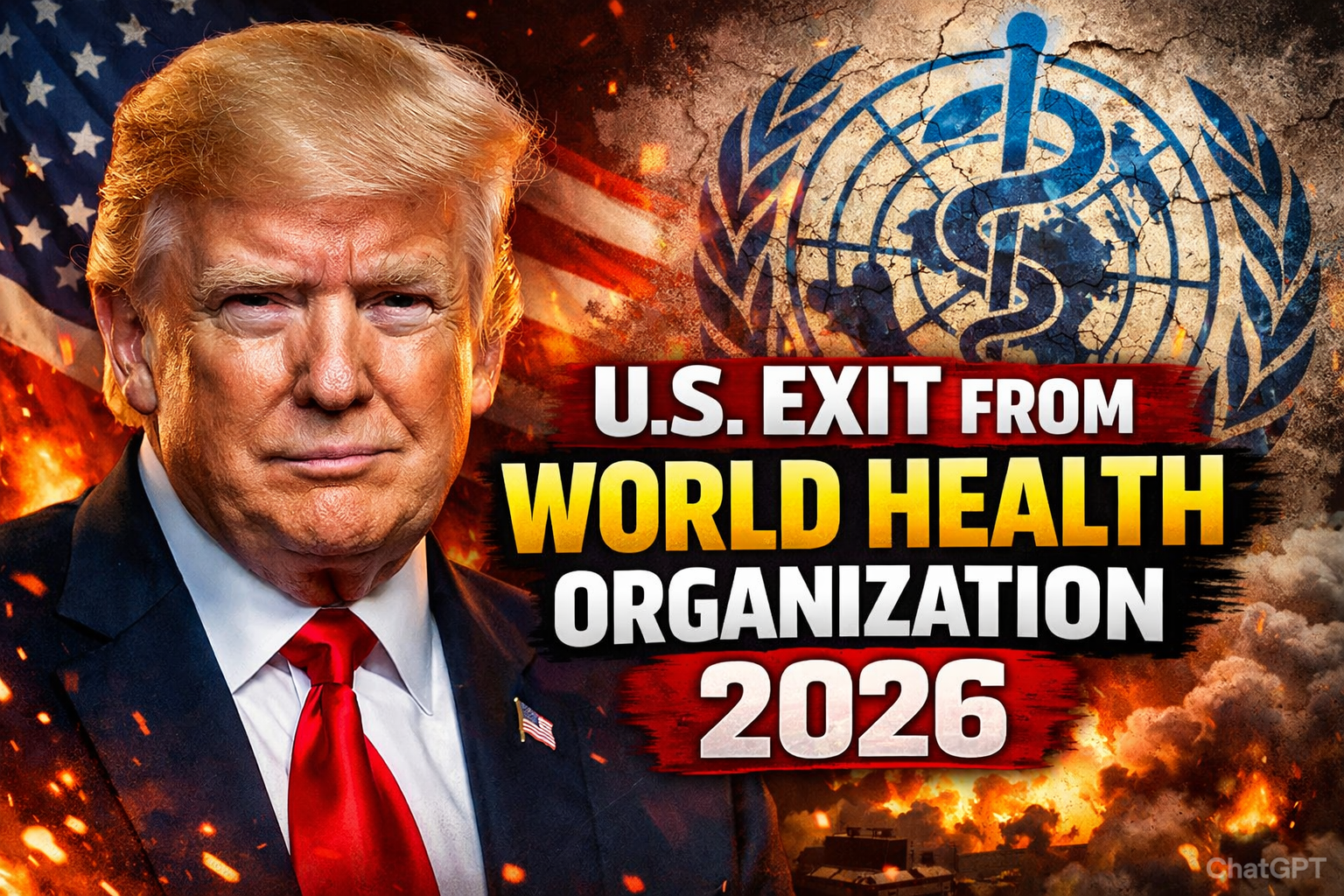
The U.S. has been the WHO’s largest donor and most influential member since its inception, providing technical expertise, leadership in emergencies, and substantial funds. During the COVID-19 pandemic, criticisms mounted over WHO’s handling of origins, China’s influence, and response delays, fueling Trump’s initial 2020 withdrawal attempt—halted by Congress and reversed under Biden.
Trump’s second term revived the push, citing sovereignty erosion, wasteful spending, and bias. An executive order paused funds, recalled personnel, and notified the UN Secretary-General, fulfilling a one-year notice under WHO Constitution Article 91. Critics decried it as unlawful without congressional approval, echoing 1948 ratification conditions requiring debt settlement. By exit, the U.S. owed around $260 million in dues, which it declined to pay, straining UN precedents.
This marks the first superstate departure, contrasting past U.S. withdrawals from UNESCO or the Paris Agreement, but WHO’s health mandate amplifies stakes.
Legal Mechanics and UN Status
WHO operates as a UN specialized agency via a 1948 relationship agreement, with the U.S. as a founding signatory. Withdrawal severs formal ties but does not dissolve obligations under binding instruments like the International Health Regulations (IHR), a treaty ratified separately by the U.S. Senate.
Under WHO Constitution Article 91, members give one year’s notice and settle arrears—steps the U.S. notionally followed, though unpaid dues spark disputes. The UN cannot enforce payment but may record arrears diplomatically. Legally, the U.S. retains IHR party status independently, requiring outbreak notifications and capacity building, but loses WHO voting rights, assembly participation, and executive board seats.
This creates a hybrid status: non-member yet treaty-bound, complicating enforcement. Precedents like the U.S.-UNESCO split show diminished influence without expulsion. UN legal scholars warn of precedent for others, potentially fragmenting specialized agencies.
Funding Breakdown Pre- and Post-Exit
| Contributor | 2024-2025 Contribution (USD) | Percentage of WHO Budget | Post-U.S. Exit Adjustment |
|---|---|---|---|
| United States | 958 million | 15-18% | Zero; $1.7B gap projected |
| Germany | 856 million | ~12% | Increased pledges |
| Bill & Melinda Gates Foundation | 830 million | ~11% | Steady voluntary |
| European Commission | ~700 million | ~10% | Boosted for emergencies |
| China | ~100 million | ~1-2% | No change announced |
| WHO Total Budget | ~6.4 billion | 100% | Slashed to $4.2B for 2026-27 |
The U.S. supplied 15-18% of WHO’s budget, blending assessed dues (~$260M) and voluntary (~$700M). Exit triggers a $1.7 billion shortfall over two years, forcing 20% cuts. WHO’s February 2026 Executive Board eyes arrears pursuit, but options limit to shaming. Donors like Germany step up, yet voluntary funds—80% of budget—prove fickle.
Operational Disruptions
WHO slashes programs: polio eradication slows, tuberculosis efforts falter, and pandemic surveillance networks thin. U.S. experts, key in flu vaccine strain selection and biolab oversight, depart, crippling Global Influenza Surveillance Response. Regional offices, like Pan American Health Organization in D.C., face U.S. funding voids.
Governance shifts: Assembly seats rotate without U.S. veto-like sway, elevating China and Russia. Pandemic Treaty and IHR amendments stall sans U.S. input. Staff morale plummets amid 15% layoffs.
International Health Regulations Impact
IHR 2005 binds 196 states to notify hazards, share data, and aid responses—core to post-SARS reforms. U.S. exit from WHO does not abrogate IHR status, preserving notification duties. However, absent WHO coordination, compliance gaps widen: no unified data platforms, fragmented alerts.
Experts predict delayed detections, as U.S.-led networks like CDC’s Global Disease Detection dissolve ties. During COVID, WHO amplified U.S. intel; now, bilateral pacts supplant, risking silos. Enforcement—via WHO’s weak dispute mechanism—weakens further.
Threats to Global Health Security
Withdrawal heightens vulnerability. Infectious diseases ignore borders: mpox, avian flu, and novel pathogens demand coordination the U.S. once drove. Without WHO, vaccine equity frays—COVAX successor at risk—exacerbating Global South disparities.
Proliferation risks rise: antimicrobial resistance surveillance lapses, biothreat monitoring erodes. Climate-health links suffer; extreme weather-fueled outbreaks go unchecked. Allies like EU nations decry isolationism, straining NATO health components.
Stats underscore peril: WHO coordinated 2020-2022 saving millions via equitable distribution; U.S.-led alternatives costlier, duplicative.
U.S. Domestic Repercussions
America loses global early warnings, reliant on costly recreations—HHS proposes $2 billion yearly for surveillance, dwarfing prior $700 million WHO spend. Vaccine development hampers without strain data; domestic priorities like obesity eclipse international.
Public health experts warn blowback: unchecked outbreaks abroad rebound homebound. Politically, it rallies “America First” base but isolates diplomatically.
Alternative Strategies Emerge
Trump administration eyes U.S.-led coalitions, perhaps G7 health forums or bilateral deals with allies. HHS floats “Global Health Security Network” mirroring WHO functions at premium cost. Philanthropy fills voids—Gates pledges more—but lacks governmental heft.
China eyes influence vacuum, boosting contributions strategically.
Future Outlook
Rejoining hinges on politics; unpaid dues bar easy return. WHO pivots to diversified funding, South-South ties. Multilateralism fractures, birthing parallel systems—risky for equity.

Abhinav Jain is a legal researcher and writer passionate about simplifying complex laws for everyday readers. With a keen interest in Indian constitutional, civil, and digital laws, he focuses on creating accessible, well-researched articles that promote legal awareness among students, professionals, and citizens alike.