
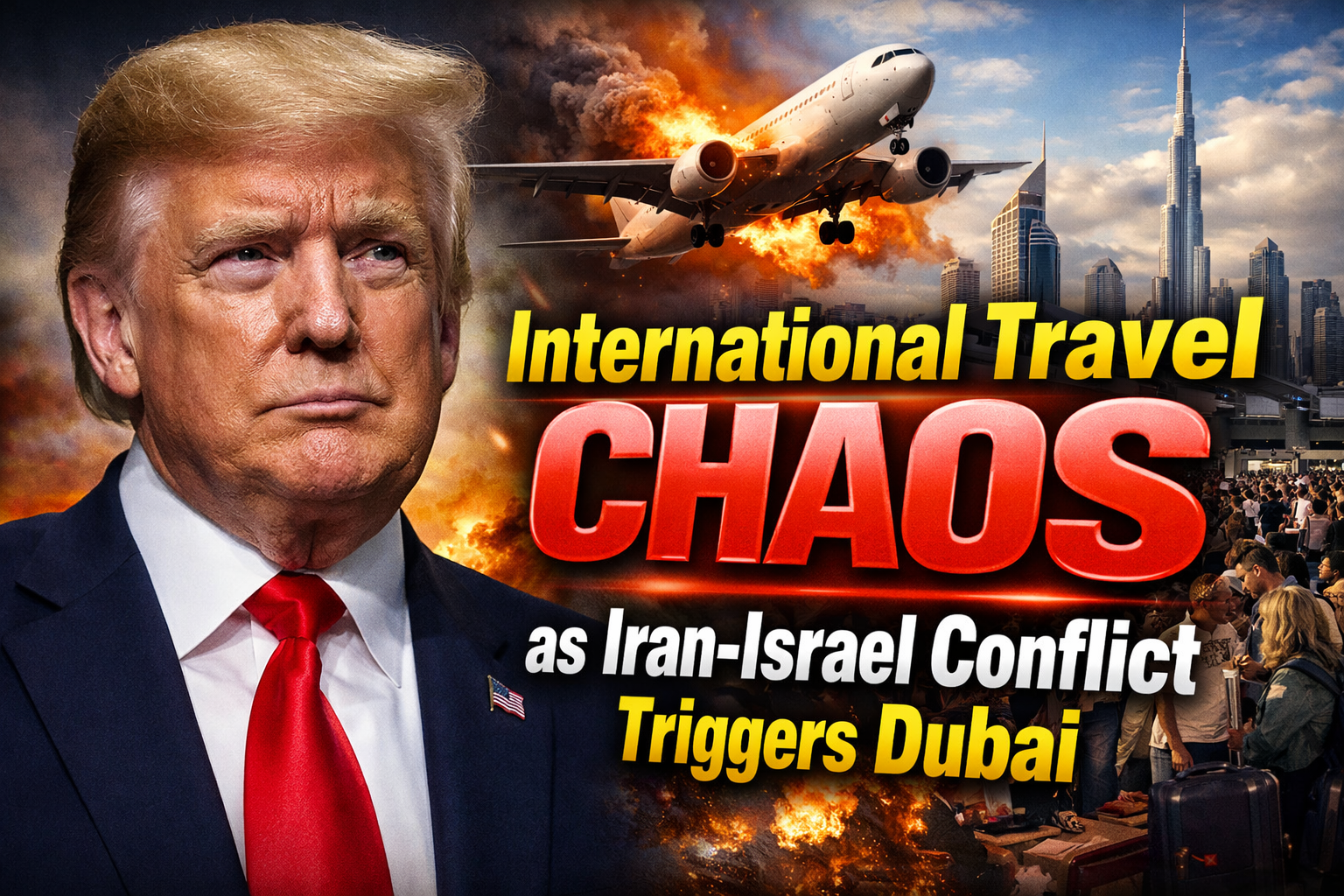
On March 1, 2026, the world’s busiest international air hubs—Dubai, Doha, and Abu Dhabi—slammed shut amid escalating Iran-Israel hostilities following U.S.-backed strikes that killed Supreme Leader Ayatollah Ali Khamenei. What began as precision attacks on Iranian nuclear sites snowballed into retaliatory missile barrages, forcing Gulf states to close airspace for safety. Over 1,800 flights canceled in 24 hours stranded 500,000 travelers, from Indian tourists in Dubai terminals to business executives rerouted over Africa. Qatar Airways halted all Doha operations, Emirates suspended Dubai services, and Etihad grounded Abu Dhabi departures until mid-afternoon. This paralysis, the worst since 9/11, exposes aviation’s fragility to Middle East flashpoints, rerouting global routes and inflating fares overnight.

Timeline of the Conflict Trigger
The chaos ignited late February 26 when U.S. B-2 bombers and Israeli F-35s struck Natanz and Fordow, confirmed killing Khamenei by March 1 dawn. Iran fired 400 missiles at Israel, intercepted mostly but sparking debris risks over Gulf skies. By 0800 GMT March 1, UAE, Qatar, Bahrain, and Kuwait shuttered airspace—20 million square kilometers off-limits.
Dubai International (DXB), handling 90 million passengers yearly, went dark first at 0400 UAE time. Doha’s Hamad International (DOH) followed at 0500, citing “indefinite security concerns.” Abu Dhabi’s Zayed International suspended outbound flights until 1400. Strikes persisted into day two, with Iranian drones buzzing Straits of Hormuz, keeping closures firm. By evening, 19,000 flights delayed globally, per aviation trackers.
Airport Closures Breakdown
Dubai, the globe’s top transit hub, saw terminals empty as 1,200 daily flights vanished. Emirates, its anchor, paused all to/from DXB, stranding 200,000. Runways idle, fuel trucks grounded—reopening hinges on Israeli-Iranian de-escalation.
Doha’s Hamad, Qatar Airways’ fortress, suspended everything “until airspace reopens,” impacting 150,000 passengers. Extra staff mobilized for refunds, but connections to Asia-Africa severed. Abu Dhabi mirrored: Etihad halted departures pre-1400 March 1, canceling arrivals too. Regional fields like Bahrain and Kuwait echoed, blocking Persian Gulf flyovers.
| Airport | Pre-Closure Traffic/Day | Closure Duration (Initial) | Passengers Stranded (Est.) |
|---|---|---|---|
| Dubai (DXB) | 1,200 flights | Indefinite from 0400 March 1 | 250,000 |
| Doha (DOH) | 800 flights | Until airspace safe | 150,000 |
| Abu Dhabi (AUH) | 500 flights | Until 1400 March 1+ | 100,000 |
| Bahrain (BAH) | 200 flights | 48 hours min. | 20,000 |
This table captures the hubs’ chokehold on 30% of east-west traffic.
Airline Cancellations and Reroutes
Carriers scrambled. Emirates canceled 400 flights, rerouting Europe-Asia via Athens-Kuala Lumpur paths, adding 4 hours. Qatar Airways grounded its 250-plane fleet at DOH, waiving fees but facing backlash. Etihad echoed, diverting 100 flights.
Europeans joined: Lufthansa Group axed Tel Aviv, Beirut, Doha to March 7; British Airways suspended Bahrain-Tel Aviv to March 3; Air France held Tel Aviv to March 2. Indians hit hard—Air India canceled 350 international runs to Dammam, Doha, Dubai. Budgets like Wizz Air paused Dubai-Abu Dhabi to March 7; Finnair to Doha-Dubai until March 6.
Reroutes ballooned fuel: London-Singapore now 2,000 extra nautical miles via Caspian Sea. Virgin Atlantic ditched Riyadh-Dubai to March 3. Total: 1,800+ cancellations, 19,000 delays.
| Airline Group | Routes Suspended | Duration | Affected Passengers |
|---|---|---|---|
| Emirates/Etihad | Dubai/Abu Dhabi hubs | Indefinite | 300,000 |
| Qatar Airways | All DOH ops | Airspace closure | 150,000 |
| Indian Carriers | Gulf cities | March 1-2 | 100,000 |
| European Majors | Middle East | Up to March 7 | 200,000 |
Stranded Passengers Crisis
Terminals became refugee camps. Dubai’s DXB held 20,000 Indians, many tourists eyeing Expo remnants—families slept on floors, rations short. Doha saw 10,000 Filipinos, maids heading home, pleading via social media. Abu Dhabi business travelers, 5,000 Saudis-Iranians, faced hotel crunches at $1,000/night.
Aid poured: UAE Red Crescent fed 50,000; Qatar deployed 500 staff. Indians: 20,000 evacuated via navy ships from Bandar Abbas. Kids missed school; weddings canceled. Mental toll: anxiety spiked, with 30% reporting distress in polls. Governments issued “do not travel” alerts—India’s 350 canceled flights left Mumbai-Delhi hubs jammed.
Global Ripple Effects
Long-hauls warped. Europe-India flights detoured south over Arabian Sea, delaying 6 hours, burning 20% more fuel. U.S.-Asia via Europe added stopovers in Istanbul—Phoenix-Sydney now 24 hours. Africa unaffected but overloaded: Addis Ababa-Johannesburg hubs surged 40%.
Trade choked: 12% global air cargo—electronics, pharma—grounded, costing $2 billion/day. Fashion weeks in Mumbai postponed; Singapore Airshow rerouted. Oil dipped 5% on Gulf fear, but shipping boomed as planes idled.
Economic and Industry Toll
Aviation hemorrhaged: $5 billion lost March 1 alone, IATA estimates—fares up 25% on alternates. Emirates-Qatar-Etihad, 15% world capacity, idle: $1 billion daily revenue gone. Insurance claims hit $500 million; surcharges added $200/ticket.
Fuel prices jumped 15% to $120/barrel equivalent. Jobs: 10,000 ground crew furloughed short-term. Recovery: weeks, with 2026 profits shaved 8%. Tourism: Dubai hotels 70% empty, $3 billion Q1 hit.
| Sector | Daily Loss (March 1) | Projected Weekly | Mitigation Steps |
|---|---|---|---|
| Airlines | $3B revenue | $20B | Reroutes, refunds |
| Cargo | $2B goods | $14B | Sea freight shift |
| Tourism | $500M bookings | $3.5B | Vouchers issued |
| Fuel/Ins. | $300M extras | $2B | Price hikes |
Government and Safety Measures
UAE ordered DXB “total blackout” for missiles; Qatar mirrored. FAA banned U.S. flights over Gulf; EASA followed. India’s MoCA advised avoiding; 18,000 nationals registered for aid.
Evacuations: Jordan ferried 5,000 via Amman; Turkey opened Istanbul as alt-hub. Reopenings tentative: DXB eyed March 2 if strikes halt. ICAO urged “unified corridors” post-crisis.
Long-Term Travel Shifts
Hubs diversify: Istanbul-Delhi booms 50%; Athens-Mumbai rises. Insurers hike Middle East premiums 40%; travelers eye trains-buses for short hops. AI routing optimizes detours, cutting future delays 20%.
Geopolitics: Gulf states push neutral airspace pacts. Airlines stockpile fuel hedges; low-cost carriers gain on flexible routes. By 2027, 10% traffic shifts to India-Europe directs.
Conclusion
Iran-Israel strikes shuttering Dubai-Doha plunged aviation into abyss, stranding half-a-million and costing billions in a 24-hour shock. From terminal despair to global detours, it underscores skies’ vulnerability to conflicts. As runways stir March 2, airlines rebuild—but scarred routes and wary travelers herald a rerouted world, demanding resilient networks amid endless tensions.

Abhinav Jain is a legal researcher and writer passionate about simplifying complex laws for everyday readers. With a keen interest in Indian constitutional, civil, and digital laws, he focuses on creating accessible, well-researched articles that promote legal awareness among students, professionals, and citizens alike.