
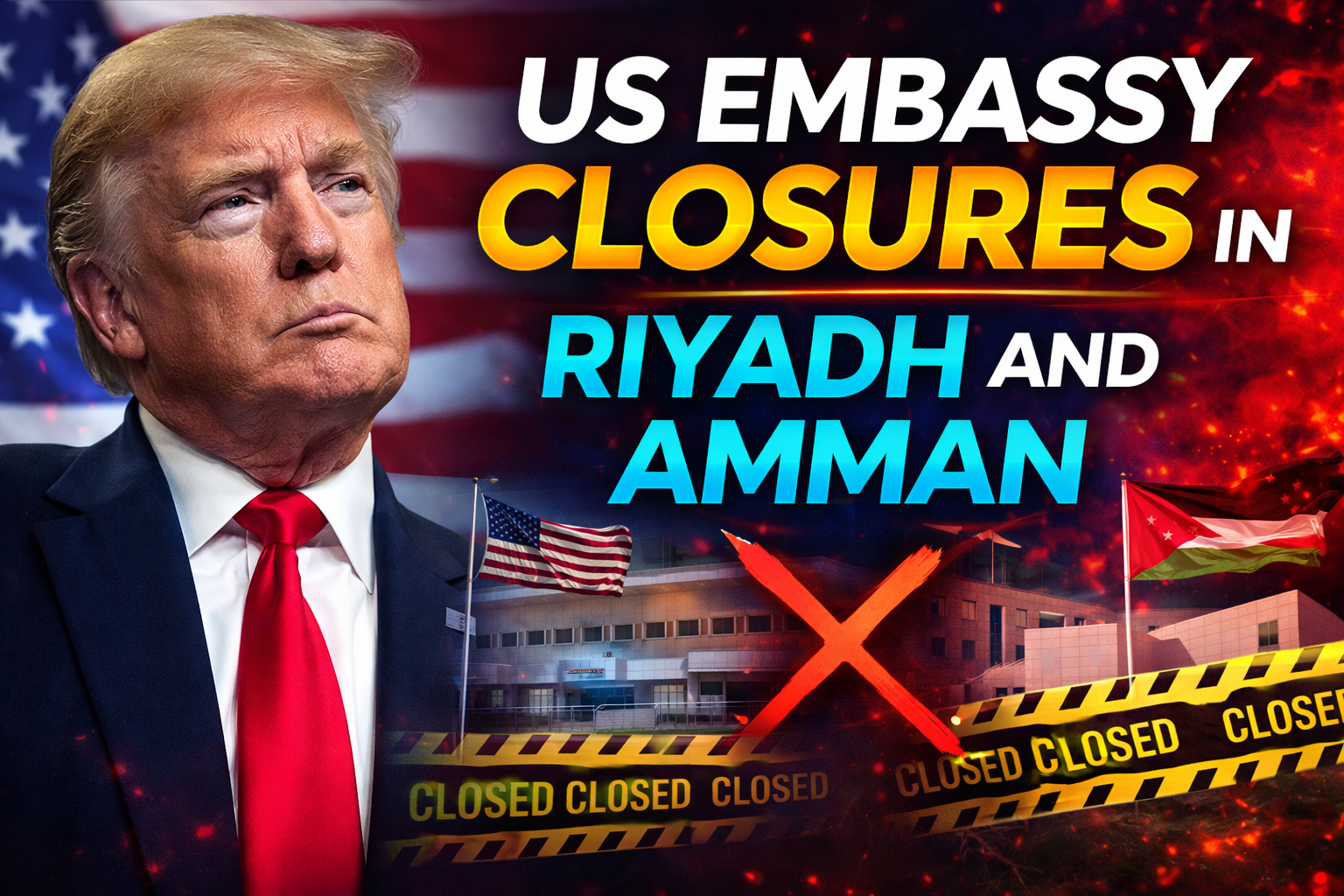
Recent escalations in West Asia have heightened concerns for American safety amid a volatile conflict involving major regional powers. The temporary closures of US embassies in Riyadh, Saudi Arabia, and Amman, Jordan, underscore the gravity of threats facing diplomatic missions and US citizens in the area. These measures reflect a proactive stance by US authorities to protect personnel and visitors as tensions flare.

Current Conflict Overview
The ongoing strife in West Asia stems from intertwined rivalries between Iran, Israel, and their allies, drawing in Gulf states and beyond. Sparked by targeted strikes and retaliatory drone assaults, the situation has rapidly deteriorated, affecting civilian and military targets alike. Key flashpoints include major cities hosting foreign embassies, where protests and attacks have surged.
US interests face direct risks as embassies become symbolic targets in this proxy and direct confrontation. American military presence in the region amplifies vulnerabilities, prompting swift diplomatic adjustments. Families of US personnel and expatriates now grapple with urgent evacuation advisories spanning multiple nations.
Embassy Closure Details
Riyadh Embassy Incident
The US Embassy in Riyadh encountered a brazen drone strike that caused limited structural damage but no casualties among staff. Eyewitnesses reported thick smoke rising from the Diplomatic Quarter, prompting immediate lockdown protocols. Saudi defense officials confirmed the attack involved two unmanned aerial vehicles, highlighting sophisticated threats.
In response, the embassy issued shelter-in-place orders for Americans in Riyadh, Jeddah, and Dhahran. Non-essential operations halted, with consular services suspended indefinitely. This closure prioritizes staff safety while maintaining emergency support channels for US citizens.
Amman Embassy Response
Similarly, the US Embassy in Amman shut its doors following intelligence of an imminent threat, evacuating non-essential personnel preemptively. Jordanian authorities coordinated with US teams to secure the perimeter amid rising local unrest. The move aligns with broader regional advisories urging Americans to avoid crowded areas.
Both closures exemplify a pattern of heightened vigilance, as US missions balance operational continuity with risk mitigation. Travel restrictions now extend to military sites, curtailing routine movements for all affiliated individuals.
Broader Regional Impact
US diplomatic facilities across the Gulf face parallel pressures, with missions in Kuwait, Bahrain, and Iraq also curtailing activities. Protests outside Baghdad’s embassy escalated into clashes, deploying tear gas to disperse crowds. Iranian-backed militias have targeted US bases and hotels housing troops, broadening the threat landscape.
Over a dozen countries now fall under US State Department warnings, advising immediate departure for non-essential travelers. Bahrain and Iraq carry the sternest “do not travel” designations, while others hover at elevated risk levels. This patchwork of alerts affects expatriates in business, education, and tourism sectors.
Safety Measures for Americans
US authorities emphasize personal security amid these disruptions. Citizens receive directives to shelter indoors during alerts, monitor local media, and register with the Smart Traveler Enrollment Program for real-time updates. Commercial flights remain operational but face delays, urging reliance on official repatriation guidance.
Diplomatic staff reductions minimize exposure, with families departing first. Military reinforcements bolster perimeter defenses at key sites, deterring further incursions. Community networks among expatriates prove vital, sharing resources like secure housing and supply caches.
Statistical Insights on Threats
Regional instability manifests in quantifiable surges of incidents. Drone incursions have tripled in frequency over recent months, per defense tracking. Attacks on Western targets rose sharply, with diplomatic sites comprising a notable share.
| Threat Type | Incidents Last Quarter | Affected US Assets | Casualty Impact |
|---|---|---|---|
| Drone Strikes | 45 | 12 embassies/bases | Minimal material damage |
| Protests/Clashes | 120 | 8 missions | No US fatalities |
| Militia Attacks | 30 | 5 military sites | 6 service members |
| Cyber Intrusions | 75 | 20 diplomatic networks | Data disruptions |
These figures illustrate the multifaceted dangers, from aerial assaults to ground-level unrest. Historical parallels show similar spikes preceding major escalations, informing current protocols.
Historical Context of US Embassy Vulnerabilities
Past episodes offer sobering lessons for today’s closures. Iconic sieges like the Tehran hostage crisis reshaped embassy fortifications worldwide. More recent assaults in Benghazi and Baghdad exposed gaps in rapid response capabilities.
In West Asia, embassies have weathered barrages during prior Iran-Israel flare-ups. Each incident spurred upgrades like blast-resistant barriers and drone-jamming tech. Riyadh and Amman’s current status echoes these cycles, where preemptive shutdowns avert worse outcomes.
Implications for US Citizens
Expatriates confront disrupted lives, from halted business deals to schooling interruptions. Dual nationals face added scrutiny at borders, complicating returns. Tourism plummets, stranding visitors who ignored earlier cautions.
Long-term, these events strain bilateral ties, as host nations juggle alliances with domestic pressures. Saudi Arabia’s prompt drone interception signals commitment to US security, yet public sentiments simmer. Jordan’s role as a stable buffer grows tenuous under protest strains.
Government and Leadership Responses
President Donald Trump vowed a measured yet firm retaliation, reversing prior hesitations on ground deployments. Operations may span weeks, prioritizing precision strikes over broad engagements. Secretary of State Marco Rubio reiterated citizen safety as paramount, coordinating multi-agency evacuations.
Host governments affirm support, with Saudi forces neutralizing threats swiftly. Iran’s leadership frames actions as defensive, mourning losses from initial US-Israel moves. International calls for de-escalation gain traction, though skepticism prevails.
Expert Analysis on Risk Factors
Analysts pinpoint Iran’s proxy networks as primary escalators, leveraging drones for asymmetric warfare. Gulf states’ air defenses hold firm, but urban embassy vicinities pose challenges. Cyber elements compound physical risks, probing for weaknesses.
Sustained conflict could inflate oil prices, rippling globally and pressuring US policy. Diplomatic isolation of aggressors remains a US lever, backed by allies. Monitoring fatigue among locals offers de-escalation windows if seized.
Protective Strategies and Recommendations
Individuals fortify personal defenses: varying routines, securing homes, and stocking essentials for weeks. Apps track alerts, while community wardens coordinate aid. Businesses activate contingency plans, relocating staff preemptively.
Authorities invest in next-gen shields like AI-driven surveillance. Long-term, diversified basing reduces single-point failures. Public diplomacy counters narratives fueling attacks, fostering local partnerships.
Future Outlook and Mitigation
Prolonged closures signal entrenched risks, potentially reshaping US footprints. Negotiations via backchannels could temper hostilities, but hardline stances dominate. Americans weigh relocation against opportunities, with many opting for prudence.
Enhanced intelligence sharing with allies fortifies resilience. Tech innovations promise superior threat detection, outpacing adversaries. Ultimately, diplomatic breakthroughs hinge on mutual restraint, safeguarding lives amid geopolitical storms.
Conclusion
The Riyadh and Amman embassy closures epitomize prudent crisis management in West Asia’s maelstrom. By prioritizing safety, the US shields its people while projecting resolve. Vigilance endures as the conflict’s arc unfolds, demanding adaptability from all stakeholders.

Abhinav Jain is a legal researcher and writer passionate about simplifying complex laws for everyday readers. With a keen interest in Indian constitutional, civil, and digital laws, he focuses on creating accessible, well-researched articles that promote legal awareness among students, professionals, and citizens alike.