
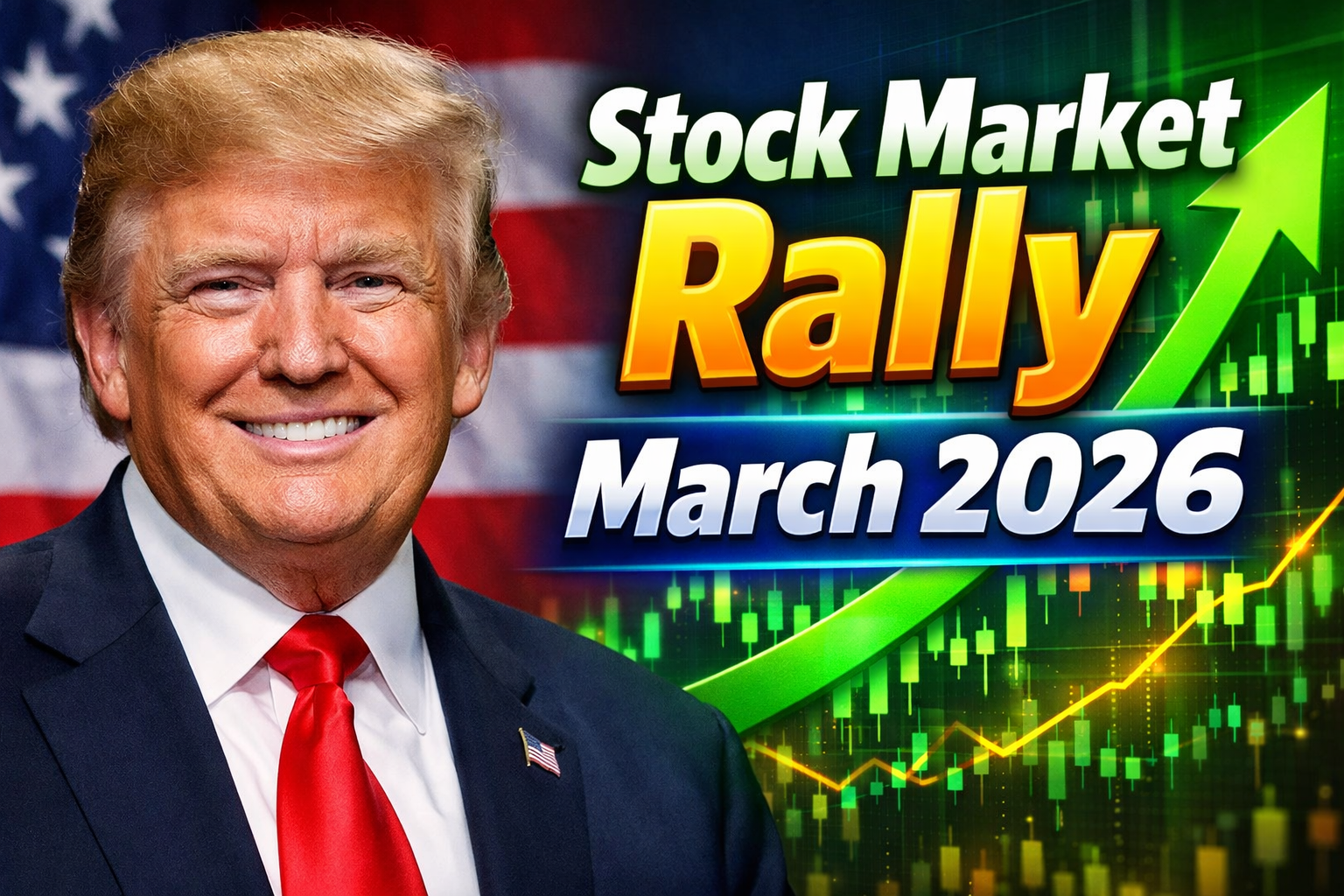
In early March 2026, global financial markets found themselves caught in the crosshairs of a Middle East‑driven risk‑off spiral. Weeks of escalating tensions between the United States and Iran, including targeted strikes, the closing of key shipping routes, and threats against energy infrastructure, had pushed oil prices sharply higher and fueled anxiety among investors. Equity indices, particularly in the U.S., began to fray as traders priced in the risk of a prolonged regional conflict suppressing growth and inflating inflation.
Against that backdrop, a single political signal—President Donald Trump’s comments about progress toward an Iran‑related agreement—became the pivot point for a dramatic reversal in sentiment. What had been a cautious, defensively‑tilted market in late February suddenly shifted into a “relief rally,” as investors seized on the prospect that the worst‑case scenario of a full‑blown war and uncontrolled oil spike could be averted.
How Trump’s Iran‑Related Signals Moved Markets
The catalyst for the March 2026 pop came when the president announced that the U.S. and Iran had been engaged in talks and that there were “major points of agreement” on a potential deal. Speaking from the White House, Trump signaled that the administration was actively working toward a compromise that could ease the immediate military standoff and, by extension, reduce the risk of wider conflict in the Persian Gulf.
He also conveyed a temporary pause in planned strikes on Iranian power infrastructure, framing the move as a good‑faith effort to allow negotiations room to breathe. From a market‑pricing perspective, this was significant: it suggested that the automatic escalation many feared—retaliatory strikes on oil‑related targets and potential disruption of the Strait of Hormuz—might be temporarily off the table. The perception of even a short‑term de‑escalation was enough to trigger a sharp rotation from safe‑havens back into risk assets.
The Dow’s 600‑Point Surge and Broader Index Moves
The immediate reaction in equities was both powerful and broad. On the day Trump’s comments hit the wires, the Dow Jones Industrial Average jumped by more than 600 points, climbing roughly 1.4 percent to close near a fresh record level. The index’s advance translated into one of the largest single‑day point gains of the year, second only to its biggest rallies during the early‑2026 Fed‑pause‑driven euphoria.
The relief was not confined to blue‑chip stocks. The S&P 500 added more than 1 percent, with all 11 major sectors finishing in positive territory. Cyclical and economically‑sensitive areas—consumer discretionary, travel, industrials, and financials—led the charge. The tech‑heavy Nasdaq Composite mirrored the Dow’s percentage gain, rising over 1 percent and reclaiming key intraday and weekly support levels that had been breached during the prior weeks of stress.
Combined, these moves signaled that investors were not merely scraping up “cheap” oversold names; they were rotating capital back into growth‑oriented and economically‑sensitive sectors that had borne the brunt of the Middle East‑driven sell‑off. The breadth of the rally, with advancing stocks outnumbering decliners by a wide margin, suggested that the move was driven by broad‑based conviction rather than a narrow trade in a few mega‑cap names.
What Sectors Led the Recovery
Within the broader market rebound, certain industries were particularly responsive to the de‑escalation narrative. Airlines and cruise operators rallied sharply as the fear of prolonged fuel spikes and disrupted travel routes began to recede. Shares in major U.S. carriers and several large cruise‑line operators climbed multiple percentage points in a single session, reflecting the sensitivity of transportation‑sector valuations to geopolitical tensions and oil costs.
Financial stocks also benefited, as the prospect of a calmer macro backdrop lifted sentiment around lending, credit quality, and the trajectory of interest rates. Bank shares and regional financials, which had been under pressure during the volatile period, regained ground as the market’s “risk‑off” mood softened. At the same time, energy equities, though still volatile, saw a partial stabilization as the premium for a worst‑case oil‑shock scenario began to unwind.
Technology and consumer‑discretionary companies, perennial beneficiaries of strong risk‑on flows, rounded out the picture. With the threat of a major regional conflict temporarily dialed down, investors were more willing to pay up for growth‑oriented valuations, pushing the Nasdaq and related growth baskets higher. The combination of receding fear and a resilient earnings backdrop turned the March 26 rally into a classic “fear‑to‑greed” shift in just a few hours.
Oil, Yields, and Risk Appetite
The equity move mirrored developments in other key markets. Crude oil prices, which had spiked on the heels of Middle East tensions, retreated sharply after Trump’s comments. The implied risk premium embedded in the oil complex began to erode as traders reassessed the likelihood of sustained supply disruptions. Lower oil prices in turn eased concerns about headline inflation, supply‑chain stress, and the cost of doing business, giving equity valuations more running room.
Interest‑rate markets also reacted. Treasury yields, particularly at the short end of the curve, eased as the fear of a full‑scale war‑driven inflation shock abated. The two‑year note yield dipped by several basis points in the wake of the news, reflecting a modest repricing of near‑term monetary‑policy risk. Lower yields and softer inflation expectations created a marginally more favorable environment for equities, especially growth‑oriented names that are particularly sensitive to discount‑rate assumptions.
For portfolio managers, the alignment of equities higher, oil modestly lower, and yields stabilizing signaled a classic de‑risk‑and‑re‑risk sequence. Assets that had been sold off under a “bad‑news‑dominates‑all” regime were now being bought back under the assumption that the downside tail risks had shrunk, at least for the short term.
Why Investors Breathed a Sigh of Relief
The psychology driving the rally can be understood through a simple lens: options and tail‑risk pricing. Throughout the late‑February and early‑March sell‑off, traders had piled into protective puts, volatility hedges, and safe‑haven assets, anticipating the worst‑case scenarios of a full‑scale war and a prolonged energy shock. The cost of that insurance, in both explicit options premiums and in the form of lower equity prices, was high.
When Trump’s comments suggested that the situation could be contained or even reversed through diplomacy, investors faced a choice: either hold onto expensive hedges as if the worst were still imminent, or start to unwind them and buy back risk assets. The market chose the latter, leading to a rapid compression of fear and a sharp rebound in equities. The relief was palpable in the tone of market commentary, with portfolio managers describing the day’s move as “the kind of bounce you get when the world doesn’t end.”
At the same time, strategists cautioned that the rally did not erase the fundamental uncertainty around the Iran‑related standoff. Iran’s official stance contradicted the president’s claims, with Tehran denying any ongoing negotiations and dismissing the idea of a near‑term deal as “fake news.” That dissonance meant that the de‑escalation narrative was inherently fragile, resting on the credibility of one‑sided political signaling rather than a confirmed, multilateral accord.
The Limits of the “De‑Escalation Rally”
Even as the Dow and other indices surged, experienced investors were quick to point out the limits of this kind of policy‑driven bounce. A rally sparked by a single political signal is more narrative‑sensitive and less durable than one grounded in earnings growth, macro‑data, or a clear shift in monetary‑policy stance. Traders who chased the 600‑point Dow move risked being whipsawed if the Iran‑related situation deteriorated again or if the administration’s tough‑on‑Iran stance suddenly re‑escalated.
Market voices warned that the upside was likely to remain tethered to the headlines from the Middle East. Positive news—verifiable progress toward a deal, an extension of the pause on planned strikes, or a reduction in military activity—would likely keep the equity‑friendly mood intact. Negative twists—fresh attacks, hard‑line statements from either side, or renewed threats against oil infrastructure—could quickly reverse the gains and send markets back into a more defensive posture. In that context, the March 26 rally was best viewed as a tactical, event‑driven rebound rather than a permanent shift in the macro cycle.
Trading Psychology and Positioning After the Jump
For active traders, the day’s action served as a textbook example of how quickly sentiment can flip around geopolitical events. Early in the session, positions were still skewed toward hedging, with many traders sitting on short‑equity or long‑volatility bets in anticipation of further volatility. As Trump’s comments began to dominate the newsflow, those positions were rapidly reversed. Option‑Trading volumes spiked, with calls replacing puts as the dominant bet.
This kind of positioning shift has important implications for volatility. After a sharp one‑way move, markets often enter a period of consolidation where the risk of whipsaw trades increases. Traders who had piled into the upside immediately after the announcement might find themselves squeezed if the news narrative stalled or if profit‑takers emerged. The lesson for many was to treat the 600‑point Dow move not as a signal to abandon caution, but as a cue to review risk exposure, tighten stop‑loss levels, and accept that the market environment could flip once again on the next geopolitical headline.
How This Rally Fits Into the 2026 Market Narrative
Within the broader 2026 market narrative, the March relief rally underscored the central role that geopolitics has come to play in driving equity returns. After a period in which central‑bank policy and earnings dominated the story, Middle East tensions briefly wrested control of the script, reshaping sector leadership and risk‑premiums overnight. The fact that a single president’s comments on prospective diplomacy could trigger a multi‑hundred‑point gain in the Dow highlighted how tightly linked global equities have become to the risk of conflict and energy shocks.
At the same time, the rebound confirmed a recurring market pattern: that equities tend to recover long before the underlying political uncertainty is fully resolved. Investors appeared willing to start pricing in a better‑than‑expected outcome even as Iran’s official position contradicted the optimism being expressed in Washington. That forward‑looking behavior, while profitable in the short term, leaves the market exposed to setbacks if the optimistic narrative fails to materialize.
What to Watch Next: Iran, Policy, and Earnings
Going forward, the sustainability of the March 2026 rally will hinge on three main factors. First and foremost is the actual trajectory of the U.S.‑Iran standoff. Any concrete evidence of a durable agreement, the reopening of key shipping lanes, or the lifting of threats against energy infrastructure would likely extend the risk‑on mood and support further gains in equities. Conversely, fresh escalations would threaten to unwind the de‑escalation premium that has been built into the market.
Second is the broader monetary‑policy and macro picture. Even with a more benign geopolitical backdrop, equity valuations cannot ignore the path of interest rates, inflation, and economic growth. Earnings season, which unfolds in the weeks following the March rally, will test whether companies can justify the higher multiples that are often bid up during periods of falling fear. Positive surprises on margins, demand, and pricing power would help anchor the rally in fundamentals rather than sentiment alone.
Finally, market participants will need to watch policy dynamics in Washington. The administration’s use of Trump’s comments as a lever to calm markets and support equities raises questions about how carefully geopolitical messaging will be calibrated going forward. If political signals appear to be aimed primarily at manipulating short‑term market sentiment, skepticism could grow, leading to more fragile and less predictable rallies.
In the meantime, the 600‑point Dow surge in March 2026 stands as a potent reminder of how quickly markets can move when the fear of war recedes—even if the underlying political reality remains uncertain. For investors, the episode is not just a snapshot of a single day’s trading, but a case study in the volatile intersection of politics, geopolitics, and the psychology of risk.

Abhinav Jain is a legal researcher and writer passionate about simplifying complex laws for everyday readers. With a keen interest in Indian constitutional, civil, and digital laws, he focuses on creating accessible, well-researched articles that promote legal awareness among students, professionals, and citizens alike.