
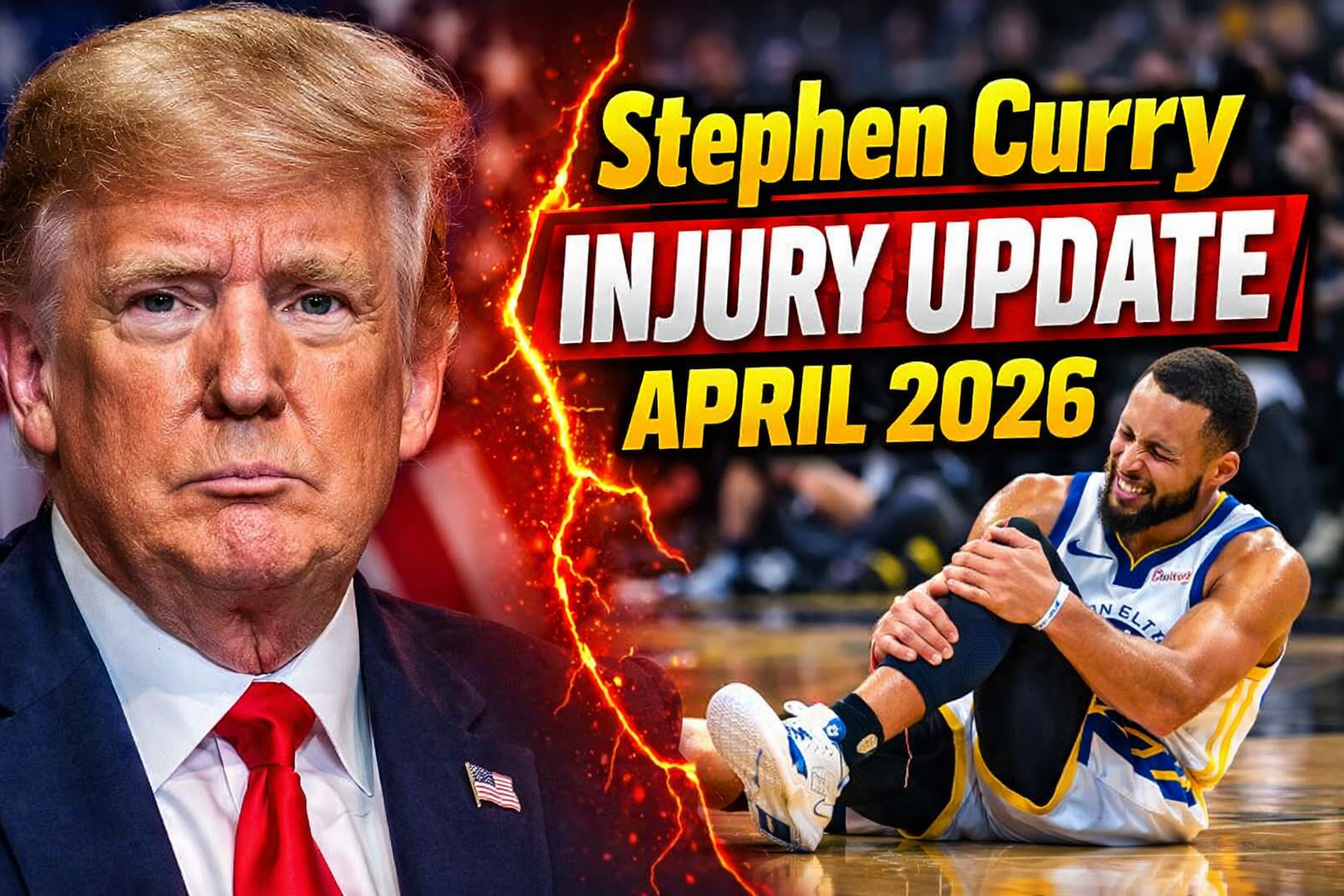
The Bay Area finally has something to cheer about. After more than two months on the sidelines, Stephen Curry has officially returned to the court, and he did it in one of the most electric spots of the NBA schedule: a primetime showdown against the Houston Rockets on April 5, 2026. Curry’s comeback caps a rehab saga that has tested the endurance of both the Golden State Warriors and their fanbase, while also reshaping the Western Conference playoff race. Now, with the regular‑season clock quickly winding down, Curry’s return timing could tilt the balance for Golden State’s postseason hopes—and add fresh drama to the league’s final stretch.
The Injury That Shut Steph Down
Curry’s absence began in late January, when a recurrence of patellofemoral pain syndrome in his right knee, along with a bone bruise, forced the Warriors’ medical staff to shut him down. The condition, often described as a form of “runner’s knee,” causes discomfort around the kneecap and can flare up under the heavy load of NBA‑level play, especially for a guard whose game leans so heavily on constant movement, pull‑up jumpers, and off‑ball cuts. Over the weeks that followed, the Warriors opted for a conservative approach, allowing Curry ample time in treatment, strength work, and small‑sided drills rather than rushing him back.
By early April, Curry had missed 27 consecutive games, the longest stretch of his prime‑years career. During that span, the Warriors stumbled to roughly a .330 win‑loss clip, slipping from the middle of the West into the lower tier of the play‑in conversation. Analysts repeatedly pointed to the same pattern: without Curry’s on‑ball gravity, opponents collapsed more freely on the pick‑and‑roll, double‑teamed Klay Thompson and Draymond Green, and dared Golden State’s younger guards to shoulder the scoring load. The stats bore it out—Curry’s presence this season has been correlated with higher assist rates, better three‑point shooting from his teammates, and a notably lower turnover rate, underscoring his role as the team’s offensive engine.
Clearing the Road to Return
The turning point came in early April, when Curry ramped up to full‑speed scrimmages with the team, including a second full‑sided workout on the Thursday before the Rockets game. After watching that session, head coach Steve Kerr offered a simple verdict: “He looked like Steph Curry.” The phrase carried layered meaning—not just that his shooting stroke looked sharp, but that his cuts, ball‑handling, and change‑of‑pace moves had the same deceptive rhythm that has defined his best seasons.
By the end of that week, multiple reports confirmed that Curry would be cleared for action when the Warriors hosted the Rockets on NBC Sunday Night Basketball. The team’s stance was clear: they were not rushing him back for a guaranteed playoff berth, because that didn’t look like a certainty. Golden State entered the game sitting 10th in the West, with a short path to the postseason that would require winning a pair of play‑in games on the road. Yet Curry made the decision to return not as a luxury, but as a necessity—for his own rhythm, for the team’s culture, and for a franchise that has relied on his presence more than any single player in NBA history.
Warriors vs Rockets: A Primetime Homecoming
The matchup against the Rockets carried extra layers of narrative. Houston entered the game several games over .500, with enough wins to be firmly in the playoff mix and riding a six‑game winning streak. Their offense, orchestrated by Kevin Durant and a young, athletic core, was among the most efficient in the league from deep, and their interior play around Alperen Sengun posed a physical challenge for the Warriors’ frontcourt. The stage, set at Chase Center under national television lights, was a perfect reunion: a full house, playoff‑push stakes, and a fully healthy‑appearing Stephen Curry ready to test his surgically‑tuned knee under game‑speed pressure.
The game itself unfolded as a back‑and‑forth shootout, true to the reputations of both rosters. The Rockets shot 55% from the field and 45% from three, with Durant pouring in 31 points and Sengun adding 24 points and 12 rebounds. Golden State responded with a similarly explosive offensive performance, led by Curry’s 29 points on 11‑for‑21 shooting from the field and 2‑for‑3 at the line. He knocked down several of his trademark 28‑ to 30‑foot step‑back jumpers, forced Houston’s defense to scramble rotations, and finished with 6 rebounds, 7 assists, and 3 turnovers in 26 minutes of action.
The Warriors’ bench followed suit, with Draymond Green, Brandin Podziemski, and Kristaps Porzingis combining for 39 points, and the team’s 35% three‑point shooting held the Rockets at arm’s length for much of the game. Despite the firepower, the final minutes slipped away from Golden State. Sengun converted the go‑ahead layup with 11 seconds left, Durant added free throws, and the Rockets held on 117–116, spoiling Curry’s return with a narrow road win. Still, the narrative—Curry’s 29‑point, 7‑assist, 6‑rebound re‑entry in just his first game back—overshadowed the loss, giving fans a tangible reminder that the Warriors’ ceiling looks far higher once he is fully integrated.
How Curry’s Minutes Are Being Managed
Even as exciting as the return was, the Warriors’ staff is treating the remainder of the schedule as an extended ramp‑up, not a sudden full‑throttle sprint. Against Houston, Curry’s 26 minutes were a reasonable starting point, giving him roughly the same floor time as a key starter coming off a long absence while leaving room for his conditioning and recovery to dictate the next few outings. The plan heading into the final week of the season is to keep him in the mid‑20s in minutes, gradually pushing closer to 30 as the calendar shifts toward the play‑in and beyond.
The biggest concern remains the knee. The Warriors’ training staff has emphasized non‑impact conditioning, stability work, and load‑management interludes between games, including extra rest days and sports‑science‑driven treatment protocols. The goal is to avoid any re‑injury scenario that could force an early shutdown or cast a shadow over the offseason. With Curry approaching his late‑30s, every game is being weighed against the risk of another flare‑up; the team’s strategy, guided by head strength coach and medical staff, is to prioritize sustainable health over short‑term wins.
What the Return Means for the Warriors’ Season
Statistically, Golden State’s record in Curry’s absence speaks louder than any talking‑head analysis. The team went 9‑18 during his 27‑game layoff, a slide from a mid‑conference standing that dragged them below the top‑eight cutoff. Without his spacing, shot creation, and ability to punish double‑teams, second‑unit lineups often stagnated in the half‑court, and the Warriors’ three‑point shooting dropped noticeably when opponents felt comfortable over‑helping elsewhere.
His return does not magically reset the standings—Golden State still sits squarely in the play‑in mix, with a path to the postseason that hinges on winning two games away from home. But Curry’s presence significantly alters the math. The Rockets, for instance, face the Warriors in three games within the span of 10 days, giving Curry multiple chances to adjust to the speed of the game while testing himself against a top‑tier playoff‑bound team. Coaches have noted that simply having Curry back forces Houston’s defense to re‑allocate resources, creating more open threes, seam passes, and driving lanes for the likes of Podziemski, Payton II, and Klay Thompson.
Moreover, the psychological impact cannot be overstated. Beyond the numbers, Curry’s return brings a stabilizing presence—a steady hand in close games, a veteran voice in timeouts, and a figure around whom the locker room coalesces. His demeanor in the postgame huddle against the Rockets suggested relief, excitement, and a competitive edge that had been dulled by weeks of sideline viewing. For a team trying to stay relevant in a loaded West, that emotional lift may be as important as the on‑court production.
The Bigger Picture: Curry’s Late‑Career Narrative
Curry’s injury and comeback arrive at a pivotal juncture in his career. At 38, he remains one of the league’s most efficient scorers, averaging more than 27 points per game when healthy and shooting just under 39% from three on a nightly diet of high‑difficulty attempts. His ability to pull defenses apart with off‑the‑dribble pull‑ups, catch‑and‑shoot movement, and secondary actions around the screen‑and‑roll has kept him at the center of the Warriors’ identity, even as the roster around him has increasingly leaned on younger players.
The 2025–26 season also underscores a broader theme: the Warriors’ reliance on veteran stars to bridge the gap between a rebuilding core and a sustainable long‑term window. With Jimmy Butler sidelined by an ACL tear for the remainder of the season, Golden State’s postseason hopes rest heavily on Curry’s ability to stay on the floor and Klay’s consistency in his final years with the franchise. The team’s front office has signaled that it is not yet ready to pivot fully to youth, instead betting on one more run built around Curry’s postseason mastery.
That wager, however, comes with risk. Injuries like the one Curry just endured are a reminder that even the most durable legends are not immune to the physical toll of two decades at the NBA’s highest level. The Warriors’ approach—to return him in time for the play‑in but with a cautiously managed workload—reflects a balance between chasing one more deep playoff run and preserving his long‑term health for future seasons.
Looking Ahead Toward the Playoffs and Beyond
As the regular season winds down, the narrative shifts quickly to the postseason and the Warriors’ path out of the play‑in. The current projection places them in the 10th seed, with a best‑case scenario that involves winning two games on the road to secure the No. 8 spot and a first‑round matchup with one of the West’s top teams. Even in that scenario, Curry’s minutes and impact will be scrutinized as much as the team’s record.
In the immediate term, Golden State’s final week gives Curry a handful of tune‑up games against varying levels of competition: a mix of playoff‑bound teams, middle‑of‑the‑pack outfits, and a few lottery‑bound clubs. Each contest offers a chance to sharpen his timing, re‑build chemistry with the guards, and test the knee against bigger bodies, tight rotations, and playoff‑style intensity. The Warriors’ coaching staff will likely monitor his workload, fatigue levels, and post‑game soreness with a microscope, adjusting minutes and practice participation as needed.
Beyond the 2025–26 campaign, the bigger question is how long Curry can sustain this level of play. The 29‑point, 7‑assist, 6‑rebound performance against the Rockets showed that the form is still there, if not yet the full stamina of his peak years. The structure of the team’s remaining games—light‑to‑moderate travel, fewer back‑to‑backs, and a gradual ramp‑up—suggests a long‑term thinking process aimed at carrying him through as many seasons as possible. Whether that stretches into the late‑30s or early‑40s depends both on the next few weeks of load management and on the choices Golden State makes in the offseason.
What Fans Can Expect Moving Forward
For Warriors supporters, the takeaways from Curry’s return against the Rockets are largely positive. The offensive gravity he brings, the way he spaces the floor, and the defensive pressure he generates by forcing opponents to chase him off screens all reappeared in dramatic fashion. The 29‑point performance, even in a loss, reminded the league that when Curry is healthy, Golden State’s ceiling jumps several notches.
The challenge will be consistency. The next few games will reveal whether Curry can stay in the 25‑plus‑minute range without a setback, and how much weight he can carry on both ends of the floor in high‑pressure situations. The play‑in games, if they come to pass, will be the first true test: a micro‑playoff series where every decision, every three‑pointer, and every off‑dribble move could determine the fate of a season.
For casual fans and international audiences, Curry’s return also offers a compelling sub‑story within the broader NBA landscape. The 2025–26 season has been defined by the emergence of a new generation of stars, but the sight of Curry back on the court, firing 30‑footers, floating through the lane, and orchestrating the Warriors’ offense, reaffirms his status as one of the league’s most transformative figures. The difference now is that each game feels like a potential chapter in the final act of one of basketball’s greatest careers.
In the end, Curry’s April 2026 return against the Houston Rockets was more than a feel‑good story. It was a statement that Golden State’s title window may not be closed yet, that the veteran core can still operate at a high level, and that the knee that sidelined him for 27 games is ready to carry him into the final stretch of the season. The Warriors may still be underdogs, but with Stephen Curry back on the court, they are no longer an afterthought.

Abhinav Jain is a legal researcher and writer passionate about simplifying complex laws for everyday readers. With a keen interest in Indian constitutional, civil, and digital laws, he focuses on creating accessible, well-researched articles that promote legal awareness among students, professionals, and citizens alike.