
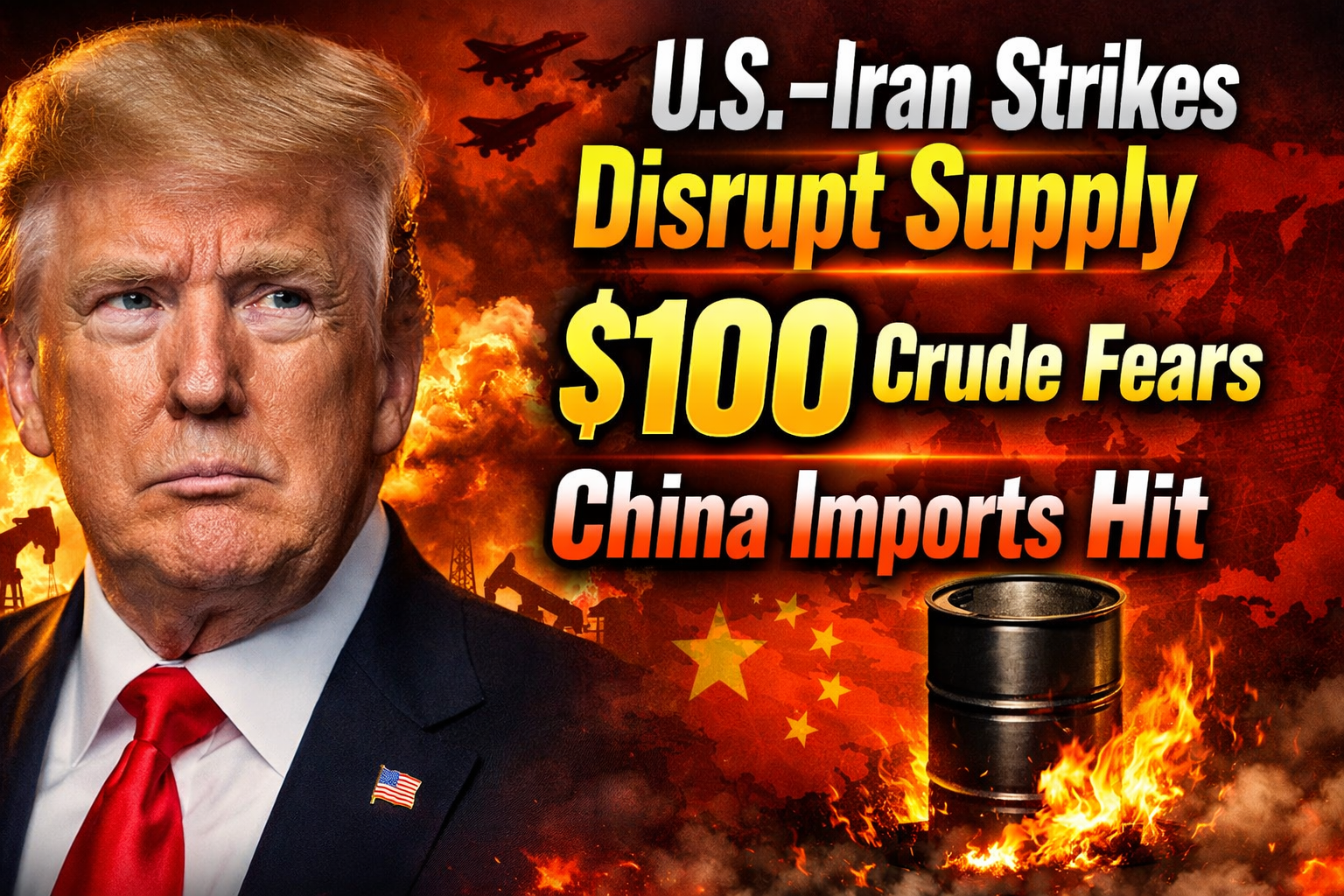
The world awoke to a nightmare on April 10, 2026, when U.S. naval forces launched precision strikes on Iran’s key oil export terminals in the Persian Gulf. What began as a targeted response to escalating drone attacks on Saudi facilities has snowballed into the most severe oil supply shock since the 1979 revolution. Brent crude spiked 18% in hours, flirting with $95 per barrel, while whispers of $100—a psychological barrier not breached since 2022—now dominate trading floors.
For energy-hungry economies, the fallout is brutal. China’s imports, already strained by domestic demand, face their sharpest drop in decades. Refineries idle, shipping lanes clog, and inflation ticks higher worldwide. This isn’t just an oil story; it’s a geopolitical earthquake reshaping trade, security, and daily life from Patna to Beijing.
The Spark: U.S.-Iran Military Escalation
Tensions simmered for months. Iran’s proxy militias ramped up attacks on Gulf shipping, culminating in a barrage that crippled Aramco’s Abqaiq facility, knocking out 5% of Saudi output overnight. The U.S., invoking Article 51 of the UN Charter for self-defense, retaliated with Tomahawk missiles and carrier-based airstrikes on Bandar Abbas and Kharg Island terminals.
Iran’s response was swift: Revolutionary Guard speedboats mined the Strait of Hormuz, halting 20% of global oil flows. Tankers turned back, insurance premiums soared 500%, and supertankers rerouted via Africa’s Cape of Good Hope, adding 15 days and $2 million per voyage in costs. This tit-for-tat has already sidelined 2.5 million barrels per day (bpd) from Iran’s exports, mostly to Asia.
Supply Disruptions in the Strait of Hormuz
The Strait remains the world’s oil jugular, funneling 21 million bpd—enough to fill 1,400 Olympic pools every hour. Strikes damaged three loading buoys at Kharg, Iran’s primary export hub, slashing flows by 1.8 million bpd. Satellite imagery shows over 40 anchored tankers, their cargoes undeliverable amid threats of further mines.
OPEC+ pledged a 1 million bpd release from reserves, but logistics falter. UAE and Kuwaiti ports overload, while Qatar’s LNG shipments compete for scarce slots. Smaller producers like Iraq face secondary disruptions, with Kurdish pipelines halted. The result? A 4 million bpd global shortfall, per initial IEA estimates, pushing spot markets into frenzy.
Crude Prices Surge Toward $100
Markets reacted viscerally. West Texas Intermediate (WTI) jumped from $82 to $94 in a single session, with Brent touching $96.50. Traders eye $100 as Iran’s threats to close the Strait fully could erase 7 million bpd—over 7% of world supply.
Contango flipped to backwardation, signaling scarcity. Hedge funds unwound shorts, amplifying volatility. Goldman Sachs whispers of $110 if disruptions persist two weeks; JPMorgan pegs a $15 premium from geopolitical risk alone. Volatility indexes like OVX hit 50, rivaling COVID peaks.
China’s Import Crisis Deepens
China, guzzling 11 million bpd as the globe’s top importer, bears the brunt. Pre-crisis, it sourced 1.2 million bpd from Iran via “dark fleet” tankers evading sanctions. Now, those flows are zeroed, forcing bids on pricier Russian Urals at $10 over Brent.
State refiners like Sinopec ration crude, idling 15% capacity in Shandong. PetroChina reports 20% stockpile drawdowns, hiking diesel prices 25% and threatening manufacturing. EV mandates offer slim relief—China’s oil demand still grows 3% yearly amid industrial rebound. Beijing’s strategic reserves cover 90 days at current rates, but diplomatic tightrope with Tehran limits options.
Global Ripple Effects
Waves crash everywhere. U.S. pump prices climb toward $5 per gallon, stoking midterm election fires. Europe’s refineries, low on Russian crude since 2022, face blackouts; German industry warns of 2% GDP shave.
Inflation reignites: Oil’s 50% weight in CPI could add 1.5 points globally. Airlines ground fleets—Delta trims 10% flights; shipping firms like Maersk add $1,500 per container surcharges. Renewables cheer indirectly, with solar installs surging 12% in bids for energy security.
India, importing 85% of its oil, sees rupee plunge 4%, diesel at record ₹110/liter. Bihar’s truckers idle, food prices spike 8%. Australia and New Zealand, LNG exporters, bask in windfall gas prices but fret supply chain snarls for coal.
Key Stats and Data Snapshot
| Metric | Pre-Strikes (April 1) | Current (April 17) | Change (%) | Impact Notes |
|---|---|---|---|---|
| Brent Crude ($/bbl) | $82.40 | $94.20 | +14.3 | Nearing $100 fear level |
| Iran Exports (mbpd) | 1.8 | 0.2 | -89 | Terminals 70% offline |
| China Imports (mbpd) | 11.2 | 9.8 | -12.5 | 1.4 mbpd shortfall |
| Strait Flows (mbpd) | 21.0 | 16.5 | -21.4 | 50+ tankers queued |
| Global Spare Capacity (mbpd) | 5.5 | 4.2 | -23.6 | OPEC+ stretched thin |
| U.S. Gasoline ($/gal) | $3.45 | $4.12 | +19.4 | East Coast shortages |
This table highlights the crunch: Spare capacity evaporates as demand holds at 103 million bpd.
Geopolitical Ramifications
Beyond oil, proxy wars intensify. Hezbollah eyes Israeli borders; Houthis blockade Red Sea, doubling Asia-Europe routes. Russia, Iran’s ally, diverts Siberian crude to China at premiums, bolstering its war chest.
U.S.-China frictions mount as Washington pressures Beijing to shun Tehran. Sanctions on “shadow fleet” insurers bite, but enforcement lags. India and Japan, neutral buyers, lobby for exemptions, fracturing alliances.
Long-term, this accelerates de-dollarization: BRICS pushes yuan oil trades, up 15% this year.
Outlook and Mitigation Strategies
Recovery hinges on de-escalation. U.S.-Iran backchannels via Oman flicker, but Supreme Leader rhetoric hardens. IEA’s 120 million barrel release could cap prices at $90 short-term.
Diversification beckons: U.S. shale ramps 500,000 bpd; Brazil’s pre-salt fields hit record 3.5 million bpd. China eyes Venezuelan restarts, while Saudi’s Jafurah gas offsets liquids.
For importers, efficiency rules: Fuel standards tighten, EVs get subsidies. Hedging booms—airlines lock 40% needs at $85. Yet, $100 crude lingers if Hormuz stays choked.
Conclusion
The 2026 oil shock underscores oil’s enduring grip amid green transitions. U.S.-Iran strikes expose fragile supply veins, slamming China and igniting $100 fears. From Patna’s streets to Shanghai factories, pain spreads—urging stockpiles, diplomacy, and renewables. Watch Hormuz: Clearance means relief; closure spells recession. Energy security isn’t abstract; it’s the fuel of tomorrow.

Abhinav Jain is a legal researcher and writer passionate about simplifying complex laws for everyday readers. With a keen interest in Indian constitutional, civil, and digital laws, he focuses on creating accessible, well-researched articles that promote legal awareness among students, professionals, and citizens alike.