
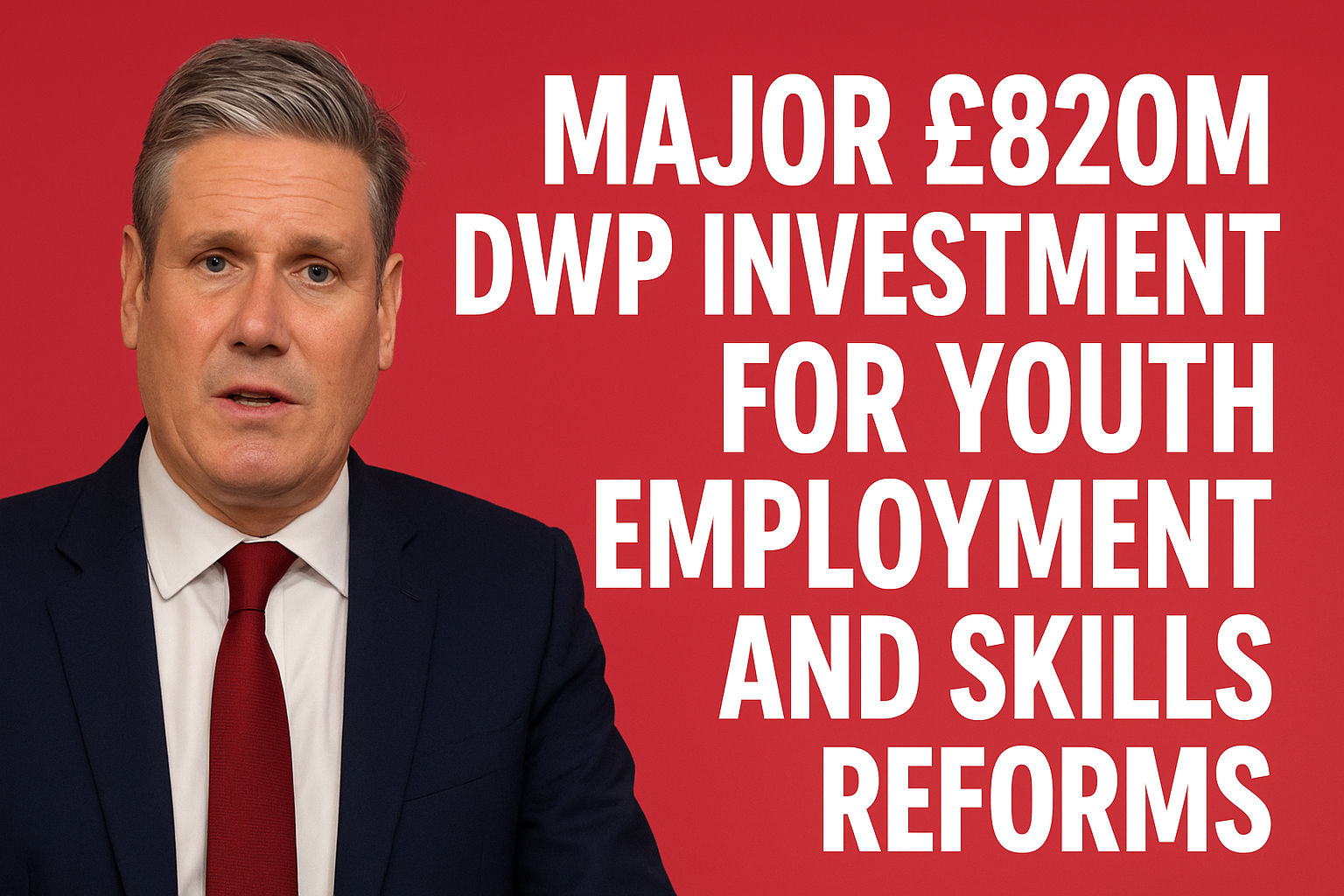
The UK’s Department for Work and Pensions (DWP) has unveiled an ambitious plan to support young jobseekers through new work experience programs set to reach nearly one million participants. This initiative represents one of the largest employment drive efforts in recent years and forms part of the government’s broader strategy to improve youth employability, reduce long-term unemployment, and connect young people to sustainable careers.
With economic shifts, automation, and post-pandemic adaptation reshaping the job market, this large-scale initiative comes at a critical time. It aims to bridge the gap between education and employment by giving young people practical work placements, skill development opportunities, and links to real employers across a wide range of industries.
Overview of the New DWP Work Experience Programs
Program Objectives
The central goal of the DWP’s new network of work experience schemes is to raise youth employment levels and enhance workplace readiness. The department recognizes that a lack of experience is one of the primary barriers preventing young people from securing stable jobs. By partnering with employers, local councils, and job centers, DWP seeks to offer structured, short-term, real-world work experience tailored to regional labor needs.
The new programs focus on three primary outcomes:
- Helping young people develop professional confidence and transferable skills.
- Supporting employers in addressing talent shortages and workforce gaps.
- Strengthening local economies through youth participation and skill alignment.
Key Features of the Initiative
The DWP plans to deliver this initiative nationwide through Jobcentre Plus, working directly with employers to arrange placements in key sectors. Each placement typically lasts between two and eight weeks, offering participants hands-on involvement in real work environments.
Participants will receive:
- Personalized job coaching and mentoring support.
- Access to tailored training modules relevant to their placement sector.
- Continued guidance on CV building, interview skills, and progression routes.
The effort reflects the government’s “back to work” strategy, emphasizing practical experience over classroom-based training, ensuring long-term employability rather than temporary job placement.
Why This Initiative Matters for UK Youth
Tackling Youth Unemployment
Recent figures show that although the UK labor market remains robust, youth unemployment still poses a persistent challenge. Approximately 11 percent of individuals aged 16–24 are unemployed or not in education or training. Many of them cite the same concern: they lack meaningful work experience.
The DWP’s initiative directly confronts this issue by giving youth the one advantage most employers prioritize—hands-on experience backed by professional mentorship. With employers increasingly valuing practical know-how alongside qualifications, this initiative could significantly improve hiring prospects for first-time jobseekers.
Enhancing Social Mobility
One of the most powerful aspects of the new DWP scheme lies in its potential to enhance social mobility. Many young people from disadvantaged backgrounds face extra obstacles—limited networks, fewer professional connections, or restricted access to skill-building opportunities.
By offering free, government-backed placements through Jobcentre Plus, the DWP ensures that all participants, regardless of location or financial background, can access meaningful career pathways. The placements cover multiple sectors—ranging from hospitality, retail, and construction to healthcare, digital, and green technology—ensuring an inclusive distribution of opportunities.
Program Scale and Expected Impact
National Reach
The DWP expects nearly one million young people to benefit over the program’s first phase, marking an unprecedented scale for youth employment initiatives in the UK.
| Metric | Target | Duration | Description |
|---|---|---|---|
| Total Beneficiaries | ~1 Million youth | 2025–2027 | Phased implementation through Jobcentre Plus and local councils |
| Work Placements Offered | 800,000+ | Across UK regions | Opportunities in public and private sectors |
| Employer Partnerships | 15,000+ | Nationwide | Small, medium, and large enterprises part of initiative |
| Training Modules Delivered | 200,000 Courses | Linked to sectoral demand | Includes digital, construction, customer service, and logistics |
| Regional Coverage | All UK regions | 100+ local networks | Focus on high youth unemployment areas |
This plan also strategically aligns with regional labor data to target regions where unemployment rates are above average, such as parts of Northern England, the Midlands, and coastal communities.
Long-term Economic Outcomes
The DWP estimates that each young person gaining six to eight weeks of practical work experience improves their employability rate by around 40 percent compared to those who have no workplace exposure. Over time, this could reduce long-term youth unemployment claims and boost overall productivity.
In addition, each successful placement reduces public spending on benefits while increasing local economic activity. Studies show that every £1 invested in well-designed youth employment programs can yield up to £3 in economic returns through higher wages, improved tax contributions, and reduced welfare dependency.
Collaboration Between DWP, Employers, and Local Authorities
A major reason for the program’s scale is the collaboration between public and private sectors. The DWP has partnered with a broad range of organizations, including small businesses, multinational firms, and public sector employers.
Employer Incentives
Employers participating in the work experience scheme also gain valuable support. In addition to access to motivated young talent, some may qualify for government-backed training grants or national insurance incentives.
These partnerships are designed to:
- Encourage long-term placements that lead to apprenticeships or full-time roles.
- Support training tailored to industry demand.
- Strengthen community ties by linking employers with local job centers.
Local Councils’ Role
Local councils coordinate with Jobcentre Plus to identify skills gaps within their areas and match suitable young candidates. Each region may prioritize sectors most relevant to its economy—for example, renewable energy in coastal regions or logistics in industrial hubs.
This level of coordination allows the scheme to be flexible, inclusive, and region-specific rather than a one-size-fits-all national program.
Empowering Future Careers Through Skills Development
Building Transferable Skills
Work experience placements emphasize both hard and soft skill development. Participants not only gain professional exposure but also acquire critical employability traits such as communication, teamwork, punctuality, and initiative.
Many placements will include digital literacy and customer service modules—both listed among the top five most in-demand skills in the UK’s 2025 job market outlook. With industries increasingly leaning towards hybrid and tech-enabled operations, even short placements can give young people a competitive edge.
Linking Experience to Qualification Pathways
The DWP has also aligned this program with apprenticeship and further education frameworks. After completing their work experience, participants can progress into paid apprenticeships, sector-based work academies, or higher vocational training supported by funding from the Education and Skills Funding Agency.
By connecting these pathways, the government ensures that work experience does not remain a temporary fix but becomes a bridge to sustained employment and skill progression.
Comparing the New Scheme to Previous Initiatives
While this program builds on earlier job schemes like Kickstart, there are important differences in structure and focus.
| Aspect | Kickstart Scheme | New DWP Work Experience Program |
|---|---|---|
| Target Group | 16–24 on Universal Credit | Broader youth base, including NEET individuals |
| Duration | 6 months | 2–8 weeks initial placement |
| Type of Experience | Paid job placement | Unpaid but with structured mentoring and training |
| Employer Incentive | Wage reimbursement | Training support and recruitment assistance |
| Framework | Temporary COVID-era policy | Core part of ongoing employment strategy |
The new program is designed for durability, learning from the challenges of previous initiatives while adding flexibility for employers and scalability for government delivery.
Challenges and Opportunities Ahead
While the objectives are ambitious, successful delivery will depend on strong partnerships, consistent funding, and sustained engagement from both youth and employers. Some key challenges include ensuring placements lead to real career progression and maintaining quality standards across employers.
However, the opportunities outweigh the risks. With close to a million beneficiaries, the initiative could transform employment outcomes for an entire generation, reduce dependency on benefits, and strengthen local labor markets through renewed participation.
The Bigger Economic and Social Picture
Youth employment plays a vital role in long-term national growth. In the UK, over 15 percent of total productivity potential lies untapped within the 16–25 age group due to underemployment or lack of access to quality opportunities. Programs like the DWP’s new work experience effort serve as a strategic economic investment—building both the workforce of the future and the confidence of a new generation.
Beyond the immediate benefits, such initiatives foster stronger communities, lower crime rates, and increase civic participation by empowering young people to see long-term prospects within their own regions rather than seeking opportunity elsewhere.
Conclusion
The DWP’s decision to launch large-scale work experience programs for nearly one million young people represents a bold and timely response to the evolving labor landscape. By prioritizing practical experience, mentoring, and direct employer engagement, the initiative promises to transform how young people enter and navigate the world of work.
This program not only addresses unemployment challenges but also builds a more resilient, skilled, and confident generation ready to contribute to the UK’s growth story. As implementation begins, its long-term success will likely be measured not just by participant numbers, but by the quality of opportunities and the sustainability of careers it helps create.

Abhinav Jain is a legal researcher and writer passionate about simplifying complex laws for everyday readers. With a keen interest in Indian constitutional, civil, and digital laws, he focuses on creating accessible, well-researched articles that promote legal awareness among students, professionals, and citizens alike.