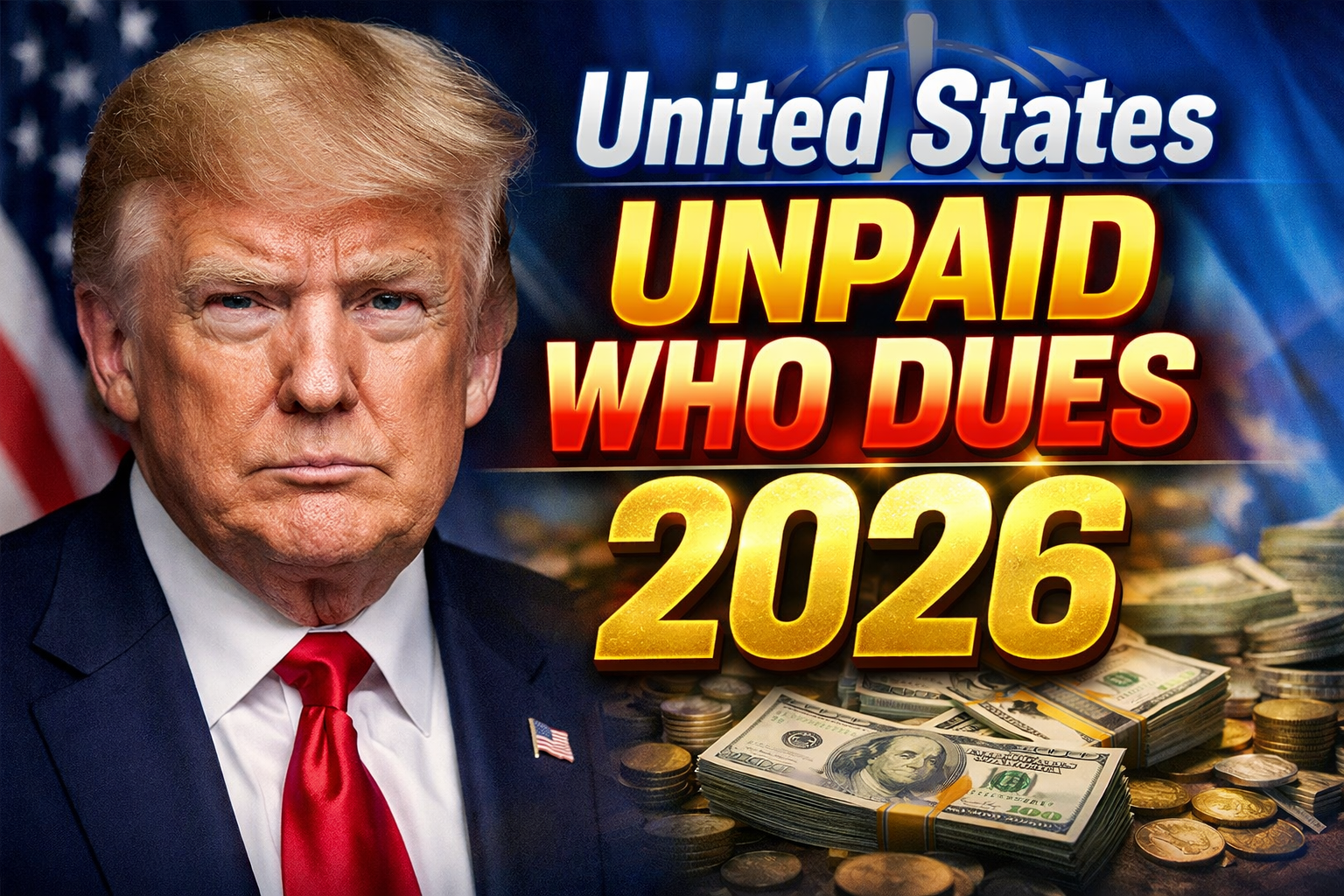
The United States’ decision to halt payments to the World Health Organization in 2026 has created a financial crisis for the global health body, leaving hundreds of millions in unpaid dues amid its formal withdrawal. This move, fulfilling campaign promises by President Trump, disrupts decades of U.S. leadership in international public health while sparking debates over sovereignty, accountability, and global equity.
Historical Context of U.S.-WHO Funding
For over seven decades, the U.S. has been the largest contributor to the WHO, providing both mandatory assessed contributions based on economic capacity and substantial voluntary funds for specific programs. Assessed dues, calculated by a UN formula considering GDP and population, cap at 22 percent for the U.S., amounting to roughly 110 million dollars annually in recent years. Voluntary contributions, often exceeding 500 million dollars yearly, supported initiatives like polio eradication, pandemic preparedness, and HIV/AIDS response.
This funding model positioned the U.S. as accounting for 15-18 percent of WHO’s total budget in recent bienniums, dwarfing contributions from other nations. Critics long argued this imbalance allowed undue U.S. influence, while supporters highlighted reciprocal benefits in disease surveillance and outbreak prevention that protected American shores.
Timeline of U.S. Withdrawal and Non-Payment
The saga began with President Trump’s first-term criticism of WHO’s COVID-19 handling, leading to a funding freeze in 2020 and withdrawal notice, later reversed by President Biden. Upon Trump’s 2025 reelection, an executive order on inauguration day recommenced the exit process, citing mismanagement and China favoritism. Formal notification occurred in January 2025, triggering a one-year withdrawal period under WHO rules.
By mid-2025, assessed dues for the 2026-27 biennium, totaling around 260 million dollars including arrears, went unpaid. Voluntary pledges evaporated, stranding programs mid-stream. On January 22, 2026, the U.S. officially exited, coinciding with the one-year mark, without settling obligations. WHO’s February executive board meeting addressed the gap, but no resolution emerged as arrears accrued interest.
| Key Dates | Event Description |
|---|---|
| January 2025 | Trump issues executive order to withdraw from WHO |
| May 2025 | WHO approves 20% dues increase; U.S. skips assessed payment |
| July-December 2025 | Voluntary funds dry up; arrears reach 150 million dollars |
| January 22, 2026 | U.S. withdrawal effective; total unpaid dues exceed 260 million dollars |
| February 2026 | WHO board debates U.S. status; other members urged to cover shortfall |
This timeline reveals a deliberate strategy to leverage non-payment as leverage during exit.
Legal Basis for U.S. Obligations
U.S. law under the United Nations Participation Act of 1945 binds the country to honor international organization dues upon congressional appropriations. Annual foreign operations bills allocate WHO payments, with arrears prohibited beyond certain thresholds without presidential waiver. The International Organizations Immunities Act further mandates settlement before withdrawal from entities like WHO.
Trump administration officials invoked national security exceptions and executive discretion over foreign aid, arguing WHO’s flaws voided obligations. Legal scholars counter that treaties, ratified via Senate advice and consent, create binding financial commitments absent formal abrogation. No congressional vote repudiated dues, leaving payments in limbo.
Court Challenges and Litigation
Immediately post-withdrawal, WHO allies and U.S.-based NGOs filed suits in federal courts, claiming breach of contract and violation of appropriations law. The primary case, brought by health advocacy groups, seeks injunctions for payment and reinstatement, alleging 260 million dollars in arrears harm U.S. interests via weakened global surveillance.
The Justice Department moved to dismiss, citing sovereign immunity and political question doctrine, arguing courts defer to executive foreign policy. A district judge in New York temporarily froze related assets in February 2026, but appeals stayed enforcement. International lawyers at the ICJ considered advisory opinions on dues enforcement, though binding power over the U.S. remains nil.
Concurrent state-level actions by California and New York attorneys general challenge federal non-payment, framing it as dereliction of public health duties. Resolution may drag into 2027, with Supreme Court review likely.
Financial Impact on WHO Operations
Unpaid U.S. dues represent over 12 percent of WHO’s 4.2 billion dollar 2026-27 budget, forcing 15-20 percent program cuts. Emergency response teams shrank, delaying Ebola monitoring in Africa and mpox containment. Polio eradication, 99 percent complete, stalled vaccinations in Afghanistan and Pakistan.
Core functions like disease outbreak notices and technical assistance suffered, with staff furloughs affecting 500 positions. WHO shifted to emergency appeals, securing pledges from Germany, Japan, and the Gates Foundation, but gaps persist at 300 million dollars projected by mid-year.
| Funding Category | Pre-U.S. Exit (Biennial) | Post-Withdrawal Projection | Shortfall Impact |
|---|---|---|---|
| Assessed Contributions | 956 million dollars | 700 million dollars | 25% drop; core budget strained |
| Voluntary Total | 6.9 billion dollars | 5.5 billion dollars | Specific programs halved |
| U.S. Share | 1.2 billion dollars | Zero | Emergency response cut 30% |
Worldwide Health Consequences
Developing nations bear the brunt, with vaccine distribution halting in 40 countries and maternal health grants slashed. Outbreaks in sub-Saharan Africa escalated without timely warnings, projecting 50,000 excess deaths from preventable diseases by year-end. Asia’s flu surveillance weakened, risking global pandemics.
Europe and allies ramped contributions, but cannot fully compensate. China’s rising dues, now second-largest, grant Beijing influence via earmarked funds for Belt and Road health projects. Non-aligned states decry politicization, eroding WHO neutrality.
U.S. Domestic Repercussions
Withdrawal severs access to WHO data streams critical for CDC border screenings, complicating responses to avian flu variants. Pharmaceutical firms lose coordinated trials, delaying drug approvals. Travel industry faces quarantines sans international standards, costing billions.
Public health experts warn of inbound threats: a hypothetical H5N1 resurgence could overwhelm without global early warning. States like California independently fund WHO-linked programs, fragmenting efforts.
Geopolitical Ramifications
The move signals eroding U.S. soft power, emboldening rivals. Russia and China position as health leaders, funding WHO alternatives like the Wuhan lab network. G7 cohesion frays as Canada and UK criticize, while India hedges with bilateral deals.
Global south nations, reliant on U.S.-backed aid, pivot to BRICS health initiatives, fragmenting standards. Long-term, multilateralism wanes, fostering parallel systems.
Economic Dimensions of Non-Payment
Arrears accrue penalties under WHO constitution, potentially barring U.S. reentry without full settlement plus interest. U.S. firms face retaliatory barriers in foreign markets, from drug tenders to medical device approvals. Global supply chains disrupt as WHO certifications lapse.
Quantified losses: U.S. exporters forfeit 2 billion dollars in health contracts annually; pandemic preparedness gaps cost 10 times unpaid dues in averted crises.
Pathways to Resolution
Congress could appropriate back payments via supplemental bills, conditioning on reforms. Bipartisan resolutions urge dialogue, proposing “associate” status with limited funding. WHO investment case highlights returns: every dollar yields 10 in health savings.
Trump administration explores bilateral health pacts with allies, bypassing WHO.
Expert Perspectives and Criticisms
Public health leaders like former CDC directors decry “self-inflicted wound,” predicting vulnerability spikes. Conservative think tanks applaud fiscal restraint, advocating private-sector alternatives. Neutral analysts project 20 percent WHO efficacy drop, urging diversified funding.
Polls show divided opinion: 45 percent support exit for savings, 50 percent favor engagement.
Future Scenarios
Optimistic: Midterm pressures prompt partial resumption, stabilizing WHO. Pessimistic: Arrears balloon to 500 million dollars, triggering collapse and regional health silos. Hybrid: U.S. funds via proxies, maintaining influence sans membership.

Abhinav Jain is a legal researcher and writer passionate about simplifying complex laws for everyday readers. With a keen interest in Indian constitutional, civil, and digital laws, he focuses on creating accessible, well-researched articles that promote legal awareness among students, professionals, and citizens alike.