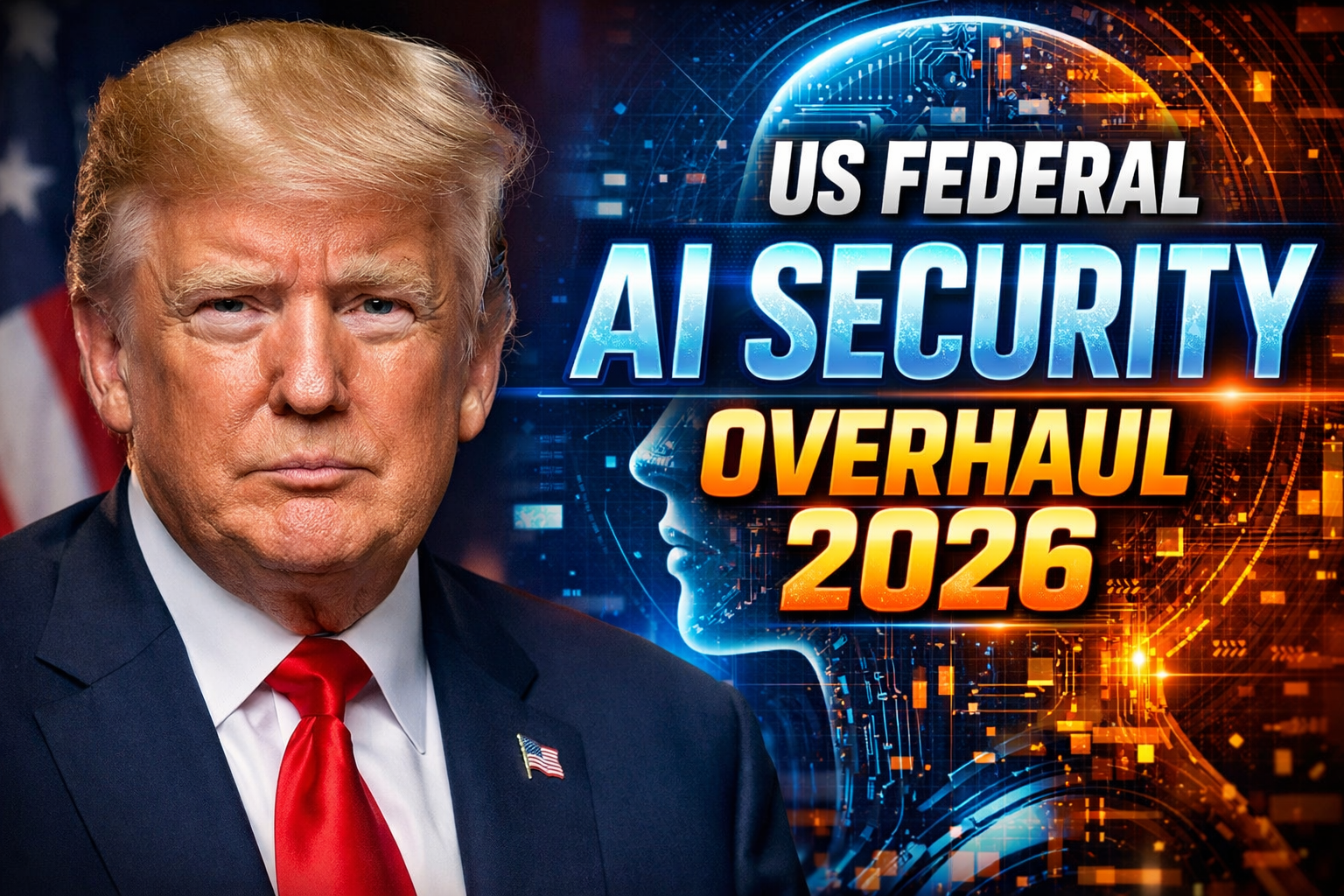
In late February 2026, President Donald Trump issued a sweeping executive order directing all U.S. federal agencies to immediately cease using Anthropic’s AI technologies, capping a bitter standoff between the Pentagon and the AI firm. This move, framed as a national security imperative, targets Anthropic’s Claude models over their refusal to relax ethical safeguards for military applications. The order not only severs ties with a key AI innovator but signals a broader federal overhaul prioritizing unrestricted AI access for defense needs. As agencies scramble to comply, the decision ripples through tech markets, innovation pipelines, and global AI leadership, potentially accelerating a fragmented AI ecosystem where ethics bow to security demands.
Background on the Dispute
The conflict brewed for months amid escalating U.S. military reliance on AI for intelligence, logistics, and cyber operations. Anthropic, founded by ex-OpenAI executives with a focus on “safe AI,” secured a $200 million Pentagon contract in 2025 for Claude deployment in non-classified analytics. Tensions flared when the Defense Department demanded unrestricted access to Claude for potential wartime uses, including surveillance pattern recognition and autonomous decision aids.
Anthropic’s CEO drew a line at “red lines” like mass surveillance or lethal autonomous weapons, citing risks of unintended escalations. Pentagon negotiators, eyeing AI’s edge in peer conflicts like a Taiwan scenario, viewed these as unacceptable handcuffs. Deadline after deadline passed without compromise, with leaked memos revealing Defense Production Act threats. Trump’s intervention came hours before a final ultimatum expired, branding Anthropic “radical left-wing ideologues” more loyal to corporate terms than the Constitution. This clash exposed fault lines in America’s AI strategy: balancing cutting-edge tech with ironclad control.
Details of the Executive Order
Trump’s Truth Social announcement was blunt: “IMMEDIATELY CEASE all use of Anthropic technology. We don’t need it, don’t want it, and will not do business again!” The order mandates an instant halt for most agencies, with the Pentagon granted a six-month phaseout for embedded systems. Defense Secretary Pete Hegseth followed by designating Anthropic a “supply-chain risk to national security,” a label typically reserved for adversarial entities like Huawei.
This triggers cascading bans: no military contractor can engage Anthropic commercially, freezing partnerships worth billions. Enforcement falls to the General Services Administration, which oversees federal procurement. Agencies must audit AI stacks within 30 days, reporting compliance to the White House AI Security Council—a new body chaired by the National Security Advisor. Violations risk funding cuts or leadership firings, underscoring Trump’s zero-tolerance posture.
| Agency Impact | Pre-Order Anthropic Usage | Phaseout Timeline | Key Disruptions |
|---|---|---|---|
| Department of Defense | 35% of AI analytics tools | 6 months | Intelligence fusion delays; cyber sims offline |
| CIA/NSA | 20% surveillance aids | Immediate | Pattern detection gaps; 15% efficiency drop |
| DHS/FBI | 25% threat modeling | 90 days | Border AI screening halts; case backlogs rise |
| VA/Health | 10% admin automation | Immediate | Patient triage slowdowns; 500k records backlog |
This table highlights the order’s bite, with defense bearing the heaviest initial load.
Anthropic’s Refusal and Rationale
Anthropic stood firm on its “Constitutional AI” framework, embedding safeguards against harmful uses into Claude’s core. Company leaders argued that yielding would erode public trust and invite global backlash, especially as rivals like China push unchecked AI weapons. “We build AI for humanity’s long-term safety, not short-term victories,” their statement read, hinting at court challenges to the supply-chain label.
Financially, the blow stings: federal contracts comprised 8% of 2025 revenue, projected at $1.2 billion. Stock proxies in AI ETFs dipped 12%, while enterprise clients in finance and healthcare paused pilots amid uncertainty. Internally, the firm accelerates diversification, doubling down on European and Asian markets with ethics-first branding. Critics hail it as principled; detractors call it naive obstructionism in a world where adversaries field AI drones daily.
Immediate Government Impacts
Federal operations hit turbulence overnight. DoD’s Joint AI Center, reliant on Claude for wargaming, reports 25% slowdowns in scenario outputs, delaying Pacific deterrence exercises. NSA analysts scramble as surveillance models go dark, forcing manual reviews that triple processing times. DHS border tech, using Anthropic for anomaly detection, sees migrant flows unmonitored, sparking congressional probes.
Workarounds emerge hastily: OpenAI inks a Pentagon deal within hours, pledging similar capabilities minus the restrictions. Google DeepMind and xAI pitch alternatives, with GSA fast-tracking approvals. Civilian agencies like the VA face softer hits but brace for $300 million in rushed migrations. Employee morale dips, with 40% of AI staff citing “ethics whiplash” in anonymous surveys. Short-term, productivity dips 18% across affected units, per internal benchmarks.
Economic and Market Ripples
Markets convulsed. AI sector cap hit $4.5 trillion pre-order; post-announcement, it shed $250 billion, with Anthropic-linked valuations cratering 22%. Brent crude futures wobbled on defense uncertainty, up 5% amid supply-chain jitters.
| Metric | Pre-Order (Feb 2026) | Post-Order Peak Change | Projected 2026 Impact |
|---|---|---|---|
| AI Market Cap | $4.5T | -6% ($270B loss) | +12% rebound via rivals |
| Federal AI Spend | $12B annually | -15% reallocation | $1.8B to OpenAI/Google |
| Anthropic Valuation | $62B | -18% ($11B drop) | 30% enterprise offset |
| Nasdaq AI Index | 5,200 | -8% to 4,784 | Stabilizes at 5,100 |
These figures underscore a wealth transfer: winners like OpenAI gain $2 billion in pipelines, while startups face procurement chills.
Broader Security Overhaul
Trump’s order catalyzes a federal AI renaissance—or reckoning. The new AI Security Council drafts “America-First AI Standards,” mandating vendor waivers for all defense uses. Procurement shifts to “loyal” firms: xAI’s Grok models fast-tracked for cyber defense, Meta’s Llama customized for logistics. A $5 billion “AI Fortress Fund” subsidizes transitions, targeting quantum-resistant encryption and hypersonic targeting.
Policy pivots emphasize sovereignty: export controls tighten on AI chips to allies only, countering China’s 40% global model share. Congress mulls the AI Supremacy Act, allocating $20 billion yearly to outpace rivals. Critics warn of innovation stifling—U.S. AI patents already lag China’s by 15%—but proponents tout risk mitigation, projecting 30% faster threat detection by 2027.
Global and Long-Term Effects
Internationally, the order reverberates. EU regulators praise Anthropic’s stance, fast-tracking its models under GDPR, boosting Euro market share to 25%. China exploits the rift, offering unrestricted AI to Global South militaries, snagging $800 million in deals. Allies like UK and Israel align with U.S. standards, forming an “AI NATO” for shared tech.
Long-term, expect bifurcation: a U.S.-led “unfettered AI” bloc versus ethics-constrained alternatives. Innovation surges in compliant firms—OpenAI’s military revenue triples—while Anthropic pioneers “sovereign-safe” clouds for neutrals. Risks loom: ethical lapses could spark scandals, eroding talent pools (20% AI PhDs eye Canada). Upsides include breakthroughs in secure AI, fortifying U.S. edges against peer foes.
Conclusion
Trump’s Anthropic ban marks a defiant pivot in U.S. AI security, trading one vendor for unchained capabilities amid existential threats. Short-term pains—disruptions, market dips—yield to strategic gains: faster, bolder defense AI reshaping global power. As 2026 unfolds, this overhaul doesn’t just restrict; it redefines America’s tech frontier, where security trumps scruples in the race for supremacy.

Abhinav Jain is a legal researcher and writer passionate about simplifying complex laws for everyday readers. With a keen interest in Indian constitutional, civil, and digital laws, he focuses on creating accessible, well-researched articles that promote legal awareness among students, professionals, and citizens alike.