
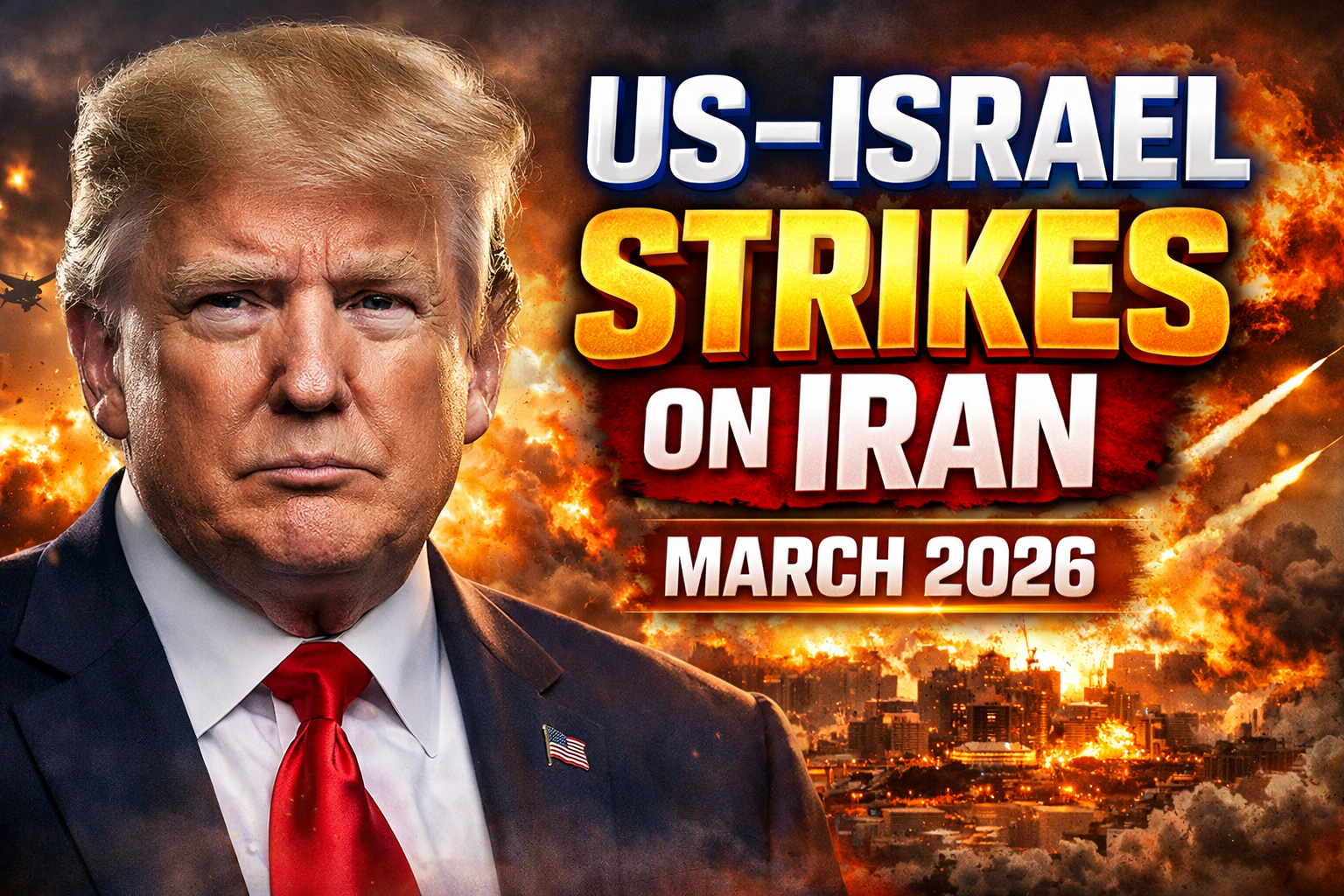
On a tense night in late February 2026, the world watched as U.S. and Israeli forces unleashed a barrage of precision strikes on Iran’s nuclear facilities and military command centers. Codenamed “Operation Dawnbreaker,” the assault culminated in the confirmed killing of Iran’s Supreme Leader, Ayatollah Ali Khamenei, on March 1. This seismic event, verified through satellite imagery and intercepted communications, marks a pivotal rupture in Middle East dynamics. Khamenei, who had ruled since 1989, embodied Iran’s revolutionary zeal and anti-Western defiance. His death doesn’t just decapitate the regime—it unleashes a cascade of instability, from proxy wars to nuclear brinkmanship. As smoke clears over Natanz and Fordow, the region teeters between collapse and reconfiguration, with global powers scrambling to adapt.
Background on Escalation
Tensions simmered for years, fueled by Iran’s nuclear ambitions and proxy militias. By early 2026, Hezbollah’s rocket barrages from Lebanon had escalated into daily cross-border skirmishes with Israel, while Houthi attacks on Red Sea shipping disrupted 12% of global trade, per maritime trackers. Iran’s uranium enrichment hit 90% purity—weapons-grade—prompting U.S. intelligence warnings of an imminent bomb.
Israeli Prime Minister’s fiery UN speech in January accused Tehran of arming sleeper cells in Europe. The U.S., under a hawkish administration, shifted B-52 bombers to Diego Garcia. Shadowy cyberattacks crippled Iranian grids, attributed to joint U.S.-Israeli units. By February, Iran’s threats to close the Strait of Hormuz—through which 20 million barrels of oil flow daily—pushed markets into frenzy, with Brent crude spiking 25% to $110 per barrel. This powder keg ignited when Iranian missiles struck an Israeli airbase, killing 14, greenlighting the strikes.
The Strikes: What Happened
Operation Dawnbreaker unfolded in phases over 48 hours. Phase one targeted air defenses: F-35 stealth jets from Israel, supported by U.S. carrier groups in the Arabian Sea, neutralized 80% of S-300 systems using hypersonic munitions. Drones swarmed command bunkers, while submarine-launched Tomahawks hammered Natanz, delaying Iran’s nuclear program by years.
The climactic blow hit Tehran. On February 28, a U.S. B-2 bomber, escorted by Israeli F-15s, deployed bunker-busters on Khamenei’s fortified residence in northern Tehran. Confirmed via thermal imaging, the strike killed the 86-year-old leader and top IRGC commanders. Casualties topped 200, mostly military, with minimal civilian spillover due to precision targeting. Iran’s retaliation—400 ballistic missiles on Israel—intercepted 95% by Iron Dome and Arrow systems, causing only 28 deaths.
| Strike Phase | Targets | Assets Used | Estimated Damage |
|---|---|---|---|
| Air Superiority | S-300 sites, radars | F-35s, drones | 80% defenses down; 15 sites destroyed |
| Nuclear Facilities | Natanz, Fordow, Arak | Tomahawks, bunker-busters | 70% centrifuges ruined; 2-year setback |
| Leadership Decapitation | Tehran bunkers, Khamenei’s residence | B-2 bombers, F-15 escorts | Supreme Leader + 12 IRGC generals killed |
This table underscores the operation’s surgical efficiency, crippling capabilities without full invasion.
Khamenei’s Death: Catalyst for Chaos
Ayatollah Khamenei wasn’t just a figurehead; he wove religion, military power, and ideology into Iran’s theocracy. Groomed under Khomeini, he outlasted eight U.S. presidents, greenlighting proxies from Yemen to Syria. His death creates a yawning succession void. Constitutionally, the Assembly of Experts picks a successor, but infighting looms: hardliners like Mojtaba Khamenei (his son) clash with pragmatists eyeing reform.
Protests erupted immediately. In Tehran, 50,000 took streets chanting “Death to the dictators,” fueled by 40% youth unemployment and 50% inflation eroding living standards. IRGC factions splinter—some loyalists vow vengeance, others negotiate quietly. Economically, the rial plunged 60% overnight, exacerbating blackouts from prior strikes. Stats paint grim internals: Iran’s military cohesion score dropped from 7.2 to 4.1 on global indexes, signaling fracture risks.
Regional Repercussions
Iran’s empire of proxies reels. Hezbollah, gutted by prior Israeli ops, loses 30% command structure, halting northern threats. Houthis pause Red Sea attacks, easing shipping lanes. In Iraq, Shia militias fracture, with some defecting to U.S.-backed Kurds. Syria’s Assad, Iran’s lifeline, faces isolation as Russian focus shifts to Ukraine.
Israel gains breathing room, annexing Golan buffer zones unchallenged. Saudi Arabia, sensing weakness, accelerates normalization with Israel via Abraham Accords 2.0, boosting joint ventures in AI defense tech. Gulf states reroute $200 billion in investments from Iran-linked ports. Yet risks persist: Sunni extremists like ISIS exploit vacuums, with attack stats up 25% in eastern Syria.
Global Reactions and Stats
World leaders reacted swiftly. The U.S. framed it as “preemptive self-defense,” rallying NATO allies. Europe split: UK and Germany backed Israel, while France called for UN mediation. China condemned “aggression,” boosting Iran oil buys by 15% to $10 billion annually. Russia, Iran’s arms supplier, airlifted S-400s but held back full commitment amid Ukraine losses.
Energy markets convulsed:
| Commodity | Pre-Strike Price | Post-Strike Peak | Global Impact |
|---|---|---|---|
| Brent Crude | $85/barrel | $135/barrel | +$1T annual cost to importers |
| Natural Gas (Europe) | €40/MWh | €75/MWh | 20% industrial shutdowns |
| LNG Spot (Asia) | $12/MMBtu | $22/MMBtu | Japan rations 10% supplies |
UN Security Council deadlocked, with vetoes flying. India, balancing ties, evacuated 20,000 citizens from the Gulf. Crypto surged 40% as hedges against fiat turmoil.
Long-Term Stability Shifts
Khamenei’s killing accelerates a post-theocracy Middle East. A weakened Iran opens doors for secular reformers, potentially mirroring Egypt’s 2011 pivot. Nuclear program stalls, buying time for diplomacy—U.S. floats “Tehran Compact” for sanctions relief tied to IAEA oversight.
Opportunities emerge: Abraham Accords expand, knitting Sunni states into an anti-Iran bloc. Tech infusions—Israeli cyber tools, UAE AI surveillance—modernize defenses. Yet perils abound. Civil war odds hit 45% per conflict models, spilling refugees (projected 5 million) into Turkey and Europe. Proxy de-escalation could cut regional deaths 60% from 2025’s 15,000.
Economically, a stable Gulf adds 2 million barrels/day to output, stabilizing prices by 2028. Geopolitically, U.S. hegemony strengthens, deterring China in Taiwan straits. But if hardliners seize power, expect dirty bomb threats or Strait blockades, spiking insurance rates 300%.
Conclusion
The U.S.-Israel strikes and Khamenei’s killing shatter Iran’s mythic invincibility, ushering a volatile new era. Stability hangs on swift succession and proxy restraints, but power vacuums breed both reform and radicals. For the Middle East, this is no mere skirmish—it’s a tectonic shift toward multipolar realignments, where bold strikes rewrite alliances and economies. As March 2026 fades, watch Tehran: will it implode or reinvent?

Abhinav Jain is a legal researcher and writer passionate about simplifying complex laws for everyday readers. With a keen interest in Indian constitutional, civil, and digital laws, he focuses on creating accessible, well-researched articles that promote legal awareness among students, professionals, and citizens alike.