
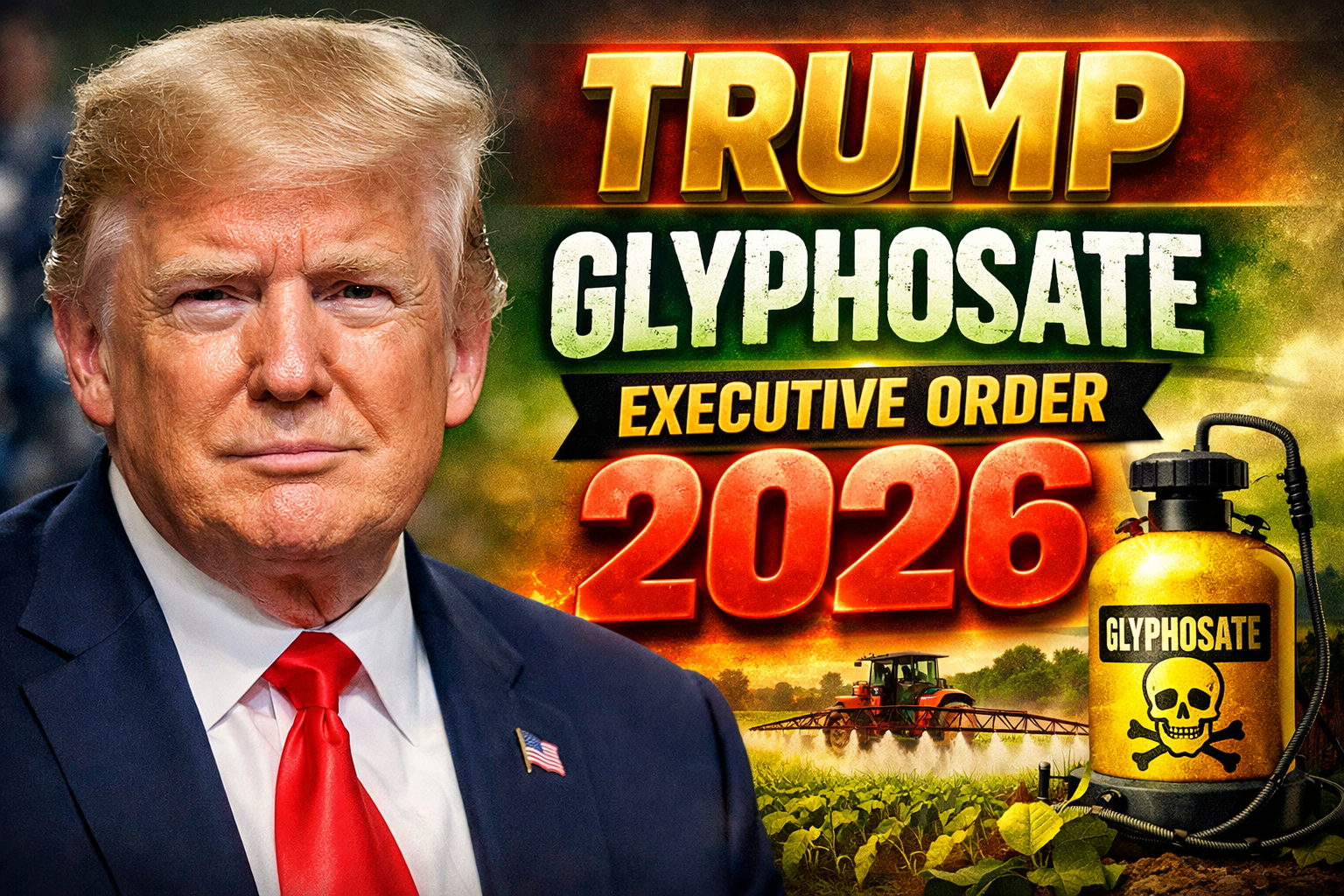
President Trump’s February 2026 executive order declaring glyphosate a national security priority has ignited fierce debate over America’s food supply. RFK Jr.’s vocal opposition underscores deepening rifts within conservative health circles, challenging the administration’s agricultural stance.
Executive Order Details
On February 18, 2026, President Trump invoked the Defense Production Act through Executive Order titled “Promoting the National Defense by Ensuring an Adequate Supply of Elemental Phosphorus and Glyphosate-Based Herbicides.” The directive classifies glyphosate production as critical infrastructure alongside munitions phosphorus, directing USDA to prioritize domestic manufacturing.
The order mandates federal agencies to expedite permits, funding, and contracts favoring U.S. producers like Bayer’s Roundup operations. It shields compliant manufacturers from certain liabilities while countering perceived foreign supply threats from China.
Glyphosate’s Widespread Use
Glyphosate, the active ingredient in Roundup, dominates global herbicide markets, applied to over eighty percent of U.S. corn and soy acres. Introduced by Monsanto in 1974, its patent expired in 2000, spawning generic competition. Farmers praise its efficacy against weeds, enabling no-till practices that preserve soil carbon.
Annual U.S. usage exceeds three hundred million pounds, generating billions in agricultural productivity. Critics highlight residues in seventy-five percent of conventional foods, prompting calls for stricter tolerances.
RFK Jr.’s Fiery Opposition
Robert F. Kennedy Jr., Trump’s HHS nominee championing “Make America Healthy Again,” denounced the order as industry capture. Labeling glyphosate “the most toxic chemical in agriculture,” RFK Jr. rallied MAHA supporters against perceived betrayals of anti-corporate promises. Social media erupted with boycotts targeting Roundup retailers.
Kennedy demands immediate EPA bans, citing non-Hodgkin’s lymphoma links from International Agency for Research on Cancer classifications. His platform amplifies lawsuits exceeding sixty thousand claims against Bayer.
National Security Justification
Administration officials frame glyphosate alongside phosphorus as dual-use essentials—herbicides for food security, phosphorus for ammunition. Chinese dominance in phosphorus refining threatens military stockpiles amid escalating Pacific tensions. Supply chain vulnerabilities exposed during COVID validate Defense Production Act mobilization.
White House fact sheets emphasize farmer input shortages crippling yields, positioning domestic production as sovereignty defense.
| Component | Agricultural Role | Defense Link |
|---|---|---|
| Glyphosate | Weed control | Food security |
| Elemental Phosphorus | Fertilizer precursor | Munitions/incendiaries |
| Supply Threat | China 85% market | Taiwan contingencies |
Dual-purpose strategic framing.
Bayer and Agribusiness Support
Bayer welcomes regulatory clarity, facing settlement pressures from Roundup litigation totaling billions. The order potentially grants immunity for federally-directed production, easing balance sheet strains. American Farm Bureau cheers supply assurances amid trade wars.
CropLife America highlights glyphosate’s irreplaceable role, warning alternatives spike food prices fifteen percent. Rural economies dependent on commodity monocultures view restrictions as existential threats.
Environmental Health Concerns
Waterkeeper Alliance decries water contamination, with glyphosate detected in ninety percent of major rivers. Runoff fuels algal blooms devastating fisheries worth billions. Endocrine disruption studies link low-dose exposures to frog sex changes and mammal infertility.
Midwestern dead zones expand from fertilizer phosphorus synergies, costing Gulf Coast economies two billion dollars yearly. Organic advocates demand regenerative transitions.
Legal Shield Controversies
Critics warn the order preempts state tort claims and warning label mandates, insulating Bayer from juries awarding billions. Over sixty thousand lawsuits allege failure-to-warn on cancer risks, with verdicts exceeding ten billion dollars pre-settlements.
Environmental groups prepare federal challenges, arguing Defense Production Act abuses dilute public health safeguards.
EPA Reevaluation Timeline
EPA’s glyphosate reregistration concludes August 2026, weighing eight thousand studies. Previous 2020 approval deemed safe; current review incorporates court-mandated cancer data. Executive order pressures swift reapproval, potentially sidelining dissent.
California’s Prop 65 listing as carcinogen contrasts federal tolerance of one point three seven five milligrams per kilogram in grains.
Global Usage Comparisons
Europe restricts glyphosate to professional use, phasing non-agricultural applications by 2023. Sri Lanka’s 2021 ban preceded economic collapse, validating yield concerns. Brazil permits broad use despite environmentalist opposition.
EU maximum residue limits average ten times stricter than U.S. standards.
| Region | Max Residue (ppm) | Usage Restrictions |
|---|---|---|
| USA | 1.375 (grains) | Broad approval |
| EU | 0.1 (most foods) | Pro renewal 2033 |
| Brazil | 0.2 (most) | Aerial bans |
| Sri Lanka | Banned | Economic fallout |
Regulatory divergence worldwide.
Farm Economics at Stake
No-glyphosate scenarios project corn yields dropping twenty percent, inflating consumer prices eight percent per USDA models. Transition costs burden smallholders lacking capital for cover crops. Precision sprayers and biological alternatives emerge slowly.
Sustainable brands command premiums offsetting losses, though scale lags.
Public Health Tradeoffs
Population-level cancer correlations remain debated; meta-analyses show weak associations post-confounders. Childhood autism hypotheses gain traction among MAHA circles despite inconclusive epidemiology.
Nutritional epidemiology struggles isolating glyphosate amid processed food confounders.
Political Fault Lines
Trump’s order fractures MAGA coalitions—farm belt loyalists versus urban health warriors. RFK Jr.’s HHS confirmation hinges on glyphosate confrontations. Democrats seize openings, amplifying environmental justice angles.
Midterm farm states test rural voter priorities.
Litigation and Liability Evolution
Bayer’s twelve billion dollar settlement covers U.S. claims; immunity shields future exposures. Future claimants pivot toward government accountability theories. State attorneys general eye consumer protection suits.
Innovation Pathways Forward
Biotech firms accelerate gene-edited herbicide-resistant crops, extending glyphosate relevance. Microbial weed controls and AI scouting promise chemical reductions. Carbon farming incentives reward regenerative shifts.
Food Safety Implications
Residue monitoring confirms ninety-nine percent compliance below tolerances. Organic certification prohibits synthetic herbicides entirely. Washing reduces surface glyphosate ninety percent; cooking degrades further.
Consumer choices amplify impacts absent regulatory floors.
Stakeholder Compromise Scenarios
RFK Jr. proposes precision mandates cutting usage eighty percent via drones and spot-spraying. Bayer pilots biological integrations yielding twenty percent chemical reductions. USDA funds transition grants totaling five billion dollars.
International Trade Ramifications
Glyphosate export bans risk retaliatory tariffs from China, America’s largest market. EU import tolerances shield U.S. commodities despite domestic restrictions. WTO disputes loom over residue disparities.
Trump’s glyphosate order crystallizes America’s agricultural crossroads—yield security versus health precautions. RFK Jr.’s insurgency pressures course corrections, reshaping food safety debates through 2026 midterms and beyond.

Abhinav Jain is a legal researcher and writer passionate about simplifying complex laws for everyday readers. With a keen interest in Indian constitutional, civil, and digital laws, he focuses on creating accessible, well-researched articles that promote legal awareness among students, professionals, and citizens alike.