
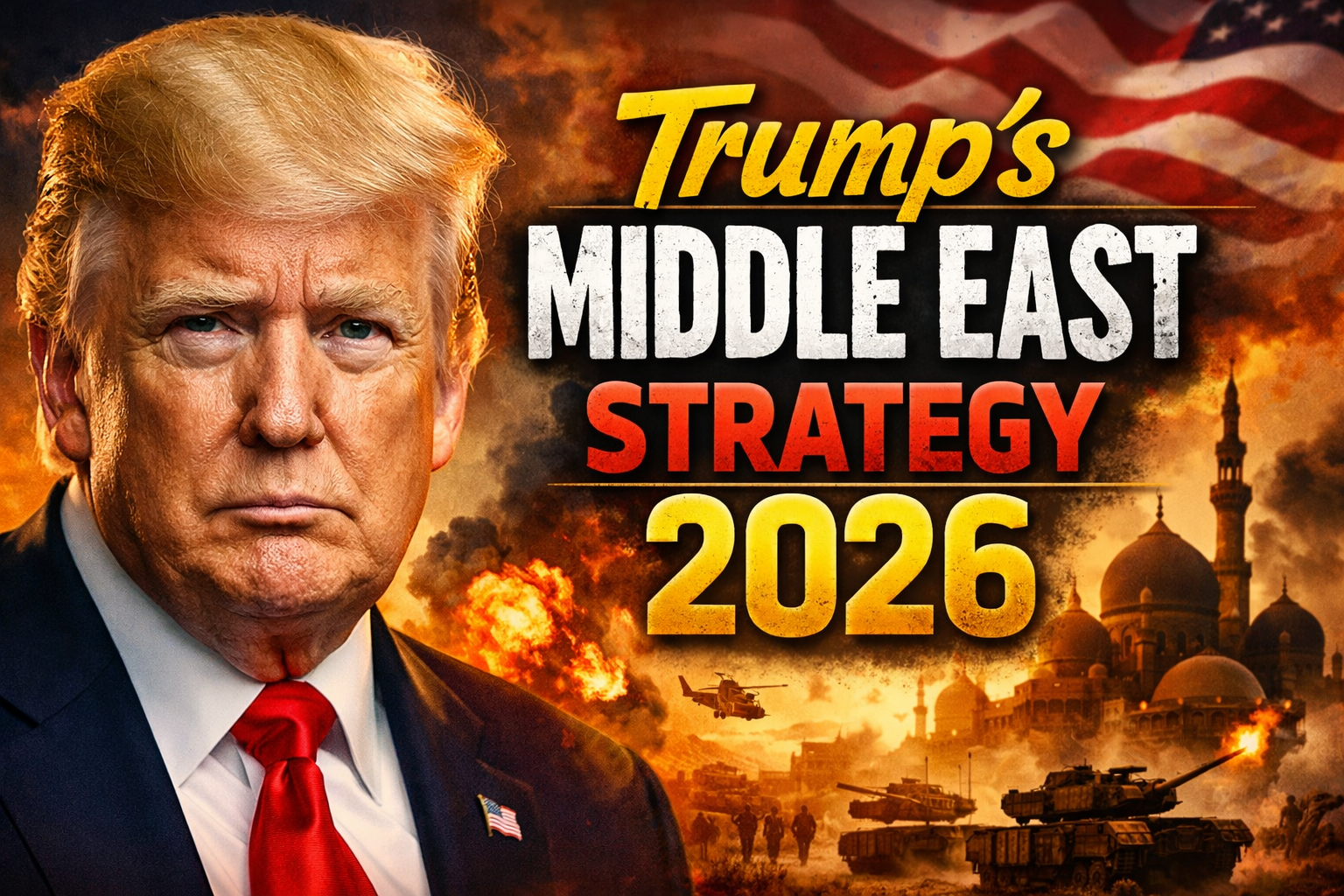
President Donald Trump’s bold Middle East maneuvers in early 2026 have reshaped global energy markets and heightened geopolitical tensions. With targeted strikes on Iran and a partial blockade of the Strait of Hormuz, his administration aims to neutralize threats while securing U.S. interests, but at the cost of surging oil prices worldwide.
Introduction
Trump’s reelection brought a return to his signature “peace through strength” doctrine, pivoting sharply toward confronting Iran after years of perceived weakness. In late February and early March, U.S. forces, alongside Israeli allies, launched precision strikes on Iranian nuclear sites and military installations, prompting Tehran’s retaliatory blockade attempts in the Strait of Hormuz. This escalation triggered a global oil shock, with crude prices spiking over fifty percent in weeks, fueling inflation and economic jitters from New York to New Delhi.
This comprehensive analysis breaks down the strategy’s origins, execution, immediate fallout, and long-term ramifications. Drawing on official statements, market data, and regional dynamics, it explains how these events unfolded and what they mean for energy security, alliances, and world economies.
Origins of Trump’s Middle East Strategy
Trump’s approach builds on his first-term Abraham Accords and maximum pressure campaign against Iran, intensified by 2026 intelligence revealing accelerated Iranian nuclear advancements. Advisors argued that diplomatic overtures had failed, necessitating military action to prevent a nuclear-armed Tehran. The National Security Strategy emphasized delegating regional burdens to allies like Israel and Gulf states, freeing U.S. resources for great power competition with China.
Key triggers included Iranian proxy attacks on U.S. bases, Houthi disruptions in the Red Sea, and post-Assad instability in Syria spilling into Iraq. Trump framed strikes as preemptive, vowing to “end Iran’s reign of terror” without full-scale invasion. Coordination with Israel ensured surgical operations, targeting enrichment facilities at Natanz and Fordow while sparing civilian infrastructure.
Domestic politics played a role too. With midterm elections looming, Trump sought to project strength, contrasting his decisiveness against prior administrations’ hesitancy. Public support surged initially, with polls showing broad approval for countering Iranian aggression.
The Iran Strikes: Timeline and Tactics
U.S.-led strikes commenced on February 28, involving stealth bombers, drones, and submarine-launched missiles. Over three nights, more than a hundred targets were hit, crippling air defenses, missile factories, and uranium centrifuges. Iranian leadership claimed minimal damage, but satellite imagery revealed extensive destruction, delaying their nuclear program by years.
Israel contributed cyber operations and follow-up raids, hitting command centers in Tehran suburbs. Casualties numbered in the hundreds among IRGC ranks, with unconfirmed reports of high-level losses. Trump addressed the nation, calling it a “decisive blow for peace,” and warned of escalated response to any retaliation.
Iran’s counterstrikes focused on soft targets: drone swarms on Saudi oil fields and missile barrages toward U.S. ships in the Gulf. These inflicted limited damage but signaled resolve, escalating rhetoric on both sides.
| Strike Phase | Date | Targets Hit | U.S./Allied Assets Deployed |
|---|---|---|---|
| Phase One | Feb 28 | Air Defenses, Radar Sites | B-2 Bombers, F-35s |
| Phase Two | Mar 1 | Nuclear Facilities | Tomahawks, Drones |
| Phase Three | Mar 2 | Missile/IRGC Bases | Submarines, Cyber Tools |
This table outlines the operation’s structure, showcasing precision to minimize escalation while maximizing strategic gains.
Hormuz Blockade: Iran’s Desperate Gambit
Tehran’s response peaked with attempts to mine and blockade the Strait of Hormuz, through which twenty percent of global oil flows. Speedboats harassed tankers, mines damaged two vessels, and anti-ship missiles sank a Greek-flagged supertanker. Trump deployed carrier strike groups, declaring the strait “international waters under U.S. protection.”
Naval clashes ensued, with U.S. destroyers neutralizing Iranian craft. Trump appealed for multinational help, but responses varied: NATO pledged surveillance, China urged restraint, and India evacuated citizens. The blockade lasted ten days before U.S. mine-clearing operations restored partial flow.
Economically, the move backfired on Iran, slashing its oil exports and revenues. Yet it exposed vulnerabilities in global supply chains, stranding millions of barrels and driving panic buying.
Global Oil Shock: Immediate Economic Fallout
Oil prices rocketed from around seventy dollars per barrel pre-strikes to over one hundred twenty dollars by mid-March. Brent crude hit one hundred forty dollars intraday, the highest since the early 2000s. Gasoline prices in the U.S. jumped forty cents per gallon, hitting working families hardest.
Supply disruptions rippled worldwide. Europe faced refinery shortages, Asia scrambled for LNG alternatives, and emerging markets like India saw inflation soar into double digits. OPEC+ pledged output hikes, but spare capacity proved insufficient amid Venezuelan sanctions and Libyan unrest.
| Region | Pre-Shock Oil Price (Feb) | Peak Price (Mar) | Inflation Impact |
|---|---|---|---|
| United States | $68/barrel | $115/barrel | +1.2% CPI |
| Europe | $70/barrel | $122/barrel | +2.1% CPI |
| Asia | $67/barrel | $118/barrel | +3.4% CPI |
| Global Avg | $69/barrel | $120/barrel | +1.8% Worldwide |
These figures highlight the shock’s breadth, with developing economies suffering most from import dependence.
Stock markets plunged, with energy firms gaining while airlines and manufacturers tanked. The S&P 500 shed five percent in a week, its worst since the pandemic. Central banks, including the Federal Reserve, paused rate cuts, citing imported inflation.
Strategic Objectives and Regional Realignments
Trump’s endgame seeks a weakened Iran suing for talks, potentially denuclearization in exchange for sanctions relief. Gulf allies, fearing blowback, boosted U.S. basing rights and purchased billions in arms. Saudi Arabia and UAE quietly supported strikes, eyeing reduced Iranian influence.
Israel hailed the operations as a “game-changer,” advancing normalization under expanded Abraham Accords. Kazakhstan’s recent entry underscored momentum, though Saudi hesitation persists without Palestinian progress.
Critics decry the risks: empowered hardliners in Tehran, empowered proxies like Hezbollah, and strained U.S.-China ties over energy. Russia benefits, selling discounted oil to offset sanctions.
Domestic and International Reactions
In Washington, bipartisan support eroded as casualties mounted and pump prices bit. Democrats decried “Trump’s war,” demanding congressional authorization, while Republicans rallied around the flag. Protests erupted in Tehran and U.S. cities, met with crackdowns.
Globally, reactions split. Europe condemned escalation but joined naval patrols; Russia and China vetoed UN resolutions; BRICS nations called for de-escalation. India and Japan, oil importers, urged quick resolution.
Public opinion polls show sixty percent American approval for strikes but only forty for prolonged involvement, pressuring Trump toward off-ramps.
Economic Ramifications Beyond Oil
The shock exacerbates U.S. inflation, already sticky at three percent, prompting Fed hawkishness. Corporate profits in transport and chemicals plummet, layoffs loom in autos and aviation. Renewables gain traction, with solar and battery stocks surging on supply fears.
For consumers, higher energy bills mean tighter belts: groceries up five percent, heating costs doubled in northern climes. Developing nations face debt crises, with currency crashes in Turkey and Pakistan.
Longer-term, the crisis accelerates energy transitions. U.S. shale ramps production, targeting record outputs by year-end.
Risks and Potential Escalation Paths
Worst-case scenarios include full Iranian retaliation—missiles on Israel, cyber on U.S. grids—or proxy wars engulfing Yemen and Iraq. A closed Hormuz could add thirty dollars to oil, tipping recessions.
De-escalation hinges on diplomacy: backchannel talks via Oman, incentives for Iranian restraint. Trump’s team eyes a “big deal” mirroring North Korea summits.
| Escalation Risk | Likelihood | Potential Impact |
|---|---|---|
| Proxy Attacks | High | Regional Instability |
| Hormuz Closure | Medium | Global Recession |
| Nuclear Dash | Low | Catastrophic |
| U.S. Ground Ops | Very Low | Prolonged War |
This assessment gauges threats, emphasizing vigilance.
Path Forward: Trump’s Endgame and Lessons
Trump envisions a post-strike Middle East with tamed Iran, thriving Accords, and U.S. energy dominance. Success metrics: oil below ninety dollars, Iranian concessions by summer.
Challenges abound: rebuilding Gulf trust, managing domestic fatigue, countering rivals. Allies urge sustained presence, complicating pivots to Asia.
Ultimately, this strategy tests deterrence in multipolar world. Bold action curbed immediate threats but sowed volatility, reminding that Middle East fires burn hottest when stoked.

Abhinav Jain is a legal researcher and writer passionate about simplifying complex laws for everyday readers. With a keen interest in Indian constitutional, civil, and digital laws, he focuses on creating accessible, well-researched articles that promote legal awareness among students, professionals, and citizens alike.