
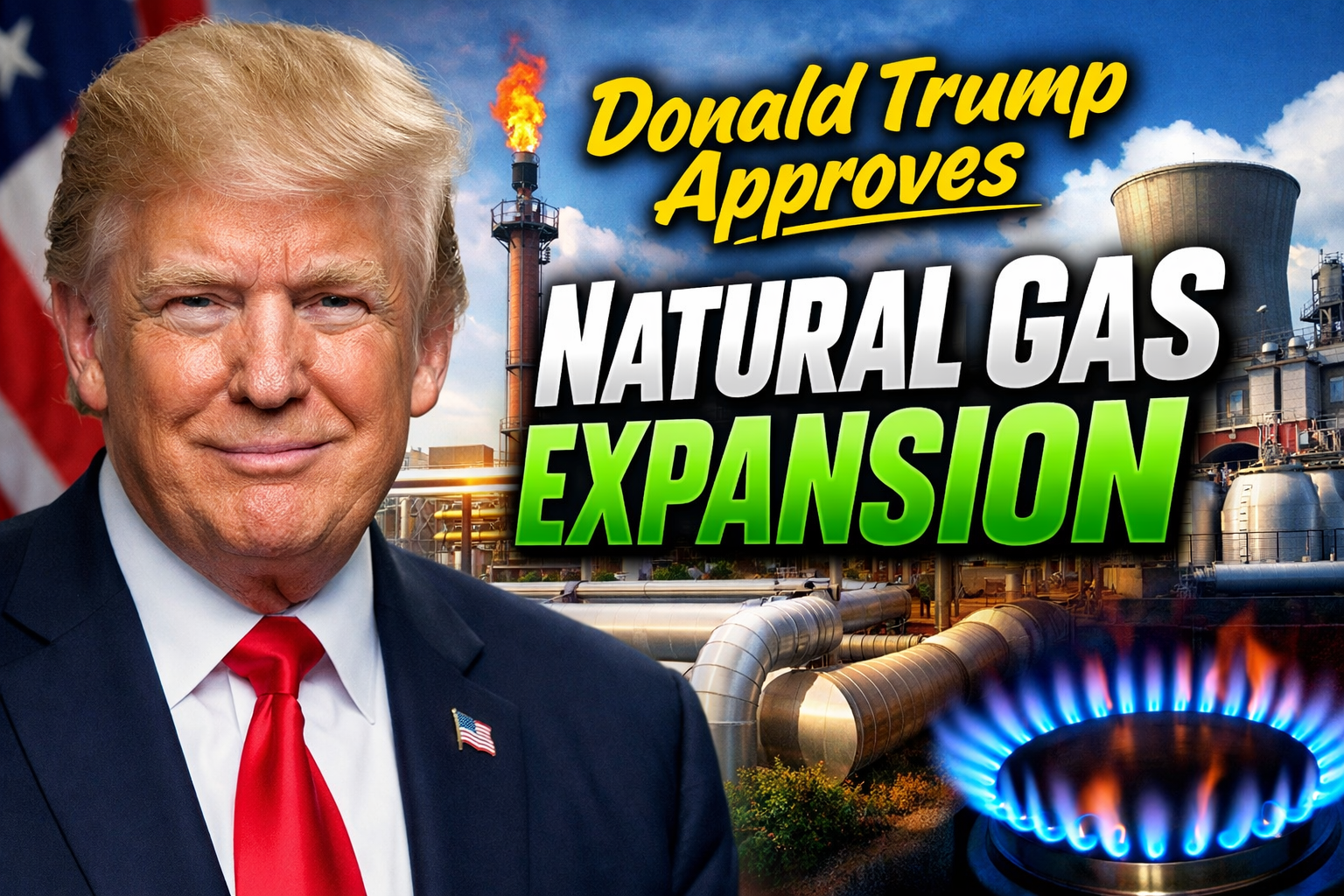
President Donald J. Trump has greenlit a massive natural gas expansion, approving NextEra Energy’s ambitious plans to develop up to 10 gigawatts of new generation capacity in Texas and Pennsylvania. This move aligns with his administration’s push for American energy dominance amid surging power demands from AI data centers and industrial growth.
Introduction to the Approval
The announcement, made public in mid-March, underscores Trump’s commitment to unleashing domestic energy production. NextEra Energy, the nation’s largest energy infrastructure builder, will spearhead the projects, which tie into a broader U.S.-Japan trade deal involving substantial foreign investment.
This approval comes at a pivotal time. Electricity demand is skyrocketing due to technological advancements and economic recovery, straining existing grids. Natural gas steps in as a reliable bridge fuel, promising quick deployment without hiking household bills.
Background on Trump’s Energy Agenda
Since his inauguration earlier this year, Trump has prioritized energy independence. Executive orders have slashed regulatory hurdles, reopened federal lands for drilling, and fast-tracked permits for fossil fuels, nuclear, and renewables alike.
Natural gas fits perfectly into this vision. Abundant domestic supplies, bolstered by shale revolution techniques, position the U.S. as the world’s top producer. Trump’s strategy emphasizes affordability, job creation, and security, countering what he calls overregulation from prior administrations.
The Japan partnership adds a global dimension. With commitments nearing hundreds of billions, Japanese firms will co-own these assets, fostering allied investment while ensuring American control over operations.
NextEra Energy’s Role and Expertise
NextEra Energy stands as a powerhouse in the sector. Headquartered in Florida, the company has constructed vast networks of power plants, transmission lines, and renewables over decades.
Their “hub strategy” enables rapid scaling. Pre-developed sites in Texas and Pennsylvania cut timelines from years to months, minimizing local disruptions. CEO John Ketchum highlighted this efficiency, noting the firm’s century-long track record in fueling American progress.
These projects mark a shift for NextEra, traditionally known for wind and solar leadership. Yet, their gas-fired plants promise baseload reliability, complementing intermittent renewables and meeting peak loads seamlessly.
Project Details in Texas and Pennsylvania
Texas Power Hub
Texas leads with expansive natural gas plans, leveraging the Permian Basin’s riches. NextEra targets multiple gigawatts here, focusing on combined-cycle plants that boast over sixty percent efficiency.
Sites near Houston and West Texas hubs benefit from existing pipelines and grids. These facilities will power data centers for tech giants, whose AI training requires uninterrupted, high-volume electricity.
Construction phases roll out swiftly, with initial units online within two years. Local economies gain thousands of jobs in engineering, welding, and operations.
Pennsylvania Power Hub
Pennsylvania’s Marcellus Shale underpins the eastern push. NextEra plans gas turbines optimized for flexibility, ramping up during renewables’ lulls or extreme weather.
Pittsburgh-area developments tap Appalachian infrastructure, linking to East Coast markets. Environmental controls exceed standards, capturing emissions and recycling water.
Joint ownership with Japanese partners ensures funding stability, blending U.S. innovation with international capital for mutual gains.
Technical Specifications and Capacity Breakdown
These plants employ state-of-the-art technology. Advanced turbines from leading manufacturers generate electricity with lower footprints than older coal units.
| Project Location | Capacity (GW) | Type of Plant | Expected Online Date | Key Features |
|---|---|---|---|---|
| Texas West | 4.5 | Combined-Cycle Gas | Late 2027 | High Efficiency, Pipeline Access |
| Texas East | 2.5 | Peaking Gas Turbines | Mid 2028 | Rapid Start, Grid Support |
| Pennsylvania North | 1.5 | Flexible Gas Units | Early 2028 | Emission Controls, Flexibility |
| Pennsylvania South | 1.5 | Combined-Cycle Gas | 2029 | Water Recycling, Job Creation |
This table outlines phased rollout, totaling 10 GW to quench rising thirst for power.
Driving Factors: Surging U.S. Power Demand
America faces an energy crunch. Data centers alone could double consumption by decade’s end, driven by AI, cloud computing, and electric vehicles.
Industrial resurgence adds pressure, from steel mills to chip factories. Texas and Pennsylvania, manufacturing hubs, bear the brunt, with blackouts threatening growth.
Natural gas fills the gap. Unlike solar’s nightly dips or wind’s variability, it dispatches reliably, stabilizing prices and preventing shortages.
Economic Impacts and Job Creation
These projects inject billions into local economies. Construction alone creates temporary roles numbering in the tens of thousands, transitioning to permanent operations staff.
Texas benefits from Permian synergies, boosting royalties for landowners. Pennsylvania revives coal-country towns with cleaner gas jobs, offering higher wages than service sectors.
Nationally, lower energy costs curb inflation. Households save on bills, while businesses expand without fear of outages.
Supply chain ripple effects strengthen. Steel, turbines, and pipes source domestically, aligning with Trump’s manufacturing revival.
Environmental Considerations and Innovations
Critics question gas’s carbon profile, yet NextEra integrates low-emission tech. Carbon capture pilots on select units trap output, readying for future mandates.
Plants run leaner than peers, slashing nitrogen oxides and particulates. Methane leak detection via drones ensures minimal waste from pipelines.
This expansion bridges to hydrogen blends. Retrofittable designs allow future clean fuels, extending plant lifespans beyond decades.
Comparatively:
| Fuel Source | Reliability | Emissions | Build Time | Cost per MWh |
|---|---|---|---|---|
| Natural Gas | High | Medium | 2-3 Years | Low |
| Coal | High | High | 5+ Years | Medium |
| Solar | Low | Low | 1-2 Years | Variable |
| Nuclear | Very High | Low | 10+ Years | High |
Gas emerges as the pragmatic choice for immediate needs.
Geopolitical and Trade Implications
The U.S.-Japan deal cements alliances. Japan’s energy hunger, post-Fukushima, finds secure supplies without Middle East reliance.
Trump’s negotiations prioritize reciprocity. Investments flow back as jobs, not outflows, fortifying dollar dominance.
This counters rivals like China, whose Belt and Road ensnares developing nations in debt. American gas exports via LNG solidify leadership.
Regulatory Fast-Tracking Under Trump
Bureaucratic delays vanish. Permits once mired in years now clear in months, thanks to streamlined reviews.
Federal agencies coordinate seamlessly, from FERC approvals to EPA nods. State governors in Texas and Pennsylvania champion the builds, waiving non-essential hurdles.
Risks remain, like supply chain snags or weather delays, but contingencies abound. NextEra’s experience mitigates overruns.
Challenges and Mitigation Strategies
Opposition from green groups looms, citing climate goals. Trump counters with all-of-the-above energy, including nuclear incentives.
Community buy-in proves key. Town halls address noise, traffic, and water use, offering revenue shares for schools and roads.
Market volatility tests financing. Fixed-price contracts with hyperscalers lock demand, insulating against price swings.
Future Outlook and Expansion Potential
Success here paves pipelines for more. NextEra eyes additional hubs, potentially scaling to twenty gigawatts nationwide.
Integration with renewables accelerates. Gas peakers complement solar farms, creating hybrid resilience.
Trump’s vision: energy abundance fueling prosperity. Lower bills, tech supremacy, and secure grids propel America forward.
Broader ripples touch exports. LNG terminals ramp up, supplying Europe amid its gas woes.
Stakeholder Reactions
Industry cheers the move. Utilities praise reliability gains; tech firms secure power for innovation.
Labor unions hail job booms. Environmentalists grumble but acknowledge transitional necessity.
Investors flock to NextEra stock, betting on execution prowess.
Conclusion: A Bold Step Toward Energy Security
Trump’s approval catapults NextEra’s 10 GW initiative, quenching America’s power thirst reliably and affordably. Texas and Pennsylvania transform into energy epicenters, blending economic vitality with strategic foresight.
This isn’t just infrastructure—it’s a declaration of dominance. As demands escalate, natural gas ensures lights stay on, factories hum, and dreams power ahead.

Abhinav Jain is a legal researcher and writer passionate about simplifying complex laws for everyday readers. With a keen interest in Indian constitutional, civil, and digital laws, he focuses on creating accessible, well-researched articles that promote legal awareness among students, professionals, and citizens alike.