
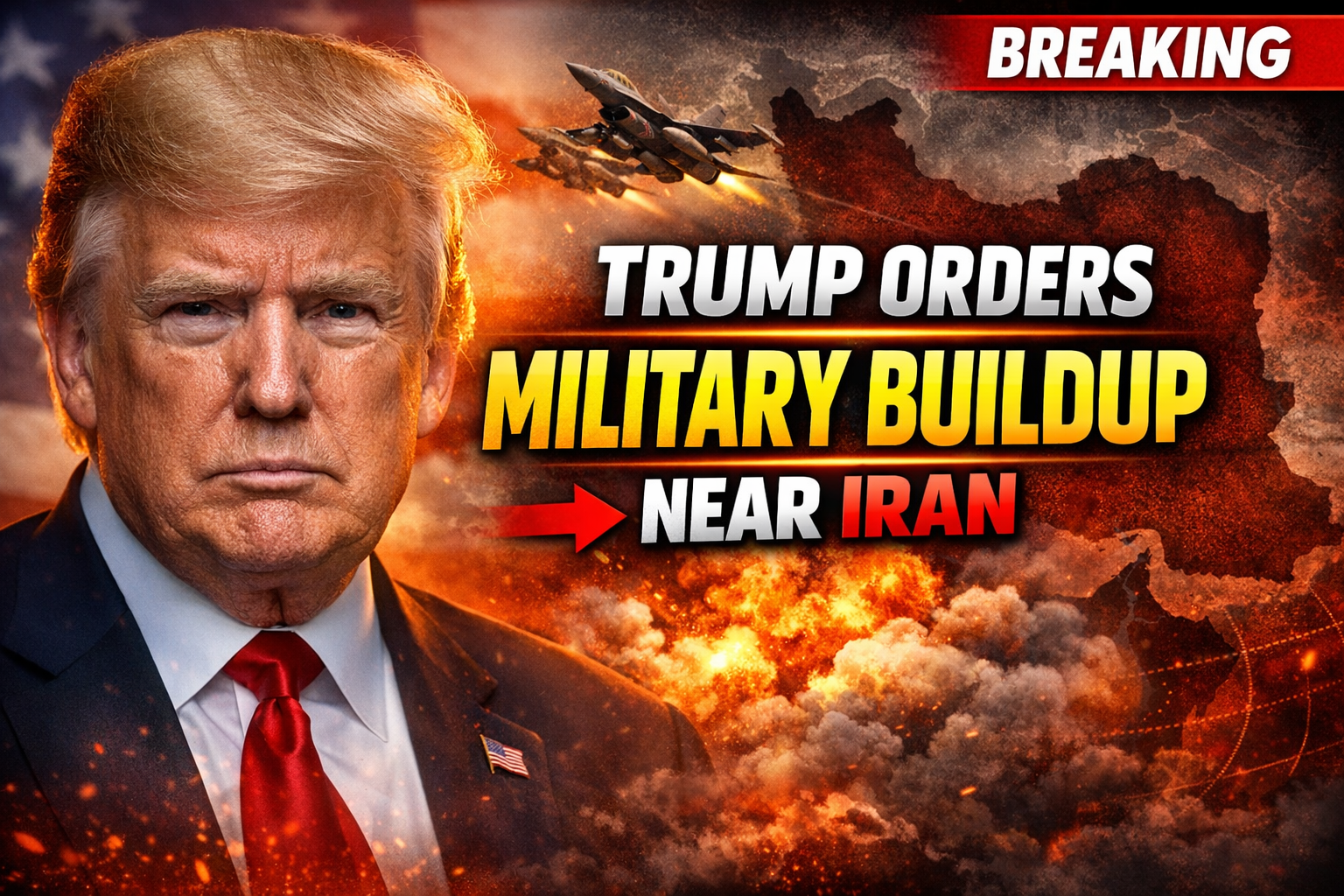
President Donald Trump has directed a significant U.S. military buildup in the Middle East, deploying thousands of Marines and naval assets near Iran amid soaring tensions over its nuclear program and regional aggressions. This escalation, unfolding in early 2026, signals a potential shift toward confrontation as diplomatic efforts falter.
Introduction to the Buildup
The deployment forms part of Trump’s revived maximum pressure campaign against Tehran, positioning American forces for rapid response or offensive operations. Dual aircraft carrier strike groups anchor the effort, supported by stealth fighters and missile defenses across bases in Jordan, Israel, and the Gulf.
This move responds to intelligence of Iran’s accelerated uranium enrichment and missile tests capable of striking U.S. assets. With protests raging inside Iran, Trump frames the posture as both deterrence and support for dissenters seeking regime change.
Historical Context of U.S.-Iran Tensions
Decades of animosity trace back to the 1979 hostage crisis, evolving through sanctions, proxy wars, and the shredded nuclear deal. Trump’s first term withdrew from the agreement, imposing crippling economic penalties that halved Iran’s oil exports.
His 2025 reelection reignited the strategy, with fresh sanctions targeting Revolutionary Guard leaders. Iranian-backed militias attacked U.S. bases in Iraq and Syria, prompting retaliatory strikes and setting the stage for 2026’s surge.
Internal Iranian unrest, sparked by economic collapse and crackdowns killing thousands, offers Trump leverage. Public calls for “help is on the way” from protesters align military moves with hopes of internal collapse.
Details of the Marine Deployment
Thousands of Marines from the 2nd and 4th Expeditionary Units surged into the region, equipped for amphibious assaults or ground support. Bases in Bahrain, Qatar, and Diego Garcia host rotational forces, ready for weeks-long operations.
Naval forces include the USS Abraham Lincoln and USS Carl Vinson carriers, each with over seventy aircraft, plus destroyers armed with Tomahawk missiles. Air wings feature F-35 stealth jets and A-10 ground attackers, visible at civilian-adjacent airfields to signal resolve.
Logistics sustain the force: refueling tankers, Patriot batteries, and THAAD systems counter Iranian ballistic threats. No large ground army deploys, focusing instead on air and sea dominance.
Strategic Objectives Behind the Order
Trump’s directives aim at multiple goals. Primary: halt Iran’s nuclear sprint toward weapons-grade material, demanding zero enrichment and missile curbs.
Secondary: deter attacks on allies like Israel and Saudi Arabia, where Iranian drones have struck oil facilities. The buildup secures the Strait of Hormuz, through which twenty percent of global oil flows.
Tertiary: exploit domestic weakness, pressuring the ayatollahs amid protests. Limited strikes could target IRGC sites, nuclear labs, or leadership bunkers to force negotiations or spark uprisings.
Key Military Assets Deployed
Naval and Air Power Concentration
Two carrier groups represent the heaviest U.S. presence since the Iraq invasion, with over a dozen warships and hundreds of warplanes. Submarines lurk undetected, primed for precision launches.
Fighter squadrons from the 5th generation fleet dominate skies, outmatching Iran’s aging air force. B-52 bombers stage from distant bases, capable of carpet strikes if escalated.
Ground and Missile Defense Elements
Marines specialize in rapid insertion, securing beachheads or airfields. Special forces units preposition for sabotage or rescue ops.
Missile defenses shield assets: Aegis ships, ground Patriots, and David’s Sling integrate into a multi-layered umbrella, neutralizing Iran’s vast arsenal of short-range rockets.
Regional Flashpoints and Risks
Strait of Hormuz and Gulf Waters
Iranian speedboats harass shipping, mining threats loom. U.S. convoys escort tankers, prepared to sweep channels or sink threats.
Disruption here spikes global energy prices, hitting economies from Europe to Asia. Trump’s allies urge restraint, fearing oil shocks.
Proxy Battlegrounds in Iraq and Syria
Iranian militias embed among civilians, launching drones at U.S. patrols. American counterstrikes degrade stockpiles, but retaliation risks civilian casualties.
Jordan hosts key bases, straining its neutrality. Israeli coordination eyes joint ops against shared threats.
Iranian Nuclear and Missile Sites
Fordow and Natanz bunkers harden against bombs, yet U.S. bunker-busters could penetrate. Strikes risk radiation leaks, poisoning neighbors.
Missile factories near Tehran produce hypersonics, threatening Europe. Preemptive hits aim to dismantle production lines.
Comparative Table of U.S. Forces
| Asset Type | Quantity Deployed | Role | Comparison to Prior Buildups |
|---|---|---|---|
| Aircraft Carriers | 2 Strike Groups | Air Superiority, Strikes | Largest since 2003 Iraq |
| Warships | 12+ Destroyers/Cruisers | Missile Defense, Tomahawks | Doubled from 2025 levels |
| Combat Aircraft | 200+ Fighters/Bombers | Suppression, Precision Attacks | Triple peacetime regional |
| Marines | Thousands (2 MEUs) | Amphibious, Ground Support | Matches Gulf War surge |
| Missile Defenses | Multiple Batteries | Ballistic Threat Interception | Comprehensive coverage |
This table illustrates the scale, rivaling major conflicts and dwarfing routine presence.
Intelligence and Diplomatic Backdrop
U.S. satellites track Iranian movements; cyber ops disrupt command nets. Claims of preemptive Iranian plots justify readiness, though evidence stays classified.
Diplomacy runs parallel: Geneva talks demand verifiable caps, with Oman mediating. Trump sets ten-day deadlines, blending carrot and stick.
Allies waver—Europeans push talks, Saudis quietly cheer. Russia and China back Tehran with arms and rhetoric, complicating dynamics.
Economic and Global Repercussions
Oil prices hover near triple digits, inflating U.S. pump rates despite domestic production. Stock markets dip on war fears, bonds rally as havens.
Iran’s economy teeters, rial in freefall, shortages fueling riots. Sanctions bite harder with naval blockade threats.
Global trade routes tense; insurers hike premiums for Gulf transits. Asian economies, oil-thirsty, lobby for de-escalation.
Domestic U.S. Reactions and Politics
Trump rallies crowds with tough talk, polls show majority backing strength. Critics warn of quagmire costs, echoing Iraq debates.
Congress debates war powers, with funding bills advancing defenses. Military families brace, recruitment surges on patriotic fervor.
Media splits: hawks praise deterrence, doves decry adventurism. Public fatigue from endless wars tempers enthusiasm.
Potential Scenarios and Outcomes
Limited Strikes Path
Targeted hits on nuclear or IRGC sites last days, pausing for talks. Iran retaliates via proxies, testing resolve without full war.
Success hinges on degrading capabilities without ground invasion.
Escalatory Full Campaign
Weeks of air ops dismantle regime infrastructure, aiming for collapse. Uprisings decide if Marines insert or watch from afar.
Risks include asymmetric responses: cyber hacks, terror abroad.
Diplomatic Off-Ramp
Concessions yield monitored limits, drawdown follows. Trump claims victory, pivots to China threats.
Challenges Facing the Deployment
Sustainment strains supply lines; Iranian mines and missiles threaten ships. Harsh desert logistics test endurance.
Allied hesitance limits basing; no European carriers join. Domestic opposition grows if casualties mount.
Iran’s resilience—dispersed assets, fanaticism—prolongs any fight. Nuclear breakout accelerates under pressure.
Broader Geopolitical Implications
Success bolsters U.S. credibility, deters North Korea, emboldens Israel against Hezbollah. Failure erodes alliances, empowers rivals.
Energy dominance shifts: American LNG fills gaps if Gulf falters. Middle East realigns, Sunnis court Washington.
Long-term: regime change births uncertainty—caliphate revival or democratic dawn?
What Lies Ahead for Trump’s Strategy
Trump weighs options daily, advisors split on strike timing. Protests inside Iran intensify, testing ayatollahs’ grip.
Buildup buys time, but windows narrow. A deal or decisive action looms by spring.
This military surge embodies Trump’s doctrine: strength through posture, pressure yielding peace or victory. Marines stand ready, world watches tensely.

Abhinav Jain is a legal researcher and writer passionate about simplifying complex laws for everyday readers. With a keen interest in Indian constitutional, civil, and digital laws, he focuses on creating accessible, well-researched articles that promote legal awareness among students, professionals, and citizens alike.