
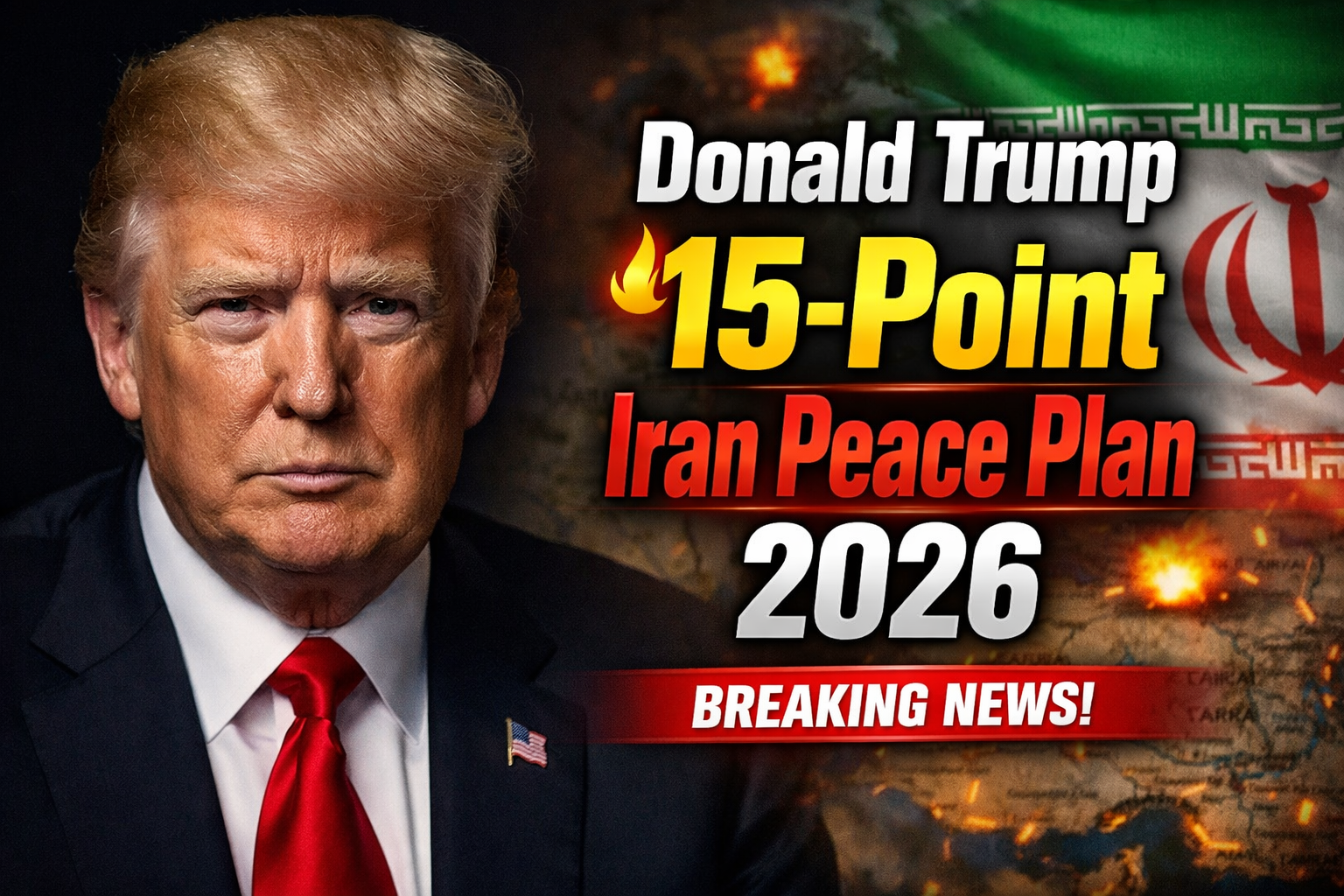
Donald Trump’s 15‑point Iran‑peace‑plan, unveiled in early 2026, represents the most comprehensive US‑led attempt so far to end the war‑torn standoff between Washington and Tehran. Offered amid escalating missile strikes, drone attacks, and a near‑blockade of the Strait of Hormuz, the plan is a dense mix of military‑concessions, nuclear‑limitation demands, sanctions‑relief promises, and de‑escalatory measures targeted at both Iran and America’s regional allies. Although Iranian officials have publicly rejected the proposal as “excessive” and have fired back with their own conditions, the 15‑point framework has become the de‑facto reference point in any discussion about an off‑ramp from the current Middle East conflict. For analysts and regional governments, it is both a potential roadmap to peace and a lightning‑rod for the deep mistrust that still separates the United States and Iran.
The 15‑Point Plan At A Glance
The 15‑point Iran‑peace‑plan is not a single, public‑facing treaty text but a US‑drafted negotiating matrix that has been conveyed to Tehran through intermediaries, including Pakistan. Reports suggest that the proposal consists of a package that includes a temporary ceasefire, nuclear and missile‑related limits, and a step‑down in regional‑proxy activities, in exchange for a phased rollback of sanctions and a guarantee of continued access to key energy‑shipping routes.
Key elements of the plan, as outlined in various media and diplomatic briefings, include:
- A 30‑day ceasefire to freeze hostilities between the US, its allies, and Iran.
- Dismantling of Iran’s nuclear facilities at Natanz, Fordow, and Isfahan as part of a broader commitment to halt enrichment and weapons‑relevant activity.
- Limits on the range and number of Iran’s missiles, including a ban on weapons‑grade uranium and certain missile‑types.
- An end to Iran’s support for regional proxies such as Hezbollah, Hamas, and other armed‑group networks.
- An end to Iranian strikes on regional energy infrastructure, including pipelines and shipping lanes.
- The reopening of the Strait of Hormuz to unimpeded commercial and military traffic.
- The removal of US sanctions on Iran and the suspension of the UN‑sanctions “snapback” mechanism.
- US support for electricity generation at Iran’s Bushehr nuclear power plant, framed as civilian‑cooperation instead of weapons‑relevant assistance.
Beyond these core points, the plan reportedly includes provisions on inspections, confidence‑building measures, and transitional‑security arrangements, as well as hooks for broader regional‑stability talks involving Gulf states, Israel, and European partners.
The Role Of The 30‑Day Ceasefire
At the heart of the plan is a 30‑day ceasefire that would act as a temporary pause in the active war‑phase of the conflict. The idea is to create a negotiating‑window in which both sides can test each other’s seriousness without immediately committing to long‑term structural changes. During the ceasefire, Iran would be expected to halt missile and drone attacks on Gulf infrastructure and shipping, while the US and its allies would scale back air and naval‑based strikes on Iranian territory.
For the Trump administration, the 30‑day pause serves several purposes:
- It signals a shift from a purely military‑to‑military mode to one that includes negotiation.
- It allows both sides to avoid the kind of escalatory spiral that could lead to a full‑fledged regional war.
- It gives third‑party mediators, especially Pakistan and select Gulf states, time to shuttle between Washington and Tehran and to push for incremental concessions.
Critics argue that a mere 30‑day truce is too short to build genuine trust, particularly given Iran’s demand for long‑term security guarantees and full‑scale sanctions‑relief. But supporters see it as a necessary first‑step: a way to stop the bleeding while the parties work out the more complex, long‑term arrangements.
Nuclear And Missile‑Related Demands
The nuclear‑related pillars of the 15‑point plan are the most contentious and symbolically loaded. The US demands that Iran dismantle key nuclear‑enrichment facilities at Natanz, Fordow, and Isfahan and commit to an enrichment‑free civilian‑nuclear‑program architecture. This mirrors earlier US‑led proposals from the 2015–2025 negotiation‑era but goes further by calling for physical dismantling rather than just operational limits.
The plan also seeks to cap Iran’s missile capabilities, including restrictions on the range and payload of its ballistic‑missile arsenal. For the US, this is about reducing the threat to Gulf allies, Israel, and American forces in the region. For Iran, it is a direct challenge to its core‑security doctrine, which sees missiles as a key deterrent against superior‑conventional‑military‑opponents.
The Trump‑team has framed these demands as a prerequisite for any comprehensive sanctions‑relief package, arguing that the lifting of economic pressure is contingent on verifiable changes on the ground. International inspectors and independent monitoring mechanisms would be expected to verify dismantling and limits, although the exact institutional setup is still being debated.
The Proxy‑War Element And Regional Militias
Another major component of the 15‑point plan is a demand that Iran end its financial, military, and operational support for regional proxies. The list typically includes groups such as Hezbollah in Lebanon, certain militia‑networks in Iraq, and Hamas‑linked actors in Gaza. The goal is to reduce the number of active fronts in the Iran‑versus‑Israel‑and‑Gulf‑axis conflict and to create a clearer, less fragmented battlefield in case diplomacy fails.
For Iran, this is a particularly difficult ask. The “axis of resistance” that Tehran has built over two decades is not just a security‑tool; it is also a source of political leverage, regional‑influence, and prestige. Reducing or dissolving that network would require Tehran to accept a major downgrade in its regional‑status and to trust that the US‑led order would not simply move in to fill the void.
In return, the US reportedly offers to curb its own regional‑military posture, including the scope and scale of airstrikes and the presence of forward‑deployed forces. However, it is unclear how specific and binding these commitments are, which feeds Iran’s skepticism about the plan’s durability.
The Strait Of Hormuz And Energy‑Security
The 15‑point plan explicitly targets the Strait of Hormuz, the narrow choke‑point through which a large share of the world’s seaborne oil passes. The proposal calls for the reopening of the Strait to unimpeded commercial and military traffic, coupled with commitments from both sides not to threaten or attack shipping in the area.
For the Trump administration, this is a key stability‑levers. Keeping the Strait open is essential for global energy‑markets and for the interests of US allies in the Middle East. The plan also includes provisions for joint‑monitoring or verification mechanisms that would involve neutral third‑parties, such as the UN or regional‑naval‑forces, to ensure continued freedom of navigation.
Iran has historically treated the Strait as a strategic‑bargaining chip, and the US‑plan seeks to neutralise that leverage by turning it into a collectively‑managed corridor. However, Tehran is likely to resist anything that implies a permanent loss of leverage over one of the most critical chokepoints in the global energy‑system.
Sanctions‑Relief And The “Economic Off‑Ramp”
The 15‑point plan’s most attractive feature for Iran is the promise of full sanctions‑relief, including the lifting of US‑financial and trade‑restrictions and the suspension of the UN‑sanctions‑snapback mechanism. The US frames this as a reward for verifiable compliance with nuclear‑ and missile‑related commitments, as well as a way to restore Iran’s access to international‑markets and investment.
The sanctions‑relief angle is also where the plan is most vulnerable. Iran has long demanded not just the lifting of sanctions but also reparations for past damage and guarantees that the US will not re‑impose them in the future. The Trump‑administration, in contrast, insists that any sanctions‑rollback must be reversible if Iran violates the agreement, a stance that feeds Tehran’s fear of another “snapback” scenario like the 2018 withdrawal from the Joint Comprehensive Plan of Action (JCPOA).
In practice, the sanctions‑relief package is likely to be phased and conditional, with the US‑preserving the right to monitor compliance and to re‑impose restrictions if needed. This compromise‑structure is meant to balance Iranian‑demand for relief with American‑demand for leverage, but it also leaves room for disputes over what constitutes a breach.
Iran’s Rejection And The “Five‑Conditions” Counter‑Proposal
Iran has publicly rejected the 15‑point plan, describing it as excessive and unacceptable. State‑affiliated media have reported that Tehran has responded with its own five‑point counter‑proposal, which includes demands for:
- Immediate and complete lifting of sanctions.
- Compensation for past economic‑damage caused by US‑sanctions.
- Guarantees against future military‑strikes or regime‑change‑style pressures.
- Recognition of Iran’s right to defend itself and its regional‑allies.
- Control over the Strait of Hormuz and a leading role in regional‑security arrangements.
This counter‑proposal is designed to reject the US‑plan while preserving Iranian‑red‑lines. It emphasises that any ceasefire must be contingent on structural‑changes to the US‑regional‑policy, not just tactical‑military‑adjustments.
The Pakistan‑Mediated Talks And Possible Off‑Ramp
The 15‑point plan is not just a document; it is also the basis for an emerging, Pakistan‑mediated back‑channel‑talks process. Reports indicate that the US has asked Pakistan to host a face‑to‑face meeting between American and Iranian officials, with the possibility of Vice President JD Vance attending on the US‑side. The talks are expected to focus on:
- Clarifying the exact terms of the 15‑point plan.
- Negotiating the details of the 30‑day ceasefire and verification‑mechanisms.
- Exploring the feasibility of the nuclear‑dismantling and missile‑limitation provisions.
For the Trump‑administration, these talks are a test of Iran’s willingness to engage in serious diplomacy. For Iran, they are an opportunity to push the US toward greater concessions, particularly on sanctions and regional‑influence, without appearing to capitulate.
How This Plan Fits Into Trump’s 2026 Syria‑Iraq‑Gaza Strategy
The 15‑point Iran‑peace‑plan is part of a broader Middle‑East‑de‑escalation‑push by the Trump administration. The president has simultaneously been pushing:
- A ceasefire and disarmament‑plan for Gaza, conveyed through his “Board of Peace” envoy‑network at the UN.
- Re‑negotiation of the Syria‑quagmire, including a push to end the conflict‑in‑Syria and reduce the US‑military‑footprint.
- Withdrawal‑timelines for Iraq, framed as a way to reduce the US‑presence in the region and to focus on strategic‑partnerships rather than occupation‑style‑missions.
The Iran‑plan fits into this larger narrative: a “de‑confliction and disengagement” strategy that seeks to end or contain multiple Middle‑East‑wars at once, while preserving US‑influence through diplomatic‑and‑economic‑leverage rather than open‑military‑confrontation.
Challenges And Risks Of The 15‑Point Plan
The 15‑point Iran‑peace‑plan faces several structural‑challenges:
- Mistrust and verification: Both sides have been burned by past‑broken‑promises, and the plan’s success depends on a robust‑monitoring‑mechanism that neither fully trusts the other to respect.
- Regional‑allies’ concerns: Gulf‑states and Israel are wary of any deal that leaves Iran with residual‑military‑capabilities or regional‑influence, even if it includes dismantling and missile‑limits.
- Domestic‑politics in both countries: Trump faces pressure from hard‑liners who want maximum‑concessions, while Iran’s leadership must avoid appearing to capitulate to American‑pressure.
- Time‑horizon and durability: The 30‑day ceasefire and step‑by‑step sanctions‑relief‑framework may be too fragile to withstand the inevitable breaches or provocations.
Despite these risks, the 15‑point plan is the most concrete and comprehensive offer so far to end the war‑with‑Iran. Whether it will succeed depends on the ability of the parties to overcome their mutual‑distrust, to find a sustainable‑verification‑mechanism, and to build a regional‑order that accommodates both Iran’s need for security and the US‑allied‑network’s demand for restraint.

Abhinav Jain is a legal researcher and writer passionate about simplifying complex laws for everyday readers. With a keen interest in Indian constitutional, civil, and digital laws, he focuses on creating accessible, well-researched articles that promote legal awareness among students, professionals, and citizens alike.