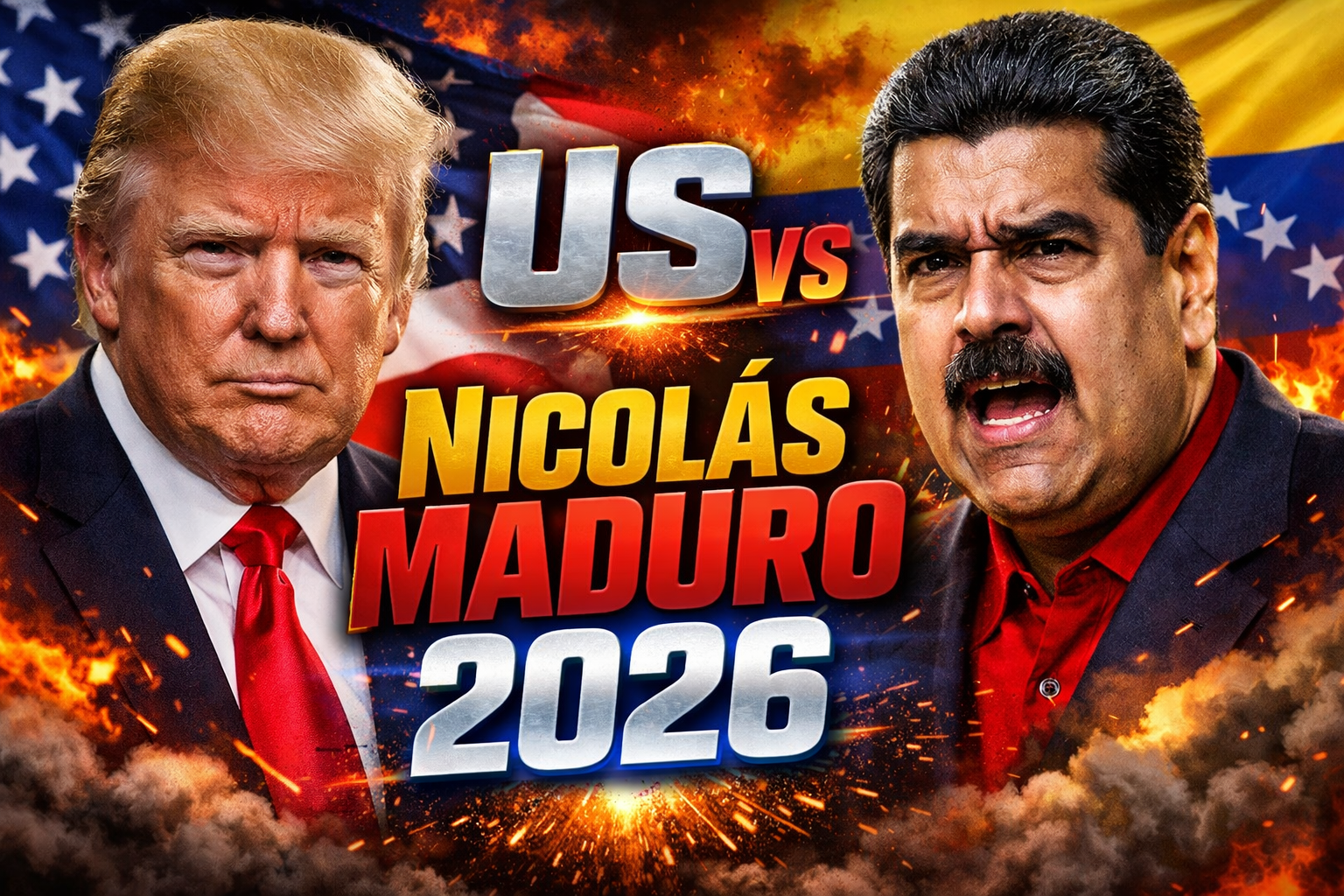
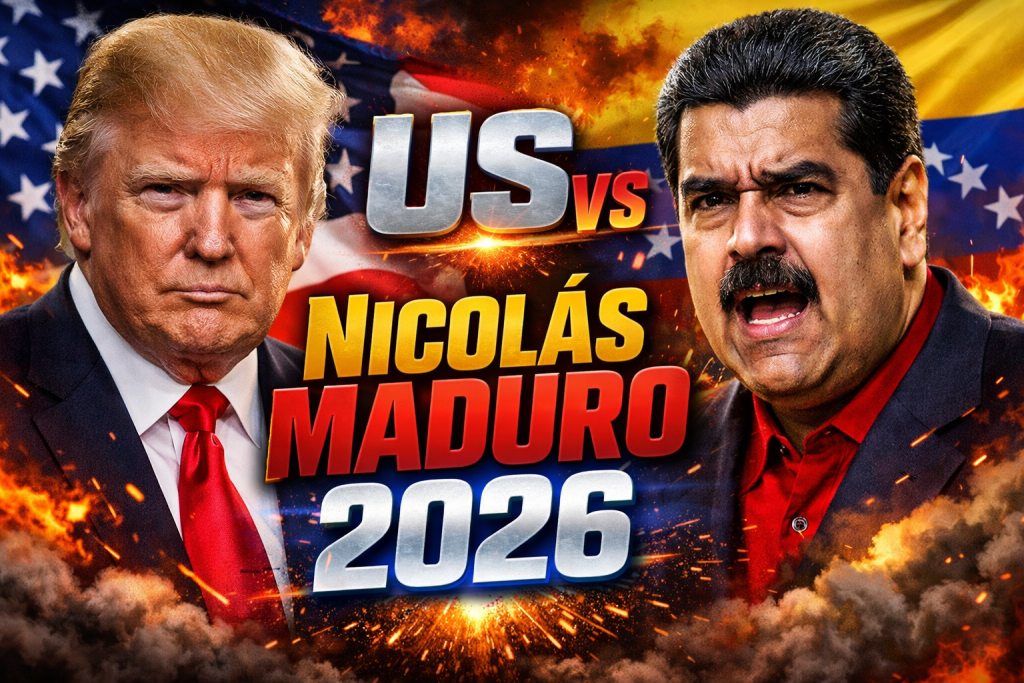
In March 2026, the marble‑floored corridors of a Manhattan federal courthouse became the unlikely stage for one of the most consequential legal‑political dramas of the decade: the United States’ attempt to try deposed Venezuelan leader Nicolás Maduro on narco‑terrorism charges. A federal judge in New York has refused to dismiss the case, effectively keeping alive a prosecution that could reshape how Washington handles leaders it accuses of using state power to fuel drug‑linked violence. The decision is not just a courtroom ruling; it is a geopolitical signal about how far the United States is willing to go to hold a former head of state accountable under its own criminal statutes.
The Origins of the Case
The legal saga against Nicolás Maduro stretches back years before his actual court appearances in New York. U.S. prosecutors have long argued that Maduro and his inner circle conspired with Colombian guerrilla groups and regional drug traffickers to move large quantities of cocaine through Venezuelan territory and onward into the United States. The core theory advanced by the Justice Department is that Maduro’s government allowed military and intelligence assets to protect cocaine shipments, provide armed escorts for drug‑laced flights, and turn a blind eye to clandestine airstrips used by traffickers. In return, these networks allegedly funneled cash and weapons back into the Venezuelan regime’s coffers and security apparatus.
Those earlier investigative threads were formalized into a sprawling indictment that includes charges of narco‑terrorism conspiracy, cocaine‑import conspiracy, weapons violations, and money‑laundering schemes. The narcotics‑terrorism statute at the heart of the case was designed two decades ago to target drug traffickers who also fund or support acts deemed terrorist under U.S. law. Prosecutors have underscored that use of that statute against a former national leader represents a rare and high‑stakes application, given its stringent evidentiary hurdles and politically charged implications.
The Narco‑Terrorism Accusation
At the center of the New York case is the narco‑terrorism charge, a legal category that ties drug trafficking to terrorism financing and support. U.S. prosecutors allege that Maduro helped orchestrate a system in which Venezuelan officials and state‑linked actors coordinated with Colombian armed groups to move cocaine through Venezuela and onward to the United States via transit points in the Caribbean and Central America. According to the indictment, this arrangement allowed traffickers to exploit Venezuelan airspace, ports, and border infrastructure while shielding them from meaningful law‑enforcement interference.
Prosecutors argue that this cooperation went beyond mere tolerance of drug flows; they claim it involved deliberate planning, state‑protected logistics, and an understanding that the proceeds would also support armed groups long designated by Washington as terrorist organizations. The legal strategy hinges on proving that Maduro knew or should have known that his government’s actions were enabling organizations whose activities Washington classifies as terrorism, and that he did so with the intent to further those ends. If the government can meet this standard at trial, the charges could carry maximum penalties of life imprisonment under U.S. law, making the case among the most severe ever brought against a former head of state.
Maduro’s Capture and Transfer to New York
The case took a dramatic turn in early 2026 when Nicolás Maduro was removed from power in Venezuela through a combination of internal upheaval and a U.S.‑backed military operation in Caracas. Once in custody, he was swiftly transported to the United States, where he was placed into the federal detention system pending trial. His arrival in New York sparked intense debate over the legality and symbolism of taking a sitting, even if de facto, leader from his own country and trying him on American soil.
Prosecutors have framed the operation as a lawful enforcement of a standing international warrant and a long‑running indictment, arguing that Maduro’s alleged crimes directly affected U.S. communities through the downstream impact of cocaine distribution and associated violence. Critics, however, see the episode as an assertion of extraterritorial power that could set a precedent for U.S. authorities to seize foreign leaders they deem hostile, regardless of diplomatic norms or international law constraints. For Maduro and his allies, the capture is portrayed as an act of imperial kidnapping, designed less to deliver justice than to humiliate Venezuela and cement U.S. hegemony in the region.
The New York Judge’s Refusal to Dismiss
The latest pivotal move in the saga came when a federal judge in the Southern District of New York declined to dismiss the narco‑terrorism case against Maduro, despite a vigorous defense motion. The defense team had argued that the prosecution was politically motivated, that the narco‑terrorism statute was being stretched beyond its intended scope, and that the circumstances of Maduro’s removal from Venezuela violated due‑process and sovereignty principles. They also pressed the court to shield Maduro’s ability to use Venezuelan state funds to pay for his legal representation, warning that an effective denial of resources would undermine his constitutional right to a fair defense.
The judge, while expressing skepticism about certain aspects of the government’s conduct—particularly its efforts to block the use of Venezuelan funds for Maduro’s legal fees—ultimately concluded that the factual and legal elements of the case were sufficient to proceed. The ruling implicitly accepts that the indictment, as drafted, can survive the Rigorous scrutiny a federal court must apply at the pre‑trial stage. By refusing to dismiss, the judge has effectively green‑lighted the prosecution to move toward a full trial, with the narco‑terrorism charge intact and the evidentiary battle lines now firmly drawn.
Key Legal and Procedural Questions
Several legal questions shadow the case as it moves forward. The first is the viability of the narco‑terrorism statute itself, which has been used in relatively few trials and has produced only a handful of convictions over the past twenty years. Defense lawyers are expected to challenge the statute as vague, overbroad, and potentially unconstitutional, arguing that it conflates drug trafficking with terrorism in ways that lack clear statutory boundaries. The outcome of those arguments could influence not only Maduro’s fate but also the future use of the same law against other defendants.
A second cluster of questions revolves around the admissibility of evidence and the credibility of witnesses. U.S. prosecutors reportedly intend to rely heavily on testimony from former Venezuelan generals and intelligence officials, some of whom have themselves been implicated in corruption or human‑rights cases. The defense will almost certainly seek to impeach that testimony, casting it as coerced, incentivized, or politically biased. The court will then have to weigh the reliability of those accounts while ensuring that the trial remains grounded in verifiable facts rather than geopolitical narratives.
A third layer of contention involves Maduro’s access to adequate legal representation. The judge has already signaled discomfort with the U.S. government’s efforts to freeze Venezuelan state funds earmarked for his defense, warning that such restrictions could implicate the Sixth Amendment’s guarantee of counsel. How the court ultimately balances national‑security concerns, financial‑sanctions regimes, and the defendant’s right to a fair trial will be closely watched by civil‑liberties advocates and foreign governments alike.
Political Implications Across the Americas
Beyond the courtroom, the case carries profound political implications for the Western Hemisphere. For the United States, the prosecution of Maduro on narco‑terrorism charges is being presented as a bold step in its long‑running campaign against what Washington describes as state‑sponsored drug trafficking. The Trump administration has emphasized that holding a former head of state accountable in a U.S. federal court will send a deterrent signal to other leaders who allegedly allow their territories to become hubs for cocaine and related criminal networks.
For Latin American and Caribbean governments, the episode raises sensitive questions about sovereignty, non‑intervention, and the reach of U.S. law. Some capitals have expressed unease about the use of Washington‑based tribunals to adjudicate what they see as intra‑regional political disputes. Others worry that the precedent could encourage future U.S. governments to target leaders they view as unfriendly, regardless of whether broader international consensus exists for such actions. The way Latin‑American leaders respond—whether by rallying behind Maduro’s defense, staying neutral, or tacitly endorsing the case—could reshape diplomatic alignments for years to come.
For Venezuela itself, the trial adds another layer of uncertainty to an already fragile political transition. Even as new figures fill the power vacuum left by Maduro’s removal, the specter of a foreign‑led prosecution looms over national debates about justice, reconciliation, and the legacy of the Chavista era. Pro‑government factions may rally around Maduro as a symbol of resistance to U.S. interference, while opposition groups could split between those who welcome the trial as a reckoning and those who fear it will deepen polarization and external meddling.
A Snapshot of the Charges and Penalties
The government’s current indictment outlines a multi‑count case built around four core clusters of alleged criminal activity.
| Alleged Criminal Activity | Nature of Charges | Potential Maximum Penalties under U.S. Law |
|---|---|---|
| Narco‑terrorism conspiracy | Coordinating with Colombian armed groups and drug traffickers to move cocaine | Life imprisonment |
| Cocaine import conspiracy | Planning and enabling the shipment of cocaine into the United States | Life imprisonment |
| Weapons offenses | Possession and use of machine guns and destructive devices in connection with trafficking | Decades‑long prison terms |
| Money‑laundering conspiracy | Concealing and transferring proceeds of the drug‑trafficking and arms schemes | Extensive prison time plus forfeitures |
These charges are not only legally severe; they are also politically explosive. By framing Maduro’s actions as involving terrorism, rather than standard drug trafficking, the U.S. government is elevating the symbolic gravity of the case and suggesting that his conduct posed a broad threat to national security and public safety.
The Broader Debate on Law, Power, and Justice
The refusal to dismiss the case in New York places the United States at the center of a broader debate about the intersection of law, power, and international relations. Proponents argue that the prosecution of Maduro on narco‑terrorism charges is a necessary step toward enforcing the rule of law against leaders who allegedly abuse state institutions to fuel organized crime. They see the case as a test of whether powerful officials can be held accountable even when their regimes have long resisted external scrutiny.
Critics, by contrast, warn that the case risks turning the U.S. justice system into an instrument of foreign‑policy enforcement. They argue that the narco‑terrorism statute, and the decision to apply it against a former president, blurs the line between genuine criminal justice and political retribution. The concern is that such prosecutions could encourage selective targeting, undermine trust in international legal cooperation, and provoke retaliatory moves by other states against U.S. officials or allies.
Regardless of where one stands on that debate, the judge’s refusal to dismiss the narcoterrorism case against Nicolás Maduro marks a clear inflection point. The legal battle that now lies ahead will not only determine whether a former Venezuelan leader spends the rest of his life behind bars in the United States; it will also help define how far Washington is willing to stretch its criminal‑law tools in the pursuit of its geopolitical objectives. In that sense, the courtroom in Manhattan has become a quiet but potent theater of global power—one where the stakes are measured not only in years of prison time, but in the future of sovereignty, justice, and international order.

Abhinav Jain is a legal researcher and writer passionate about simplifying complex laws for everyday readers. With a keen interest in Indian constitutional, civil, and digital laws, he focuses on creating accessible, well-researched articles that promote legal awareness among students, professionals, and citizens alike.