
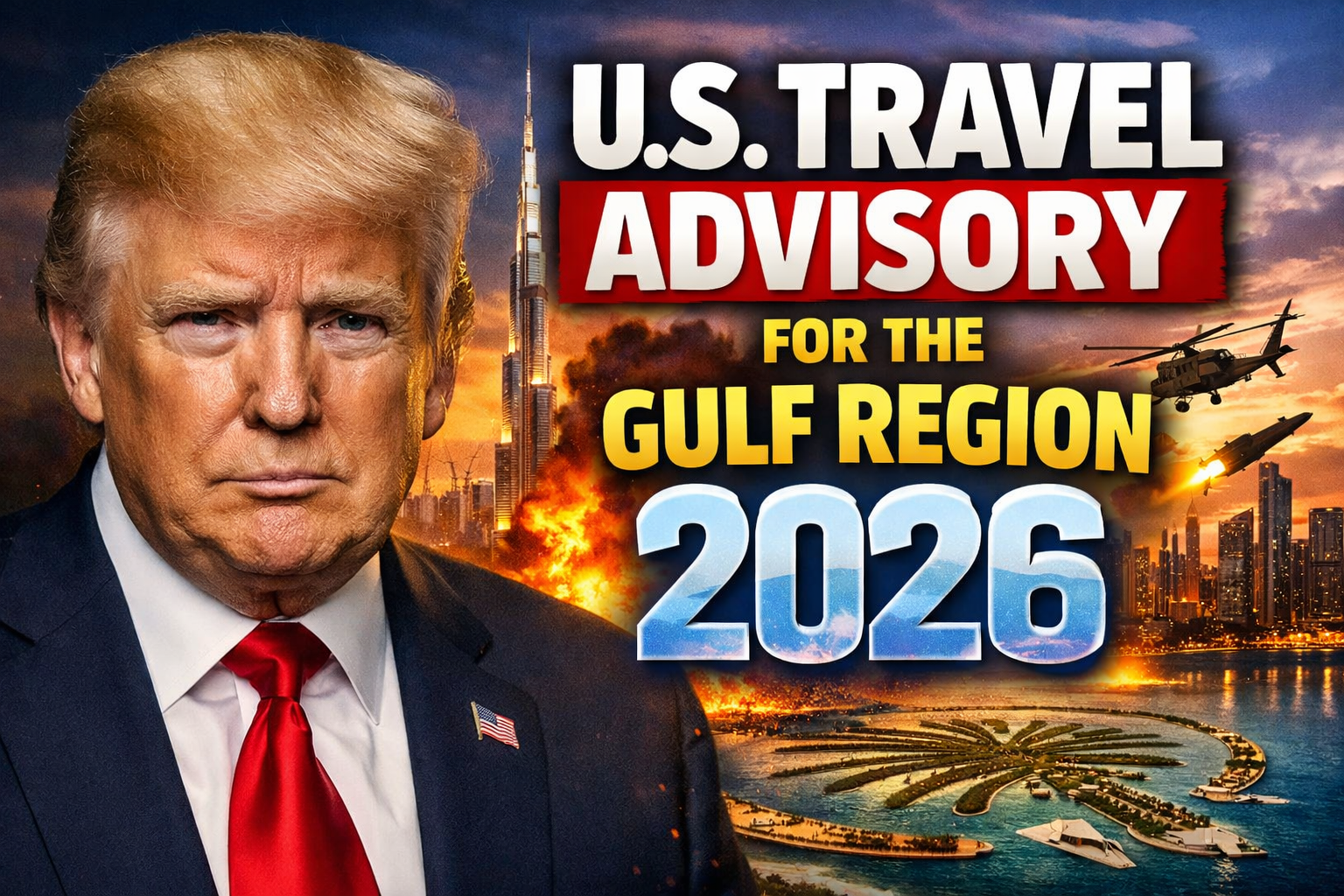
In early 2026, the United States has sharply tightened its travel warnings for the Gulf region, placing Americans on high alert as missile threats, regional warfare with Iran, and cascading security risks remake the risk calculus for Middle East travel. What were once relatively stable business, tourism, and transit hubs—such as Saudi Arabia, the United Arab Emirates, Qatar, Bahrain, Kuwait, and Oman—are now flagged by the U.S. State Department as environments where Americans should “reconsider travel” or even “avoid” the region altogether. The backdrop is a rapid escalation between the United States and Iran, including U.S. combat operations inside Iran, retaliatory missile and drone strikes, and the very real possibility that American‑linked targets across the Gulf could come under sustained attack.
The Escalation That Changed the Travel Map
The roots of the current travel‑advisory crisis lie in the rapid deterioration of U.S.‑Iran relations by late February 2026. Following a failed diplomatic round in Geneva and a series of high‑profile cyberattacks, Washington and its allies launched a series of strikes deep into Iran, which the U.S. government framed as a campaign to degrade missile capabilities and regional proxy networks. Tehran responded with missile salvos toward U.S. military bases and allied infrastructure across the Gulf, as well as threats to hit “tourist sites” and commercial nodes worldwide. The Gulf states, in turn, reported intercepting multiple drones and missiles near oil installations and urban centers, underlining the risk that even secondary engagements could translate into civilian casualties and economic disruption.
In the wake of these exchanges, the U.S. State Department issued a phalanx of updated travel advisories and a global “Worldwide Caution” advisory, explicitly warning Americans that Iran‑linked groups may target U.S. interests as far afield as Europe, Asia, and North America. The Middle East, however, remains the most acute flashpoint. The advisory landscape has shifted from country‑specific cautions to a broader perception of systemic risk: airspace, commercial infrastructure, and population centers are now treated as potential conflict zones rather than neutral transit corridors.
Which Gulf Countries Are Now High‑Risk?
The latest travel‑advisory framework effectively turns much of the Gulf into a network of high‑risk destinations for American travelers. Key countries affected include:
- United Arab Emirates – The U.S. now classifies the UAE at Level 3, “Reconsider Travel,” explicitly citing the threat of armed conflict, missile and drone attacks, and Iran’s stated intent to target locations associated with the United States in the Emirates. The advisory notes that U.S. government has ordered the departure of non‑emergency staff and family members from the country, a signal that even the embassy itself views the security situation as deteriorating.
- Saudi Arabia – Similar alert levels apply to Saudi Arabia, where the government has already intercepted missile and drone strikes believed to originate from Iran or its regional proxies. The U.S. advisory warns that armed‑conflict risks and terrorism threats could affect cities, oil infrastructure, and commercial hubs, including major metropolitan centers such as Riyadh and Jeddah.
- Qatar, Kuwait, Bahrain, Oman – Each of these Gulf states has been upgraded to Level 3 or equivalent, with the State Department urging Americans to rethink travel plans. The advisories emphasize that the escalation of hostilities has led to an ongoing threat of drone and missile attacks, disruptions to commercial air travel, and the possibility of targeted strikes on U.S. facilities or sites linked to American interests.
- Jordan and Israel – Though not Gulf states in the strict geographic sense, Jordan and Israel are closely tied to Gulf‑region security dynamics and have also been placed at Level 3, with the U.S. warning of missile and drone threats, armed conflict, and terrorism. Americans are urged to avoid travel to many areas and to depart immediately if already present.
A pattern emerges from these advisories: the United States no longer treats the Gulf as a largely insulated, modern business hub, but as a broad theater where missiles, drones, and terrorist‑style attacks could occur with little notice and in places that are normally considered safe for tourists, business travelers, and expatriates.
Laying Out the Key Risks for Americans
For Americans planning travel to or through the Gulf in 2026, the dominant risks cluster around three overlapping categories: missile and drone threats, terrorism and proxy attacks, and secondary disruptions such as airspace closures and consular‑service constraints.
Missile and Drone Threats
The most visible and immediate danger is the potential for missile and drone strikes. Iran and its regional allies have demonstrated an ability to launch salvos at Gulf‑based infrastructure, including oil facilities, airports, and urban centers. Gulf air defenses have intercepted several such attacks, but the system is not foolproof. For travelers, this means that even short‑stay business trips or layovers could coincide with a sudden escalation: a commercial airport might be forced to shut down, a city might face a blackout, or emergency‑response systems could be overwhelmed. The U.S. advisory language explicitly notes that Americans should anticipate periodic airspace closures and significant travel disruptions as a result.
Terrorism and Proxy‑Linked Attacks
Beyond state‑on‑state missile exchanges, the United States warns that Iran‑linked groups may turn to asymmetric or terrorist‑style tactics. That includes targeting Western‑linked hotels, shopping centers, diplomatic compounds, and other venues frequented by expatriates and tourists. The current global caution advisory stresses that U.S. diplomatic posts, even outside the Middle East, have been targeted in the past and that groups aligned with Iran could replicate such tactics in multiple regions. For Americans, this raises the risk not only of being caught in a direct attack, but also of being in a high‑profile venue that becomes a symbolic target.
Travel and Infrastructure Disruptions
The third layer of risk is practical and logistical. Airlines have already begun rerouting or suspending flights over parts of the Gulf as missile and drone activity increases. Airspace closures, last‑minute schedule changes, and inability to rebook quickly can leave travelers stranded in countries whose security environment is itself deteriorating. The U.S. advisory notes that commercial‑flight options may be limited or abruptly reduced, especially on routes to and from the United States and Europe. This constraint is particularly acute for Americans who rely on Gulf‑based hubs such as Dubai, Doha, or Abu Dhabi as transit points to South Asia or Africa.
A Snapshot of the Current Advisory Landscape
A concise overview of the status for key Gulf‑linked states underscores how dramatically the security picture has shifted in early 2026.
| Country | U.S. Travel‑Advisory Level | Main Stated Risks | Notable Measures |
|---|---|---|---|
| United Arab Emirates | Level 3 – Reconsider Travel | Armed conflict, missile and drone attacks, terrorism, threat to U.S.‑linked sites | Ordered departure of non‑emergency U.S. government staff and families |
| Saudi Arabia | Level 3 – Reconsider Travel | Armed conflict, missile and drone threats, terrorism, targeting of U.S. interests | Heightened air‑defense and security at major cities |
| Qatar | Level 3 – Reconsider Travel | Missile and drone threats, terrorism, regional hostilities | Security reinforcement at key facilities |
| Kuwait | Level 3 – Reconsider Travel | Armed conflict, missile and drone attacks, regional instability | Air‑defense interceptions reported |
| Bahrain | Level 3 – Reconsider Travel | Armed conflict, terrorism, regional tensions | Close coordination with U.S. military presence |
| Oman | Level 3 – Reconsider Travel | Armed conflict, missile and drone threats, Gulf‑wide instability | Increased vigilance at ports and border areas |
| Jordan | Level 3 – Reconsider Travel | Missile and drone threats, terrorism, regional conflict | Enhanced security at airports and border crossings |
| Israel | Level 3 – Reconsider Travel | Armed conflict, terrorism, missile and drone attacks | Widespread air‑defense and emergency protocols |
This table is not merely a bureaucratic checklist; it reflects a regional transformation. States that once competed to attract tourism, conferences, and foreign investment by advertising safety and modern infrastructure now post overt warnings that their territory is exposed to warfare‑level threats.
Why This Is Different from Past Advisories
The 2026 Gulf travel‑advisory surge departs from earlier patterns in several important ways. Previous U.S. warnings often focused on specific terror‑group threats, isolated incidents, or targeted political instability. By contrast, the current advisories frame the entire region around a broader armed‑conflict scenario. The trigger is not a single bomb or kidnapping, but an ongoing military confrontation between the United States and Iran, with the Gulf states positioned directly in the line of fire.
Moreover, the current advisories are accompanied by concrete operational steps—ordered departures of U.S. government staff, tightened security at embassies, and explicit global cautions—rather than generic “exercise increased caution” language. That shift signals that Washington views the risk as not just plausible, but material and time‑sensitive. For Americans, the message is that the Gulf is no longer a place to treat as a “calculated risk” for short business trips or weekend getaways; it is a region where the fundamentals of personal safety have shifted.
What Travelers Should Do Now
For Americans currently considering travel to the Gulf—or already in the region—the U.S. advisories and consular guidance offer a clear, if stark, set of recommendations:
- Rethink or postpone travel – For most Gulf states classified at Level 3 or higher, the default stance should be to delay non‑essential trips. That includes business conferences, weddings, tourism, and even many family visits.
- Monitor embassy alerts and departure orders – The U.S. State Department has urged travelers to follow security alerts issued by the nearest embassy or consulate. In some cases, those alerts have included explicit instructions to depart the country immediately while commercial flights are still available. Ignoring such guidance can leave travelers exposed when the security environment worsens and flights become scarce.
- Review insurance and contingency plans – Travelers should confirm that their policies cover war‑risk scenarios, terrorism‑related cancellations, and medical evacuation. Many insurers currently exclude or severely limit coverage for conflict‑affected regions, so Americans may need to secure supplemental coverage or restructure their itineraries.
- Prepare for rapid‑exit scenarios – Individuals already in the Gulf should have realistic contingency plans, including ready access to cash, copies of important documents, and an understanding of local emergency‑response protocols. In the event of a missile or drone incident, the ability to move quickly to a safer location and stay in contact with U.S. consular services can be critical.
The Broader Implications for Gulf Tourism and Business
The current travel‑advisory regime has profound implications beyond individual safety. The Gulf has built its post‑oil economy heavily on tourism, aviation‑hub status, and global business investment. Cities such as Dubai and Abu Dhabi have marketed themselves as safe, cosmopolitan gateways where international visitors can transact, travel, and live with minimal security concerns. The surge in U.S. warnings now forces local governments and private‑sector actors to confront the prospect that the region’s reputation for safety may be eroded, at least for Western travelers.
Hotels, airlines, and conference‑center operators are already seeing cancellations and postponements, particularly from North American and European clients. Airlines serving Gulf hubs have been forced to reroute or cancel flights, leading to higher operational costs and reduced connectivity. In the medium term, the Gulf may need to balance its security posture with efforts to reassure international partners that the region can once again be a stable destination for business and tourism. For Americans, the current advisories serve as a stark reminder that even the most modern, interconnected, and seemingly secure regions can become flashpoints when geopolitical tensions rise. In the Gulf in 2026, the air is not just hot; it is also charged with the risk of missile fire, drone strikes, and unpredictable escalation—making the safest decision, for many, to stay away until the storm passes.

Abhinav Jain is a legal researcher and writer passionate about simplifying complex laws for everyday readers. With a keen interest in Indian constitutional, civil, and digital laws, he focuses on creating accessible, well-researched articles that promote legal awareness among students, professionals, and citizens alike.