
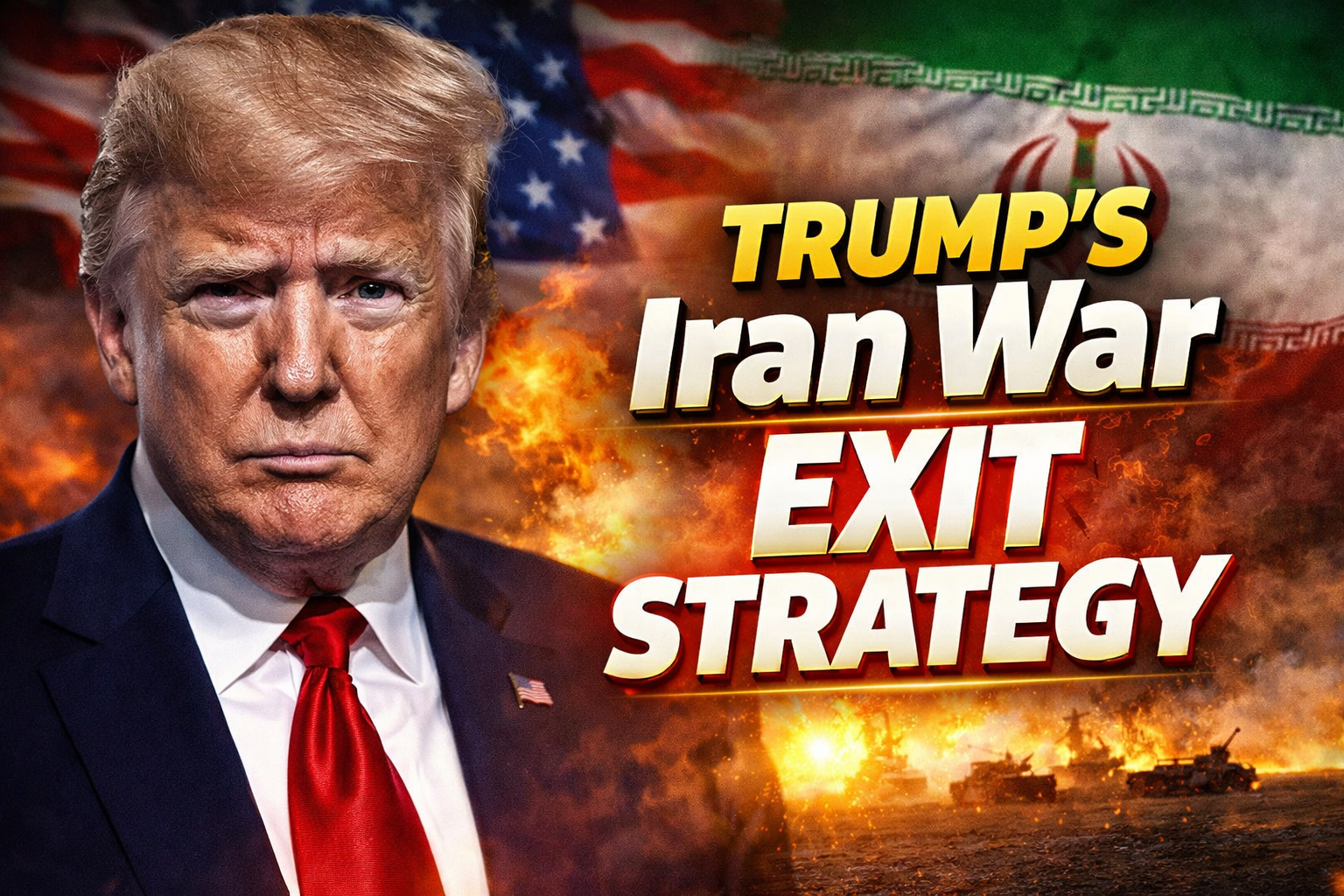
President Donald Trump’s second term has thrust the U.S. into direct confrontation with Iran, but true to form, he promises a swift exit. On March 31, 2026, Trump declared the Iran war could wrap in two to three weeks, claiming victory after crippling Tehran’s capabilities. This pullback strategy hands the Strait of Hormuz hotspot to allies, prioritizing American lives and wallets over endless entanglement.
The move caps months of airstrikes on Iranian nuclear sites, proxy militias, and oil infrastructure. With Brent crude dipping to $104 per barrel on de-escalation hopes, markets cheer, but risks loom large. Iran’s battered regime faces internal chaos, while Gulf states scramble. This analysis unpacks the timeline, energy fallout, and what comes next in a region forever altered.
Roots of the Iran Confrontation
Tensions boiled over from Trump’s “maximum pressure” revival. Reelected in 2024, he ditched Biden-era nuclear talks, slapping fresh sanctions and greenlighting Israeli preemptive hits. Iran’s retaliation—drone swarms on U.S. ships, Houthi blockades—forced Trump’s hand. By early 2026, carrier groups steamed into the Gulf, pounding IRGC bases.
Objectives crystallized: neuter nuclear ambitions, dismantle missile arsenals, sideline Hezbollah and Houthis. Trump framed it as “Stone Age reversion” for Iran, vowing no forever wars. Casualties stayed low via precision strikes, buying political cover for exit.
Exit Strategy Unveiled
Trump’s playbook blends bravado and pragmatism. No full occupation—just enough pain to force concessions. Key demands: scrap weapons-grade plutonium, scrap ballistic missiles, disarm proxies from Yemen to Lebanon. Diplomacy? Optional. “Iran doesn’t need a deal,” Trump shrugged, eyeing a unilateral pullout.
Handover targets Saudi Arabia, UAE, and Israel for Strait policing. China and Pakistan mediate a five-point peace pitch, restoring passage sans U.S. boots. Critics decry it as Vietnam redux—ceding leverage—but Trump insists objectives met, time to go.
Military Pullback Timeline
Phased withdrawal minimizes chaos. Here’s the roadmap:
| Phase | Timeline | Actions | Locations Affected |
|---|---|---|---|
| Initial Drawdown | April 2026 | Evacuate forward bases, special ops pivot | Iraq (Ain Al-Asad), Syria |
| Core Reduction | May-June 2026 | Pull carriers, halve air wings | Persian Gulf, Red Sea |
| Strait Handover | July 2026 | Allies assume patrols; U.S. to Diego Garcia | Strait of Hormuz |
| Full Exit | September 2026 | Last troops out, NATO advisers gone | Iraq, Kurdistan (Erbil) |
Iraq leads the pack: U.S. forces vacated federal bases by early 2026, with Kurdistan lingerers exiting by fall. Syria follows suit, no ISIS justifying presence. Trump accelerates prior pacts, declaring “mission accomplished” sans quagmire.
Key Players and Negotiations
Allies squirm. Saudis bulk up navy for Hormuz duty; Israelis demand ironclad nukes veto. Europe frets energy spikes; G7 pledges “necessary measures” for stability. China, Pakistan push ceasefires, eyeing cheap oil flows.
Iran, reeling from blacked-out power grids and desalination woes, signals flexibility via backchannels. Proxies fracture—Houthis waver without Tehran cash. Trump tells allies: “Get your own oil,” shrugging off pleas.
Energy Crisis Unfolding
War throttled 20% of global supply via Hormuz threats. Iran’s Kharg Island terminals smolder; Saudi fields dodge drones. Brent hit $130 peaks in March, gassing U.S. pumps to $5/gallon. Trump’s exit dips prices 2.6%, but volatility reigns.
Downstream chaos: refineries idle on tainted crude, shipping rates triple. Asia starves first—China rations, India blackouts surge. Europe taps reserves; U.S. drills domestic shale frenzy. Desalination bombs risk water wars in arid Gulf.
Stats and Economic Data
Numbers tell the tale. Oil metrics shifted wildly:
| Metric | Pre-War (2025) | Peak War (Mar 2026) | Post-Exit Projection |
|---|---|---|---|
| Brent Crude ($/bbl) | $85 | $130 | $100-110 |
| U.S. Gas ($/gal) | $3.20 | $5.10 | $4.00 |
| Global Supply (mbd) | 102 | 82 | 95 |
| Strait Flow (mbd) | 21 | 5 | 18 |
| Inflation Impact (%) | 2.5 | 4.8 | 3.5 |
Damage tallies $1.2 trillion globally: lost GDP, stranded assets. U.S. consumers gripe, but shale booms 15% output. Renewables stall as grids prioritize fossil buffers.
Geopolitical Repercussions
Vacuum invites sharks. Russia woos post-pullout Iran with arms; Turkey eyes Kurdish gains. Nuclear dominoes: Saudis mull bombs if Tehran rebuilds. Israel patrols solo, risking overstretch.
Proxies scatter: weakened Hezbollah cedes Lebanese turf; Houthis pivot to piracy. China locks Gulf ports via debt-trap bases. U.S. pivots to Pacific, but credibility dips—foes test resolve elsewhere.
Domestic U.S. Impacts
Homefront splits. MAGA base cheers “no more blood for oil”; doves applaud. Hawks warn Hormuz loss invites 1979 rerun. Midterms loom: gas prices sway swing states.
Economy mixed: inflation bites, but manufacturing re-shores sans cheap imports. EVs falter at pumps; Trump’s “energy dominance” drills Alaska anew. Public fatigue peaks—polls show 65% back exit.
Long-Term Outlook
Optimists see stability: Iran humbled, markets normalize, U.S. refocuses China. Pessimists predict blowback—emboldened ayatollahs, Saudi-Iran cold war, $150 oil redux.
Scenarios branch: diplomatic win locks cheap energy; failed handover spikes chokepoints. Trump bets on strength yielding peace. Gulf realigns around Sunni bloc; U.S. sells LNG to former foes.
This exit tests “America First.” Risks abound, rewards tantalize. As troops board ships, the world watches if Trump’s gamble pays—or backfires spectacularly.

Abhinav Jain is a legal researcher and writer passionate about simplifying complex laws for everyday readers. With a keen interest in Indian constitutional, civil, and digital laws, he focuses on creating accessible, well-researched articles that promote legal awareness among students, professionals, and citizens alike.