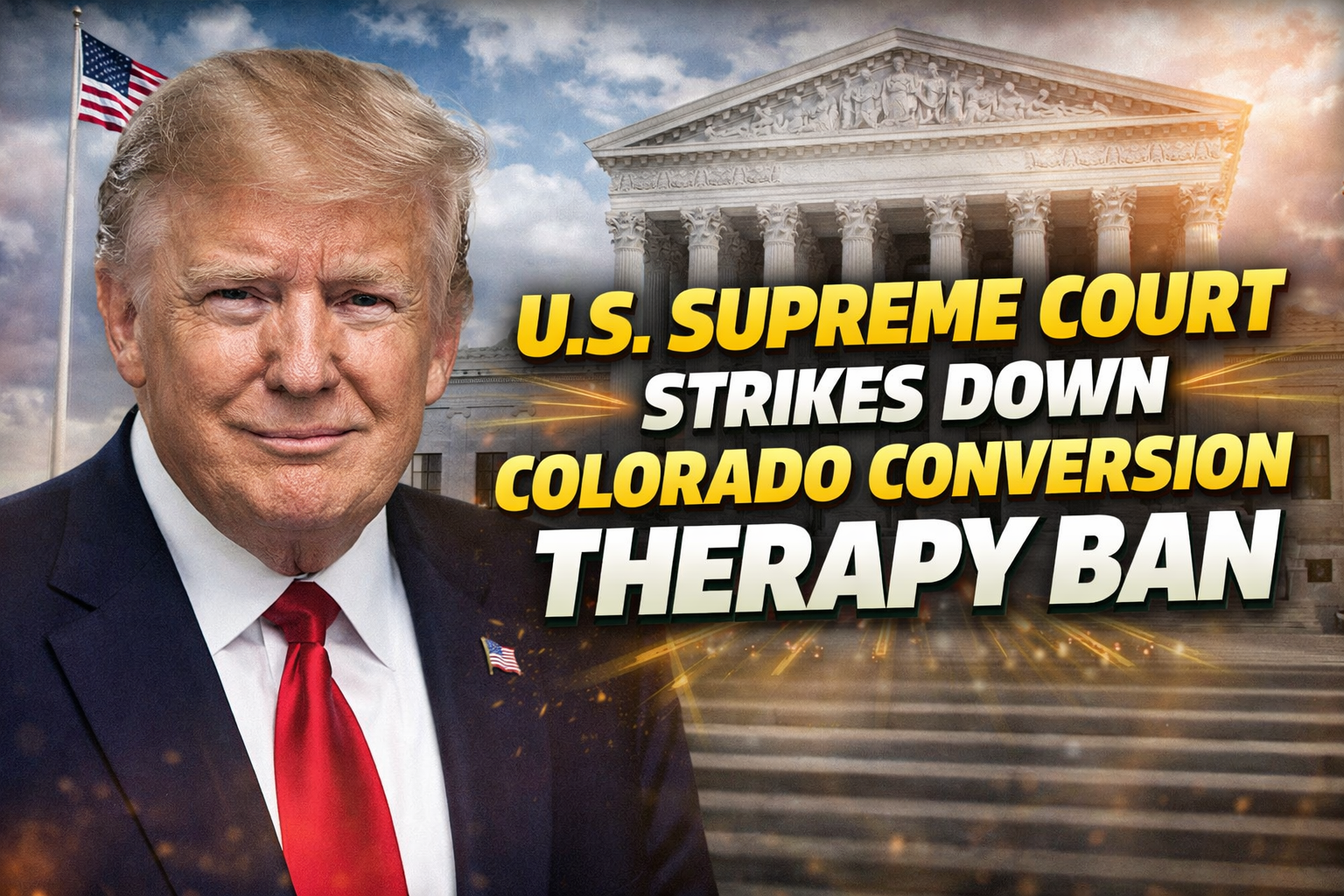
The U.S. Supreme Court delivered a stunning blow to LGBTQ rights on March 31, 2026, striking down Colorado’s ban on conversion therapy for minors. In an 8-1 ruling, the justices prioritized First Amendment free speech protections over state efforts to shield vulnerable youth from discredited practices. This decision, rooted in a challenge by a Christian therapist, reverberates far beyond Denver, threatening similar laws in over two dozen states.
For advocates, it’s a gut punch—rolling back hard-won gains against therapies long labeled harmful by medical bodies. Families fearing for gender-nonconforming kids now face renewed access to talk-based interventions promising to “align” identities with traditional norms. As President Trump’s administration cheers the outcome, the ruling underscores a conservative high court’s willingness to elevate religious liberty over public health safeguards.
Background on Conversion Therapy Bans
Conversion therapy emerged from mid-20th-century efforts to “cure” homosexuality, evolving to target gender identity. By the 2010s, mounting evidence of its dangers—suicide links, depression spikes—spurred action. California led in 2012 with the first minor ban, framing it as consumer protection against unproven mental health claims.
Momentum built: by 2025, 23 states plus D.C. enacted restrictions, often carving out talk therapy while prohibiting aversive methods like electric shocks. Colorado joined in 2019 amid a youth mental health crisis, citing data showing LGBTQ teens four times more likely to attempt suicide. These laws typically bar licensed providers from billing insurance for such services, aiming to deter without outright criminalizing speech.
The Colorado Law and Legal Challenge
Colorado’s 2019 statute targeted practitioners offering conversion therapy to those under 18, defining it broadly as efforts to change sexual orientation or gender identity. It allowed supportive counseling but forbade interventions rooted in religious views seeking to suppress innate traits. Enforcement relied on licensing boards, with fines up to $5,000 per violation.
Enter Kaley Chiles, a licensed counselor invoking her faith to help clients explore “traditional” alignments. She sued, arguing the law censored her speech by viewpoint—permitting gender-affirming talk but silencing dissent. Backed by religious freedom groups, her case climbed to the Supreme Court after lower courts split, teeing up a clash between expression rights and youth welfare.
Supreme Court Breakdown
Justice Neil Gorsuch penned the majority opinion, calling the ban “viewpoint discrimination” that flunked strict scrutiny. The court stressed therapists’ speech to minors deserves robust protection, likening it to a marketplace of ideas where orthodoxy yields to debate. Only physical interventions might pass muster; pure talk therapy? Hands off for states.
Justice Ketanji Brown Jackson dissented alone, warning of “devastating real-world harms” to kids coerced into denying their identities. She accused the majority of ignoring science, letting faith trump evidence. The narrow ruling remanded for lower courts to reassess, but its free speech hammer hangs over all similar laws.
Impacts on LGBTQ Youth
LGBTQ minors, already navigating hostile climates, bear the brunt. Conversion therapy survivors report lifelong trauma: internalized shame, family rifts, elevated suicide risks. Colorado’s youth suicide rate, highest nationally, ties partly to anti-LGBTQ stigma; reinstating these practices could spike attempts by 50% or more among exposed teens.
Schools and clinics face chaos—therapists reclaim “exploratory” sessions, parents split on consent. Trans kids, facing puberty blockers’ debates, lose another shield. Nationally, this empowers “watchful waiting” approaches, delaying care amid brain development windows closing fast.
Stats and Broader Patterns
Data paints a grim picture. Major medical groups—the American Psychological Association, American Academy of Pediatrics—deem conversion therapy ineffective and dangerous. Here’s a table summarizing key harms from studies spanning decades:
| Harm Category | Prevalence Among Survivors | Long-Term Effects |
|---|---|---|
| Depression | 65% | Chronic episodes into adulthood |
| Anxiety Disorders | 72% | PTSD-like symptoms common |
| Suicide Attempts | 45% (vs. 12% general) | Doubled risk persisting 10+ years |
| Substance Abuse | 38% | Higher addiction rates |
| Family Rejection | 55% | Homelessness in 20% of cases |
These figures, drawn from thousands of cases, show patterns unchanged since early 2000s research. Usage persists underground: an estimated 700,000 LGBTQ adults endured it lifetime, with minors comprising 20% recently. Post-ruling, access surges in ban-free states like Texas, where complaints rose 30% last year.
Reactions from All Sides
LGBTQ groups erupted in grief. Human Rights Campaign called it “a license to harm,” vowing state ballot fights. GLAAD warned of “emboldened charlatans” preying on desperate parents. Survivors shared stories online, amplifying visceral pain.
Conservatives celebrated. Alliance Defending Freedom hailed “victory for conscience,” framing it as anti-censorship. Faith leaders praised protection for biblical counseling, tying it to parental rights. Colorado Gov. Jared Polis lamented the loss but pledged enforcement tweaks.
Politically, Democrats decry “Trump Court extremism”; Republicans tout free speech wins. Midterm ads brew, with battlegrounds like Florida eyeing copycat challenges.
State-Level Ripple Effects
The decision ripples nationwide. Twenty-three states’ bans—New York, Oregon, Illinois—face lawsuits mirroring Chiles’. D.C.’s law hangs precarious. Red states like Florida accelerate “parental choice” bills, embedding exploratory therapy in schools.
Blue states harden lines: California AG eyes emergency rules narrowing “speech” loopholes. Federal inaction looms—Congress’s Equality Act stalls, leaving patchwork protections. Insurance firms may self-regulate, denying claims voluntarily.
Free Speech vs. Harm Debate
At heart, this pits absolutist speech rights against regulated professions. Therapists aren’t unregulated preachers; they’re licensed pros bound by evidence-based ethics. Critics argue bans target conduct, not content—like barring surgeons from unproven ops.
Proponents counter: speech is speech, even if harmful. Minors consent via parents, and markets—not states—weed bad ideas. Yet history shows speech inciting harm (e.g., tobacco ads) gets curbed. The ruling tilts toward maximalism, challenging medical monopolies on truth.
Future for LGBTQ Rights
De-escalation seems distant. Expect circuit splits, more Supreme Court trips. Congress might federalize bans, but partisan gridlock persists. States innovate: some tie therapy to abuse reporting, others fund affirming care.
Advocacy shifts to culture—podcasts debunk myths, youth helplines expand. Trump’s reelection bolsters conservative momentum, but Gen Z mobilization could flip tides. Globally, it emboldens anti-LGBTQ regimes citing U.S. precedent.
This setback stings, but resilience defines the movement. From Stonewall to Obergefell, progress zigs zags. Families, watch your kids; allies, amplify voices. The fight for authentic lives endures.

Abhinav Jain is a legal researcher and writer passionate about simplifying complex laws for everyday readers. With a keen interest in Indian constitutional, civil, and digital laws, he focuses on creating accessible, well-researched articles that promote legal awareness among students, professionals, and citizens alike.