
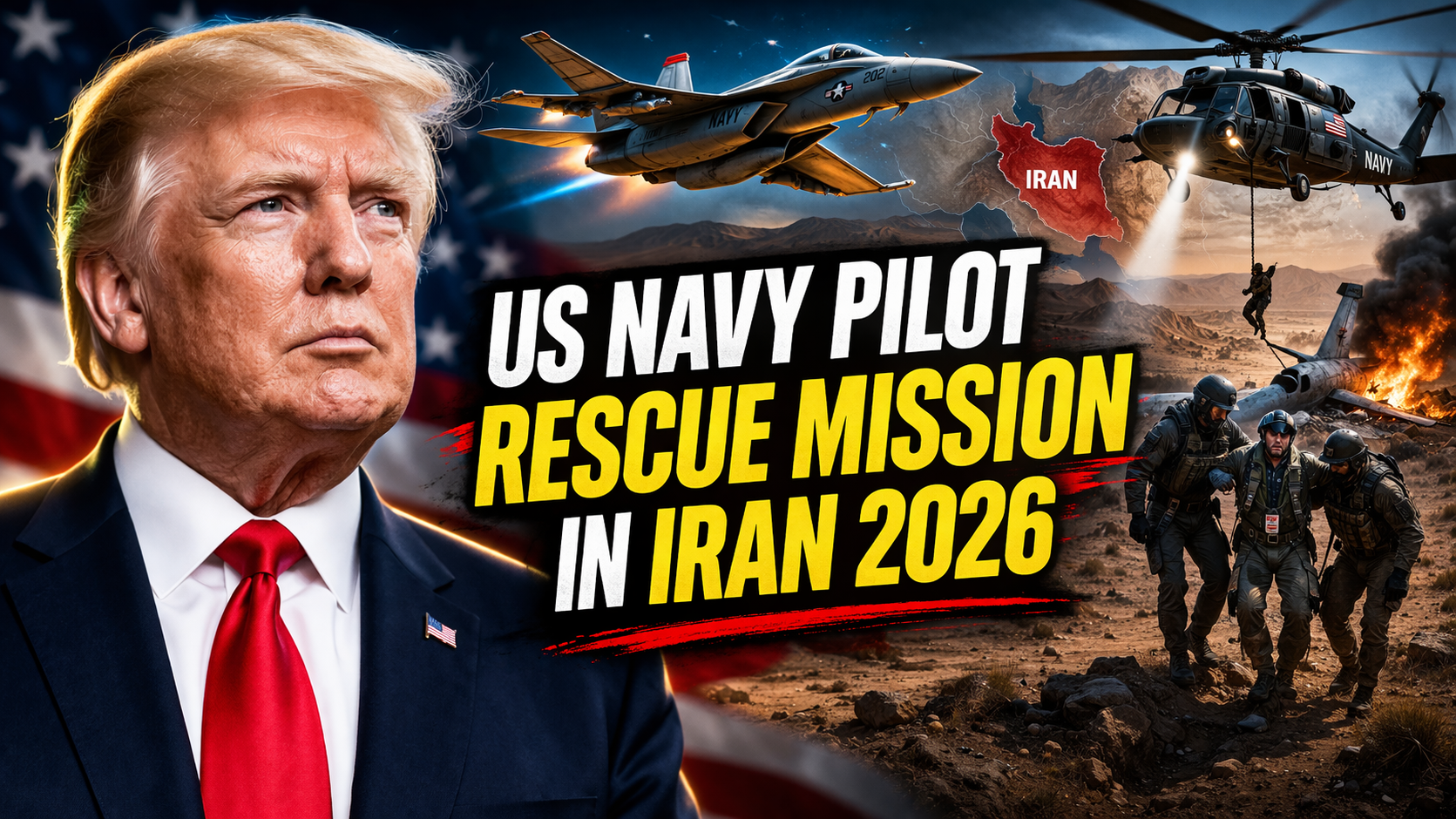
In early April 2026, a tense, high‑stakes drama unfolded in the skies and mountains of Iran, shining a harsh spotlight on the growing US–Iran confrontation. A US F‑15E Strike Eagle belonging to the 494th Fighter Squadron was shot down deep inside Iranian territory, marking the first confirmed downing of a US fighter in the current phase of the 2026 Iran war. The aircraft’s two crew members—its pilot and weapon systems officer (WSO)—survived the ejection but found themselves stranded in hostile, mountainous terrain, triggering a large‑scale combat search and rescue (CSAR) operation involving US Navy, Air Force, and special operations forces. The mission, which unfolded over roughly 48 hours, became one of the most audacious American rescue efforts in the Middle East in decades, blending covert insertion, air‑to‑ground strikes, and a nerve‑wracking race against Iranian ground units and local militias.
The Downed Jet: What Happened Over Iran
The incident began on April 3, when the F‑15E Strike Eagle, operating from a forward Middle East base, was conducting a strike or patrol mission over southern Iran. According to US military sources, the jet was intercepted and hit by Iranian air defenses, likely advanced surface‑to‑air missile systems deployed along the country’s interior corridors. The aircraft went down, and both crew members successfully ejected. The pilot came down closer to the crash zone and was quickly detected by US surveillance assets, but the WSO landed further into the rugged Zagros Mountains, where the terrain and local population complicated efforts to locate and secure him.
Iran’s state media moved swiftly to publicize the event, broadcasting images of the wreckage and claiming responsibility for the shootdown. Tehran’s narrative framed the downing as a decisive blow against US air power and a deterrent to continued strikes along its borders. The case of a second US aircraft—later reported as an A‑10 Thunderbolt II also shot down in the region—added to the gravity of the situation and signaled that any rescue attempt would have to run the gauntlet of Iranian air defenses, quick‑reaction ground units, and local militias.
Launching the Rescue: Scale and Tactics
Once the US confirmed the F‑15E had gone down with survivors, Pentagon planners activated a multi‑domain rescue package that drew on Navy, Air Force, and special operations assets. The mission was not a simple recovery over water or a nearby friendly base; it involved inserting forces hundreds of miles inside Iranian territory, under the shadow of hostile air defenses and a kinetic campaign already underway.
The operation reportedly mobilized hundreds of US soldiers and special operators, supported by dozens of aircraft ranging from heavy transport planes to attack helicopters and stealthy ISR drones. US forces established a forward operating base at a small, abandoned agricultural airstrip roughly 14 miles north of Shahreza City in southern Isfahan, using it as a staging point for quick rotations, casualty evacuation, and command oversight. Helicopters shuttled operators in and out, while fixed‑wing assets ran orbits overhead, ready to suppress Iranian ground forces if they closed in on the stranded airman.
Iran, meanwhile, launched its own search effort, with units of the Islamic Revolutionary Guard Corps (IRGC) and local militias moving toward the suspected crash and landing zones. Reports indicated that Iranian officials even offered a bounty of about 60,000 US dollars for information leading to either crew member, underscoring the political stakes Tehran assigned to capturing or killing a US pilot. The race between US forces, Iranian troops, and local tribesmen in the Zagros Mountains turned the rescue into a live chess‑style contest, with electronic surveillance, deception, and close‑range firefights shaping the outcome.
The Navy’s Role in the Broader Theater
Although the F‑15E belonged to the Air Force, the US Navy’s role in the 2026 Iran crisis provided the backdrop that enabled such a high‑risk rescue. Since late January 2026, the United States had been building up a massive naval presence in the Middle East, sending carrier strike groups, destroyers, and amphibious ships into the North Arabian Sea, the Persian Gulf, and the Gulf of Oman. The USS Gerald R. Ford and the USS Abraham Lincoln were both reported en route to or already operating in the region, creating a rare two‑carrier posture that signaled a readiness for sustained air and naval operations.
From the Navy’s perspective, the downed F‑15E and the ensuing rescue operation highlighted the proximity and interoperability of air and maritime power. Carrier‑based fighter squadrons conducted overhead strikes against Iranian missile sites, radar installations, and ground‑based air defenses, helping to suppress the very systems that had shot down the F‑15E. At the same time, Navy ships provided long‑range strike, missile‑defense, and logistics support, ensuring that land‑based rescue assets had breathing room to operate. In some reports, Navy‑linked special operations aviation and ISR assets were integrated into the rescue package, blurring the line between “Navy‑led” and “joint‑force” operations in the public eye.
The Climax: Recovering the Weapon Systems Officer
The most dramatic phase of the rescue unfolded over the Zagros mountain zone, where the WSO, injured but alive, had managed to conceal himself in a crevice or remote outcrop. US intelligence and special operations units, guided by drone feeds and signals‑intelligence, narrowed his location and devised a plan to reach him before Iranian forces did. The CIA reportedly ran a disinformation campaign within Iran, feeding local media and chatter networks the claim that the airman had already been rescued, in an effort to mislead or slow the Iranian search.
As US special operators moved in, helicopters and attack aircraft kept Iranian convoys at bay through a mix of verbal warnings, show‑of‑force passes, and, when necessary, precision strikes. Several US Black Hawk helicopters were hit by small‑arms fire from local tribesmen and militia units, but none went down, and the crews continued their mission. At one point, US attack jets dropped bombs on Iranian convoys advancing toward the area, forcing them to halt or retreat and buying critical time for the ground team.
Iranian officials claimed that their forces disrupted the operation and even shot down multiple US aircraft, including the A‑10 Warthog and additional drones. The US later acknowledged the loss of the A‑10 and the intentional destruction of at least two C‑130 Hercules transport planes at the temporary airstrip, which had become too stuck in soft ground to be recovered without risking capture. The US also confirmed damage to a number of MH‑6 or AH‑6 light helicopters from the 160th Special Operations Aviation Regiment, most of which were reportedly destroyed by their own crews to prevent them from falling into enemy hands.
By April 5, the US announced that the WSO had been successfully retrieved, injured but alive, after a grueling 48‑hour ordeal. No US service members were reported killed in the operation, although some helicopter crews sustained injuries from small‑arms fire. The successful extraction of both crew members transformed what could have been a major propaganda victory for Iran into a showcase of US special‑operations capability and the “no‑one‑left‑behind” ethos that has underpinned American military doctrine for decades.
Reacting to the Mission at Home and Abroad
In Washington, the rescue quickly became a talking‑point centerpiece for the Trump administration. President Donald Trump took to Truth Social, posting a terse but emphatic “WE GOT HIM!”, and later praised the operation as “the most daring operation in US history,” drawing parallels to previous hostage‑rescue efforts such as the Entebbe raid and Scott O’Grady’s 1995 Bosnia rescue. The White House and Pentagon echoed the sentiment, highlighting the bravery of special operations troops, the integration of intelligence agencies, and the coordination across military branches.
Israel’s government also weighed in, with Prime Minister Benjamin Netanyahu calling the successful rescue a reaffirmation of the principle that “no one is left behind.” The Israeli‑US partnership in the 2026 Iran war had already included joint strikes on Iranian nuclear and missile facilities, and the shared framing of the rescue as a model of allied deterrence reinforced the message that the US and Israel were prepared to go deep into hostile territory to protect their personnel.
In Iran, the narrative diverged sharply. Iranian officials and state‑linked media continued to tout the downing of the F‑15E and later the A‑10 as a triumph of national defense, pointing to the ability of Iranian air defenses to intercept US aircraft. Some hardline outlets compared the US rescue attempt to the failed Operation Eagle Claw in 1980, framing it as another example of American overreach that was only partially salvaged by luck. Yet the fact that both crew members were ultimately recovered and that the US claimed the operation as a success undercut the full propaganda value Tehran had hoped to extract from the shootdown.
Casualties, Losses, and What the Mission Cost
From a hard‑data perspective, the rescue operation exacted a measurable toll on both sides, even if the Americans avoided fatalities. The loss of the two‑seat F‑15E itself was the trigger event, but the supporting fight included the shoot‑down of an A‑10 Thunderbolt II whose pilot ejected over Kuwait and was later recovered, as well as the deliberate destruction of at least two C‑130s and several light helicopters. Iranian sources claimed three IRGC members killed, while the US reported no American deaths but acknowledged injuries among helicopter crews.
Iran also claimed the downing of at least one Israeli Hermes‑900 drone and one US MQ‑9 Reaper in Isfahan Province, likely timed to the same window as the rescue operation. The US has not fully confirmed those losses, but the broader pattern underscores how the skies over central Iran have become a contested domain, where drones, fighters, and helicopters operate in a dense, high‑risk environment. The cost of even a “successful” CSAR mission, therefore, includes not only the risk to human lives but also the depletion of high‑end platforms and the political price of admitting battlefield losses.
Implications for Middle East Military Operations
The 2026 F‑15E rescue operation in Iran offers several sobering lessons for US military planners and policymakers as the broader Iran war grinds on. First, it confirms that operating near or inside Iranian airspace will remain a high‑risk proposition, with capable air‑defense systems, terrain that favors the defender, and local populations that can be leveraged both by Iranian forces and by US operators. Future missions will need to build in deeper contingency planning for downed pilots, including more robust evasion and recovery protocols, hardened communications, and pre‑positioned extraction packages.
Second, the mission underscores the centrality of special operations forces in modern conflicts. Navies and air forces may project power and deliver strikes, but the extraction of isolated personnel often falls to small, highly trained units working in austere, politically sensitive environments. The 2026 rescue will likely become a case study in how to blend air power, ground maneuver, intelligence, and psychological operations in a denied or contested zone.
Finally, the operation illustrates the way battlefield events can quickly reshape the political narrative. For the US, a successful pilot recovery can help offset the optics of aircraft losses and sustain domestic support for a difficult war. For Iran, even a failed capture attempt can still feed narratives of national resilience and resistance, especially when paired with claims of enemy casualties and downed platforms. In this sense, the rescue mission was not just a military feat—it was also a high‑stakes exercise in perception management, with each side trying to spin the same set of facts into a story of victory.
Looking Ahead: What the 2026 Rescue Means for US Navy Strategy
For the US Navy, the 2026 Iran pilot rescue reinforces the value of forward‑deployed carrier strike groups, integrated air‑and‑sea task forces, and robust special‑operations aviation support. It also highlights the need for more flexible logistics, including the ability to use austere or improvised strips behind enemy lines and to rapidly rotate maintenance and recovery assets. As the US continues to balance operations in the Middle East with growing competition in the Indo‑Pacific and elsewhere, the Navy will have to weigh how much of its force it can afford to keep committed to the region.
The rescue operation also raises questions about the long‑term sustainability of high‑intensity campaigns near Iran’s borders. The combination of advanced air defenses, drone warfare, and conventional strikes means that every sortie carries the risk of another shootdown and another CSAR mission. If the US is forced to run such operations repeatedly, the cumulative cost—in lives, platforms, and political capital—could become a limiting factor even if each individual mission is successful.
In the short term, however, the 2026 US Navy–assisted pilot rescue in Iran stands as a stark example of how far American forces will go to bring their own home. It is a reminder that, even in an era of standoff strikes and AI‑enabled drones, the human factor—downed pilots, isolated crews, and the teams sent to retrieve them—remains at the heart of modern warfare. The mission in the Zagros Mountains did not bring an end to the Iran conflict, but it did draw a bright line under the idea that US personnel, wherever they fall, are not considered expendable.

Abhinav Jain is a legal researcher and writer passionate about simplifying complex laws for everyday readers. With a keen interest in Indian constitutional, civil, and digital laws, he focuses on creating accessible, well-researched articles that promote legal awareness among students, professionals, and citizens alike.