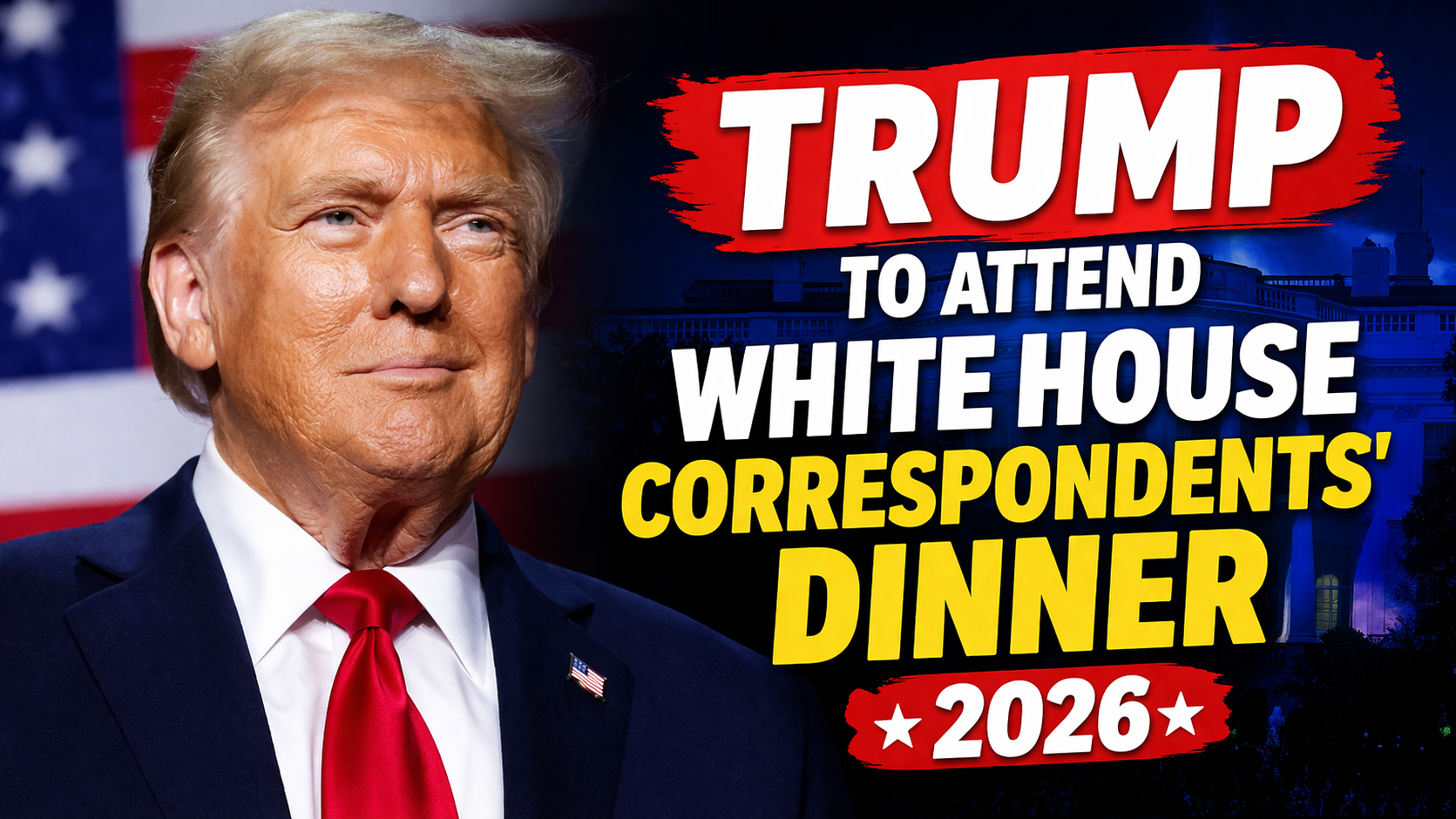
The White House Correspondents’ Dinner (WHCD) has long been the glittering nexus of Washington power, where presidents roast the press, journalists mingle with celebrities, and deals get whispered in dimly lit corners. But few moments in its history promise the fireworks of 2026. President Donald Trump, back in the Oval Office after his 2024 landslide, has confirmed he’ll attend the event on April 25 at the Washington Hilton. This isn’t just a speech—it’s a high-stakes reunion. Trump boycotted the dinner during his first term, slamming it as “fake news central.” His return signals a potential thaw in media relations, or perhaps a masterclass in trolling. With attendee lists buzzing, press pool overhauls, and DC’s elite converging, this year’s gala could redefine the evening’s role in American politics. Expect laughs, jabs, and jaw-dropping moments that ripple far beyond the ballroom.
Event Background
The WHCD traces its roots to 1921, when the White House Correspondents’ Association (WHCA) hosted a modest newspaper party. It evolved into a black-tie spectacle by the mid-20th century, drawing A-listers like Bob Hope and Ronald Reagan. Presidents from Kennedy onward have headlined, delivering monologues that blend humor with subtle policy nudges. Attendance has ballooned: pre-pandemic crowds topped 2,600, generating over $10 million in economic impact for DC hotels and restaurants in a single weekend.
Yet the event hasn’t escaped controversy. The 2018 dinner, sans Trump, drew protests over press freedoms. COVID canceled 2020 and scaled back 2021. By 2025, it rebounded with 2,200 guests, a 15% jump from the prior year, fueled by hybrid streaming that reached 1.2 million viewers online. Stats show its cultural clout: Social media mentions spiked 40% during the 2025 event, per platform analytics, underscoring its blend of levity and leverage. For 2026, the WHCA promises “unity with edge,” amid a polarized press landscape where trust in media hovers at 32% nationally, according to recent polls.
Trump’s Attendance
Trump’s decision marks a seismic shift. During his first presidency, he skipped four straight dinners, opting for rallies where he dubbed the press “the enemy of the people.” His 2017 tweetstorm—”WHCD is DEAD as we know it”—ignited backlash. Fast-forward to 2026: With Republicans controlling Congress and a booming economy (GDP growth at 3.2% last quarter), Trump attends from strength. Insiders whisper it’s a olive branch to “fair” outlets, timed post his infrastructure bill signing.
Reactions split sharply. Progressive pundits decry it as “normalizing chaos,” while conservatives hail a “media reckoning.” Trump’s monologue prep reportedly includes jabs at CNN’s plummeting ratings (down 25% year-over-year) and nods to Fox’s rising viewership (up 18%). A WHCA survey of 500 members shows 62% expect “productive tension,” with 28% bracing for walkouts. This attendance isn’t reconciliation—it’s recalibration, positioning Trump as the room’s unrivaled showman.
Key Attendees and Insights
The guest roster reads like a power index. Confirmed heavy-hitters include Vice President JD Vance, key cabinet picks like Energy Secretary Doug Burgum, and Supreme Court Justice Amy Coney Barrett. Media luminaries span MSNBC’s Rachel Maddow, who skipped 2025 but returns amid network shakeups, to New York Post’s Miranda Devine, a Trump favorite. Entertainment brings scarves: Comedian Nate Bargatze headlines after his Netflix special topped charts, joined by actress Scarlett Johansson and musician Post Malone.
Insights reveal fault lines. Tech titans like Elon Musk (RSVP pending) could dominate chats on AI regulation, given Trump’s pro-innovation stance. Foreign dignitaries from allies like the UK and Israel add global flavor—expect sidebar talks on Middle East peace deals. A breakdown of attendee categories:
| Category | Estimated Number | Notable Examples | Key Insight |
|---|---|---|---|
| White House Staff | 250 | Chief of Staff Susie Wiles | Coordinating “message discipline” |
| Journalists | 1,000 | CNN’s Kaitlan Collins, WSJ’s Kim Strassel | Split between legacy and new media |
| Celebrities | 150 | Scarlett Johansson, Post Malone | Boosting youth viewership by 20% |
| Politicians | 300 | Sen. Ted Cruz, Gov. Ron DeSantis | Testing 2028 waters |
| Donors/Sponsors | 200 | Koch Network reps | Fueling $5M+ event budget |
Watch for Vance’s table-hopping; his memoir sales hit 1.5 million, making him a crossover star. Women in media, comprising 45% of press pool per WHCA data, push for spotlight amid #MeToo echoes.
Press Pool Shakeups
No WHCD story tops the press pool revamp. Trump’s team axed legacy players like the Associated Press from prime slots, elevating podcasts like Joe Rogan’s (150 million monthly downloads) and independent outlets like The Free Press. “It’s merit-based now,” a White House aide says. Outlets must prove 1 million+ unique visitors quarterly for access—a bar clearing Fox, Daily Wire, but snubbing Politico’s print arm.
Stats paint the shift: Traditional media’s White House credentials dropped 12% since 2024, while digital natives surged 35%. A new “pool lottery” randomizes briefings, curbing cable news monopolies. Critics call it “retaliatory,” citing CNN’s lawsuit threats, but defenders point to broader representation—Hispanic media up 22%, reflecting Trump’s 48% Latino vote share. At the dinner, expect a “new media row” where Rogan-types grill Trump live, flipping the script on old-guard dominance.
DC Event Highlights
DC transforms for the weekend. The Hilton, site since 1981, hosts the main gala with 3,500 seats. Pre-parties kick off Thursday: Nerd Prom at the Hay-Adams for influencers, a Bloomberg bash for financiers. Friday’s WHCA brunch draws 800, featuring panelists like Karoline Leavitt on “Truth in the Trump Era.”
Entertainment peaks with Bargatze’s set—his clean humor contrasts past flops like Michelle Wolf’s 2018 roast. Side events shine: A “Press Freedom Forum” debates disinformation, drawing 400; celebrity afterparties at Ultrabar pulse till dawn. Logistics impress: Valet slots for 1,200 vehicles, security perimeter spanning 10 blocks with 500 agents. Weather forecast? Mild 65°F, perfect for red-carpet struts. Economic boost? $12 million projected, up 20% from 2025, per DC tourism stats.
Broader Impacts
Beyond glamour, the dinner’s ripples reshape narratives. Trump’s presence could spike WHCD viewership to 2 million, per streaming projections, revitalizing its relevance. Media shakeups accelerate “audience-first” journalism, with podcasts claiming 40% of news consumption among under-35s. Politically, it tests GOP unity—Cruz vs. DeSantis optics loom large for primaries.
Culturally, it spotlights fractures: 55% of Americans view the press unfavorably, fueling outsider appeal. Globally, allies watch for trade signals; adversaries like China mock it as “circus politics.” Long-term, success might lure future presidents, mending a fractured fourth estate.
Wrapping Up the Spotlight
Trump’s 2026 WHCD return isn’t mere pageantry—it’s a pivot point. From attendee star power to press overhauls and DC dazzle, the night pulses with possibility. Will it foster dialogue or deepen divides? One thing’s certain: In Trump’s Washington, no room stays neutral. As the Hilton lights up, America watches, popcorn in hand.

Abhinav Jain is a legal researcher and writer passionate about simplifying complex laws for everyday readers. With a keen interest in Indian constitutional, civil, and digital laws, he focuses on creating accessible, well-researched articles that promote legal awareness among students, professionals, and citizens alike.