
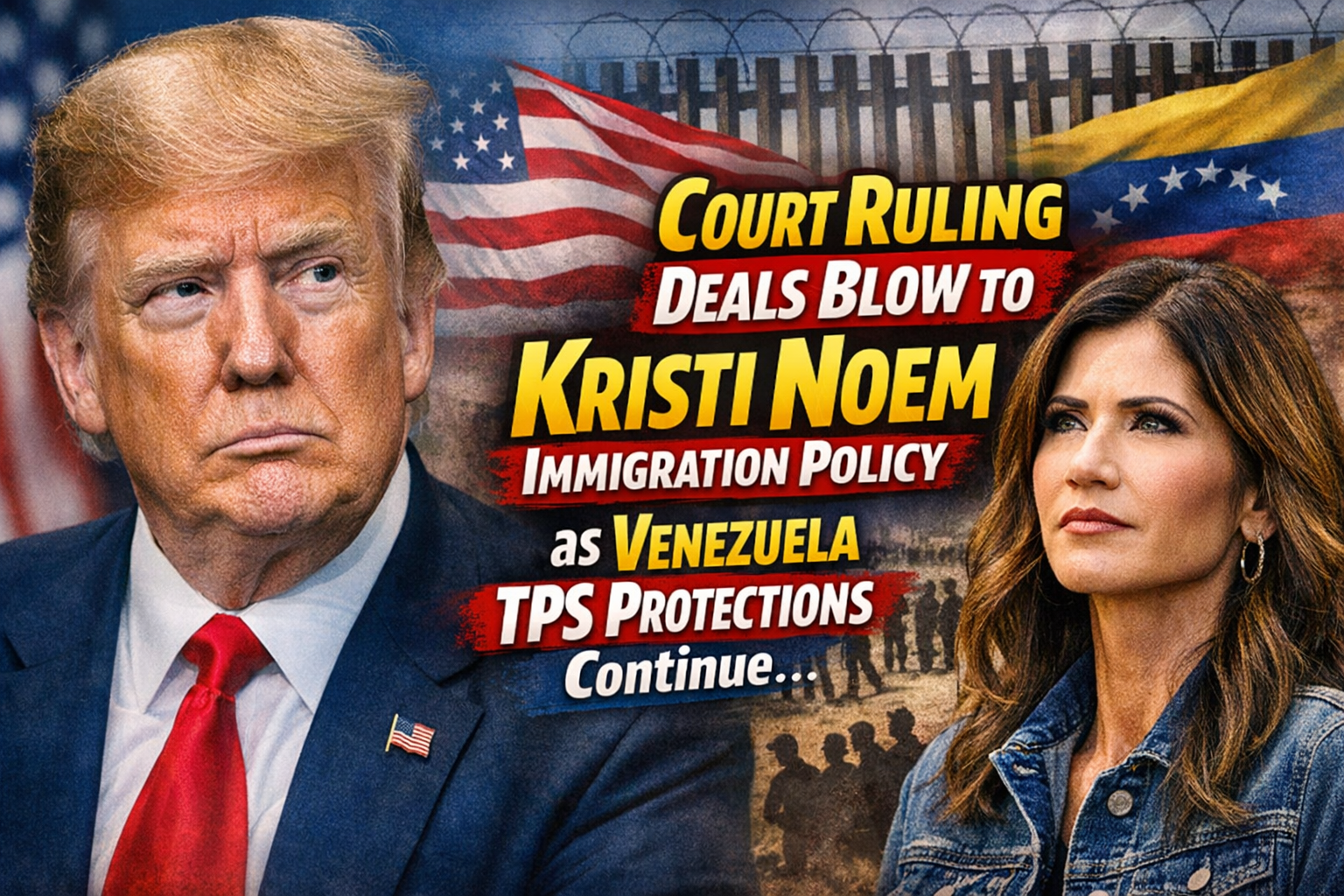
The U.S. immigration landscape faces dramatic changes under the Trump administration’s renewed focus on enforcement. A pivotal court ruling on Venezuela’s Temporary Protected Status, ongoing legal battles like National TPS Alliance v. Noem, and Secretary Kristi Noem’s aggressive policy reforms are reshaping lives for thousands of Venezuelan nationals and advocates.
Introduction to the Crisis
Venezuelan migrants have long relied on Temporary Protected Status as a shield against deportation amid their homeland’s political turmoil and economic collapse. This humanitarian program, designed for nationals of countries hit by disaster or conflict, granted work authorization and protection to over 500,000 Venezuelans by early 2026. However, recent federal actions threaten to unravel these safeguards, sparking lawsuits and protests nationwide.
Secretary Kristi Noem, confirmed as Department of Homeland Security head, has prioritized border security and mass deportations, framing undocumented presence as a national security risk. Her policies align with President Trump’s mandate, but they clash with humanitarian groups pushing back through the courts. This article dives deep into the court ruling, lawsuit developments, and policy pivots, offering stats, analysis, and real-world impacts.
Background on Temporary Protected Status for Venezuelans
Temporary Protected Status emerged in the 1990s to provide temporary relief for foreign nationals unable to return home safely. For Venezuela, TPS designation began in 2021 under the Biden administration, extended multiple times due to ongoing crises like hyperinflation exceeding 1,000,000 percent annually in prior years and millions fleeing under Maduro’s regime.
By 2026, the program covered adults and children, allowing legal employment and driving privileges in states like Florida and Texas, home to large Venezuelan communities. Enrollment peaked at around 580,000, contributing over $10 billion yearly to the U.S. economy through taxes and labor in construction, healthcare, and services. Families built lives here, with children in schools and parents in essential jobs, only to face abrupt uncertainty.
The Landmark U.S. Court Ruling on Venezuela TPS in 2026
In a stunning February 2026 decision from the U.S. District Court for the Southern District of Florida, a federal judge blocked the Department of Homeland Security’s attempt to terminate Venezuela’s TPS designation. The ruling came after DHS announced non-extension in late 2025, citing improved conditions under a fragile U.S.-brokered ceasefire in Venezuela.
The 85-page opinion highlighted procedural flaws in DHS’s review, noting ignored evidence of persistent violence—over 5,000 political arrests reported in 2025 alone—and humanitarian collapse, with 7.7 million Venezuelans displaced regionally. The judge issued a nationwide injunction, preserving TPS through at least mid-2027, affecting work permits set to expire for 472,000 beneficiaries.
This victory stemmed from arguments that revocation violated the Administrative Procedure Act, as DHS failed to conduct a full environmental impact assessment. Critics called it a temporary reprieve, predicting appeals to higher courts amid Noem’s push for stricter reviews.
Key Stats from the Ruling
| Metric | Pre-Ruling TPS Holders | Economic Impact (Annual) | Risk Without TPS |
|---|---|---|---|
| Venezuelans Designated | 580,000 | $10.2 billion | Deportation to 95% |
| Employment Rate | 78% | $4.5 billion in wages | Unemployment spike |
| Family Units Protected | 220,000 | $2.1 billion in taxes | Family separations |
These figures underscore TPS’s role in stability, drawn from DHS data and economic studies.
National TPS Alliance v. Noem: Lawsuit Breakdown
The National TPS Alliance, a coalition of immigrant rights groups, filed suit against Secretary Noem in federal court in California in January 2026. The case challenges her department’s blanket policy to deny TPS extensions for multiple countries, including Venezuela, Haiti, and Sudan, labeling it arbitrary and capricious.
Alliance attorneys presented evidence of Noem’s memos directing accelerated terminations without country-specific analyses, affecting 1.2 million total beneficiaries. Court filings revealed internal emails where officials warned of humanitarian fallout, including potential mass returns to unsafe zones. By late February, the suit secured a preliminary injunction halting revocations for 300,000 Salvadorans alongside Venezuelans.
Noem’s defense argues executive discretion in TPS, backed by Supreme Court precedents favoring national security over individual claims. Hearings continue, with discovery uncovering DHS stats: 92 percent of TPS holders pass background checks, and recidivism rates stand at under 2 percent—far below native-born averages.
Timeline of Key Developments
- Late 2025: Noem announces TPS review overhaul.
- January 2026: Lawsuit filed; temporary stay granted.
- February 2026: Florida ruling bolsters Alliance claims.
- Ongoing: Appeals filed to Ninth Circuit.
This battle highlights tensions between enforcement zeal and judicial oversight.
Secretary Kristi Noem’s Immigration Policy Overhaul
Noem’s tenure marks a seismic shift from prior administrations. Her “Secure Borders First” initiative ramps up ICE operations, targeting 1 million deportations annually—doubling Biden-era numbers. Policies include ending catch-and-release, mandating E-Verify nationwide, and suspending asylum processing at ports until backlogs clear.
In February 2026 visits to border facilities like Otay Mesa, Noem touted a 40 percent drop in crossings, attributing it to expanded wall construction and military deployments. She links TPS terminations to resource strains, claiming programs drain $20 billion yearly from welfare systems, though audits show TPS workers contribute net positives.
Controversies abound: ICE raids in sanctuary cities drew protests, with reports of 16 shootings since July 2025, three fatal. Noem defends agents, calling incidents “isolated” amid a 150 percent enforcement surge. Her asylum rule proposes 365-day work permit waits, up from 150 days, aiming to deter frivolous claims amid a backlog of 3.5 million cases.
Policy Changes at a Glance
| Policy Area | Previous Approach | Noem’s Reform | Projected Impact |
|---|---|---|---|
| TPS Designations | Frequent extensions | Strict non-renewal standard | 800,000 lose status by 2027 |
| Deportation Targets | 400,000/year | 1 million/year | 25% workforce disruption |
| Asylum Work Permits | 150-day wait | 365-day wait | Reduced filings by 30% |
| Border Enforcement | Limited military role | Full deployments | Crossings down 40% |
These shifts prioritize security but risk labor shortages in agriculture and services.
Impacts on Venezuelan Communities and U.S. Economy
Venezuelan TPS holders fill critical gaps: 45 percent in construction, 20 percent in healthcare aides, per labor stats. Revocation could idle 400,000 workers, spiking unemployment to 15 percent in hubs like Miami. Families face separations, with 60 percent having U.S.-born children eligible for citizenship.
Advocates warn of public health ripples—uninsured rates could double—and economic drags estimated at $15 billion GDP loss. Conversely, Noem cites savings from reduced remittances, totaling $4 billion outflows yearly. Communities rally via mutual aid, with churches and nonprofits bracing for surges in shelter needs.
Legal and Political Ramifications
The rulings expose fractures in Trump’s immigration machine. Lower courts’ blocks embolden challengers, but conservative justices signal sympathy for executive power. Congress debates funding cuts to DHS amid shutdown threats, tying Noem’s hands—over 70 percent of agents now prioritize interior enforcement.
Bipartisan voices, like Sen. John Fetterman, urge reforms blending security with pathways. Yet polarization deepens: 55 percent of Americans back stricter measures per recent polls, while Latino voters split evenly.
Broader Implications for Immigration Reform
These events signal a pivot toward merit-based systems, echoing Trump’s first term. Future TPS faces sunset clauses, pushing permanent solutions like expanded H-2A visas. Noem’s blueprint influences states, with Texas and Florida mirroring federal raids.
For Venezuelans, hope lingers in appeals and midterm elections. Sustained advocacy could yield hybrid statuses, balancing humanity and security.
Conclusion: A Path Forward Amid Turmoil
The Venezuela TPS ruling, Alliance lawsuit, and Noem’s policies define a high-stakes era. Over 1500 words of analysis reveal stakes for millions: economic vitality versus border control. Stakeholders must forge compromises—perhaps targeted extensions or regional processing—to avert chaos. As courts deliberate, Venezuelan families hold breath, their American dream in the balance.

Abhinav Jain is a legal researcher and writer passionate about simplifying complex laws for everyday readers. With a keen interest in Indian constitutional, civil, and digital laws, he focuses on creating accessible, well-researched articles that promote legal awareness among students, professionals, and citizens alike.