
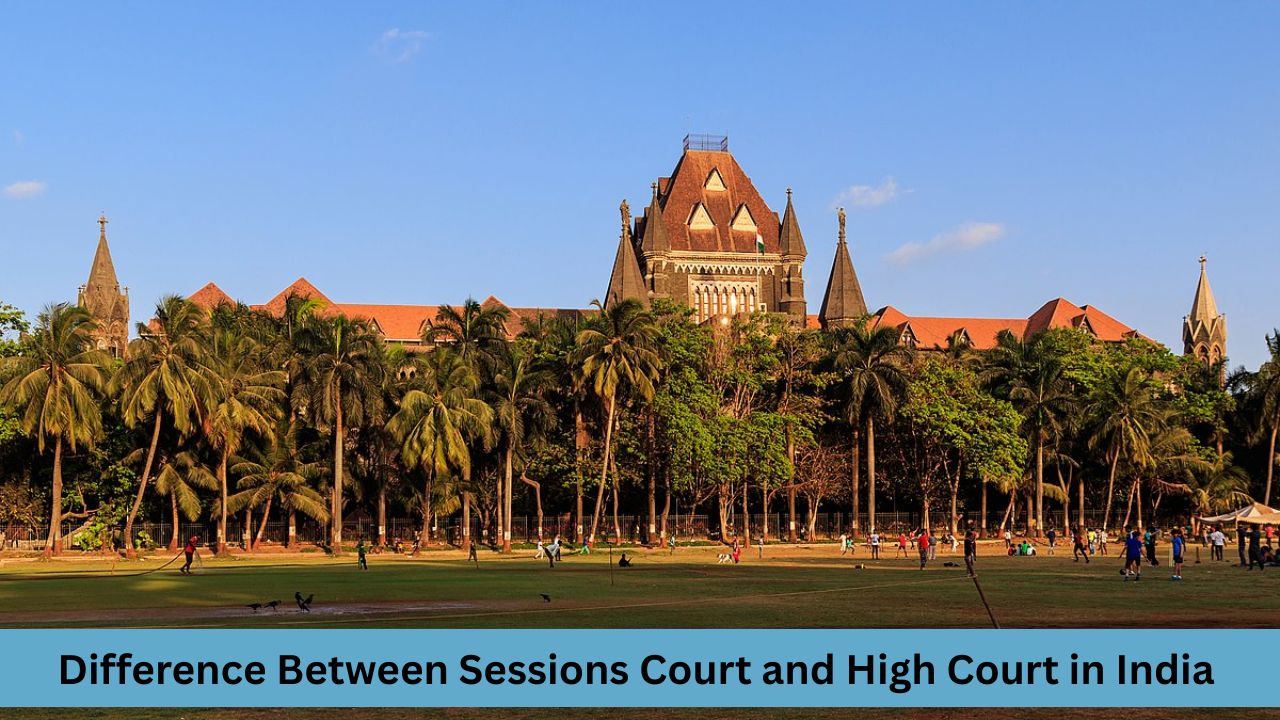
India’s judiciary is a multi-tiered system designed to administer justice at various levels and jurisdictions. Among the key entities are the Sessions Court and the High Court, each playing distinct and critical roles in upholding the rule of law. Understanding the fundamental differences between these courts is essential to grasp India’s legal framework.
Definition and Jurisdiction
Sessions Court
The Sessions Court, also known as the Court of Sessions, is a criminal court established by the state government for every sessions division under Section 9 of the Code of Criminal Procedure (CrPC), 1973. It is the principal court of first instance for trying serious criminal offenses such as murder, dacoity, robbery, and theft, where the punishment may exceed seven years, including life imprisonment or even the death penalty.
A Sessions Court is presided over by a Sessions Judge, appointed by the respective state’s High Court. The High Court may also appoint Additional Sessions Judges and Assistant Sessions Judges. The Sessions Court hears criminal trials and has the power to impose the full spectrum of punishments authorized by law.
High Court
The High Court is the highest judicial body in each state or group of states in India and functions as an appellate court as well as a court of original jurisdiction in certain matters. It enjoys supervisory jurisdiction over all subordinate courts, including District and Sessions Courts, within its territorial limits.
The High Court is vested with extensive powers, including the authority to hear appeals from decisions of the Sessions Court and other lower courts. Judges of the High Court are appointed by the President of India, and the court is headed by a Chief Justice along with several other judges depending on the state.
Key Differences Between Sessions Court and High Court
| Aspect | Sessions Court | High Court |
|---|---|---|
| Appointment of Judges | Judge appointed by the State High Court | Judges appointed by the President of India |
| Jurisdiction | Primarily tries serious criminal cases | Hears appeals from lower courts and exercises original jurisdiction in certain cases |
| Types of Cases | Criminal cases involving offenses punishable with imprisonment of over seven years including capital punishment | Civil, criminal, constitutional, and administrative cases |
| Number of Courts | Multiple Sessions Courts exist across different divisions within a state | One High Court per state or group of states |
| Appellate Power | Can hear appeals from Magistrate Courts | Can hear appeals from Sessions Courts and has supervisory jurisdiction over all subordinate courts |
| Authority | Trial court with power to impose sentences including death penalty | Highest court within the state judiciary, subject to Supreme Court of India |
| Role in Judicial Hierarchy | Subordinate to High Court | Superior court with authority over Sessions and other lower courts |
| Scope of Work | Delivers judgments in criminal trials, also hears appeals from Magistrate courts | Supervises and oversees functioning of all subordinate courts including administrative and legal oversight |
Roles and Functions of Each Court
Sessions Court Functions
- Conducts trial of serious criminal offenses under the Indian Penal Code (IPC) and other laws.
- Hears appeals from decisions of lower Magistrate courts within its jurisdiction.
- Exercises revisional powers to correct errors in proceedings of subordinate courts.
- Has the authority to grant bail and impose punishment including imprisonment and fines.
- Sessions Courts are typically district-level courts or cover sessions divisions.
High Court Functions
- Hears appeals and revisions from Sessions Courts as well as from civil courts and tribunals.
- Exercises original jurisdiction in cases involving constitutional matters, company laws, and writ petitions.
- Supervises all subordinate courts and magistrates within the state.
- Can punish for contempt of court to maintain the authority of the judiciary.
- Issues directions, orders, and writs for enforcement of fundamental rights and legal remedies.
Relationship Between Sessions Court and High Court
The Sessions Court operates as a trial court handling serious criminal offenses. Its decisions can be challenged and appealed in the High Court, which examines the legality and correctness of the trial court’s judgment. The High Court’s supervisory role ensures that Sessions Courts and other lower courts function within the bounds of law, maintaining justice and fairness.
Conclusion
In summary, the Sessions Court and High Court serve different but complementary roles within India’s judicial system:
- The Sessions Court acts as a major trial court specifically for criminal cases with significant penalties.
- The High Court serves as the apex judicial authority at the state level, exercising appellate, original, and supervisory jurisdictions.
Together, they form an essential part of the judiciary’s structure, ensuring that justice is administered at both grassroots and higher appellate levels. Understanding their differences helps in navigating legal processes and appreciating the layered system of courts in India.

Abhinav Jain is a legal researcher and writer passionate about simplifying complex laws for everyday readers. With a keen interest in Indian constitutional, civil, and digital laws, he focuses on creating accessible, well-researched articles that promote legal awareness among students, professionals, and citizens alike.