
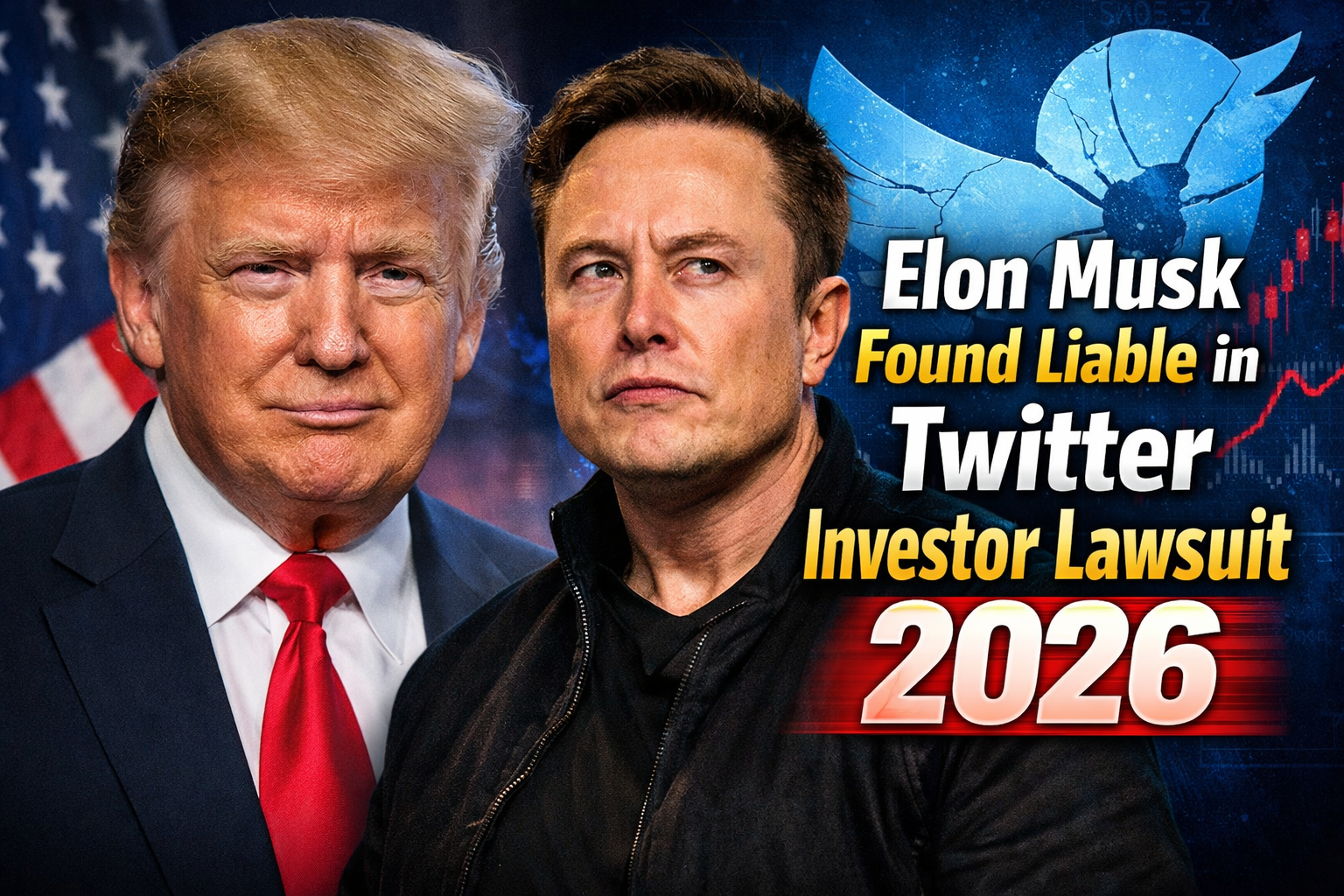
Elon Musk, the world’s richest innovator and free-speech warrior, just took a rare courtroom hit. A San Francisco federal jury declared him liable for misleading Twitter investors during his chaotic 2022 takeover, slapping a more than $2 billion damages award on the Tesla titan. This civil fraud case, rooted in tweets that tanked the stock, exposes the perils of billionaire bravado in public markets. As X (formerly Twitter) thrives under Musk’s reinvention, former shareholders cry foul over losses from his bot-account rants. The ruling tests the limits of social media influence on stock prices and could redefine accountability for tech moguls.
The Chaotic Path to the $44 Billion Buyout
The drama ignited in April 2022 when Musk, then Tesla’s CEO, disclosed a 9% stake in Twitter, sparking a bidding war. He quickly offered $54.20 per share for the $44 billion prize, but doubts crept in over spam bots plaguing the platform. Musk tweeted furiously, questioning Twitter’s user metrics and claiming up to 20% of accounts were fake. One infamous post paused the deal, citing bot woes, while a podcast amplified his skepticism. Twitter’s stock plunged nearly 40% in days, forcing investors to sell at depressed prices.
Musk tried to wriggle free, arguing massive bot infiltration justified backing out. Twitter sued to enforce the merger, and after months of legal trench warfare, Musk completed the deal in October 2022—firing the board and CEO Parag Agrawal on day one. X was born, slashing staff and pivoting to “everything app” ambitions. But aggrieved shareholders, led by a group of institutional investors, filed suit in 2023, alleging Musk’s outbursts were a calculated ploy to renegotiate or ditch the purchase at a discount.
Dissecting the Investor Lawsuit
Plaintiffs hammered Musk for securities fraud under federal law, claiming his statements artificially depressed Twitter’s value. They pointed to internal Twitter data showing bots at under 5%, contradicting Musk’s public bombast. The suit targeted specific communications: two tweets—one halting the deal—and podcast remarks. Investors who dumped shares between May and October 2022 sought billions, arguing Musk’s influence as a market mover inflicted foreseeable harm.
Musk’s defense framed his comments as genuine concerns, backed by his own bot-hunting polls on Twitter. Lawyers argued free speech protections shielded his opinions, and no “scheme” existed since he ultimately paid full price. The trial, kicking off March 2, 2026, featured three weeks of testimony, including Musk’s own appearance where he quipped, “Twitter was bot heaven—who knew?” After three days of deliberation, the nine-person jury delivered its split verdict on March 20.
Inside the Jury’s Split Decision
Jurors found Musk liable on the two pivotal tweets, ruling they misled investors by falsely implying insurmountable bot issues to tank the stock. This constituted fraud by omission and manipulation, as Musk knew or should have known his words swayed markets. However, they cleared him on the podcast comments and rejected claims of a broader “scheme” to defraud, noting no evidence of pre-planned conspiracy.
The verdict hinged on intent: Did Musk deliberately drive down shares to escape? Jurors said yes to manipulation via tweets but no to orchestrated fraud. Lead plaintiff attorney Francis Bottini hailed it as “justice for shareholders crushed by Musk’s recklessness.” Musk’s team called it a partial win, vowing appeals.
Calculating the Hefty $2 Billion Damages
Damages crystallized at over $2 billion, though exact figures await final court math—estimates range from $2.1 to $2.6 billion. The method? Courts typically multiply affected shares by the price drop attributable to Musk’s statements. Here, plaintiffs calculated losses from the 40% stock plunge post-tweets, with roughly 20 million shares traded in the window.
A simplified breakdown shows the math:
| Damages Component | Estimated Amount ($B) | Basis of Calculation |
|---|---|---|
| Direct Tweet Impact | 1.2 | 25M shares x $15/share drop |
| Secondary Market Losses | 0.5 | Chain reaction sales by institutions |
| Interest and Penalties | 0.4 | 4 years at 7% federal rate |
| Total | 2.1 | Subject to judge’s final adjustment |
This payout dwarfs prior tech fraud cases, like the $265 million Enron fallout per investor class. Musk must personally fund it, as Tesla dodged direct liability.
Stats Highlighting the Financial Carnage
Twitter’s stock nosedived 38% after Musk’s “deal on hold” tweet, wiping out $20 billion in market cap overnight. Investors lost an average $12 per share, hitting pension funds and retail holders hardest. Post-acquisition, X’s valuation cratered to $19 billion by late 2023 before rebounding to $50 billion under Musk’s cost cuts.
Broader stats paint the picture:
- Musk’s tweets moved Twitter stock by 10-15% on average during the saga.
- Bot claims: Twitter reported 5% spam; Musk alleged 20%; independent audits pegged 11%.
- Shareholder class: Over 500 institutions and individuals, representing $5B+ in pre-drop holdings.
- Trial cost: $50M+ in legal fees split between sides.
These numbers underscore Musk’s market sway—his posts rival SEC filings in impact.
Clash of Legal Titans
Plaintiffs wielded emails and depositions showing Musk’s team privately downplayed bot fears even as he tweeted doom. They invoked Rule 10b-5, proving material misstatements caused reliance and losses. Defense countered with First Amendment armor, arguing opinions aren’t fraud, and Musk’s poll (82% users saw bots) validated his stance.
Musk testified bluntly: “I bought Twitter to fix it, not scam anyone.” Jurors bought the passion but not the full innocence.
Ripples Through Law and Markets
Appeals loom—Musk’s camp targets jury instructions on “scheme” definitions. The SEC watches closely, mulling sanctions after its own 2022 probes. Tesla shares dipped 3% post-verdict but recovered, as investors eye Musk’s track record.
For X, the ruling clouds growth: Advertisers fled post-buyout, revenue halved to $2.5B yearly. Yet user base grew 15%, buoyed by premium features.
Lessons for Tech Titans and Investors
This verdict signals peril for CEOs wielding social media like weapons. Musk’s style—raw, unfiltered—now carries $2B price tags. Boards may clamp tweet approvals, echoing post-trial governance pushes at Meta and Google.
Globally, it bolsters investor safeguards. In India, SEBI could cite it for stricter disclosure on influencer-CEOs. Europe’s MiFID II already mandates sentiment monitoring; this amps calls for AI oversight on exec posts.
Musk’s Empire Endures the Storm
The Twitter verdict stings, but Musk’s fortress—$300B+ net worth, SpaceX triumphs, Tesla EVs dominating—holds firm. He’s vowed to fight on, tweeting “Truth wins eventually.” For investors, it’s a reminder: Billionaire hype cuts both ways. As AI and EVs propel his vision, this legal scar tests if unchecked genius bends to law. The saga spotlights a new era where tweets topple titans, demanding balance between innovation and integrity.

Abhinav Jain is a legal researcher and writer passionate about simplifying complex laws for everyday readers. With a keen interest in Indian constitutional, civil, and digital laws, he focuses on creating accessible, well-researched articles that promote legal awareness among students, professionals, and citizens alike.