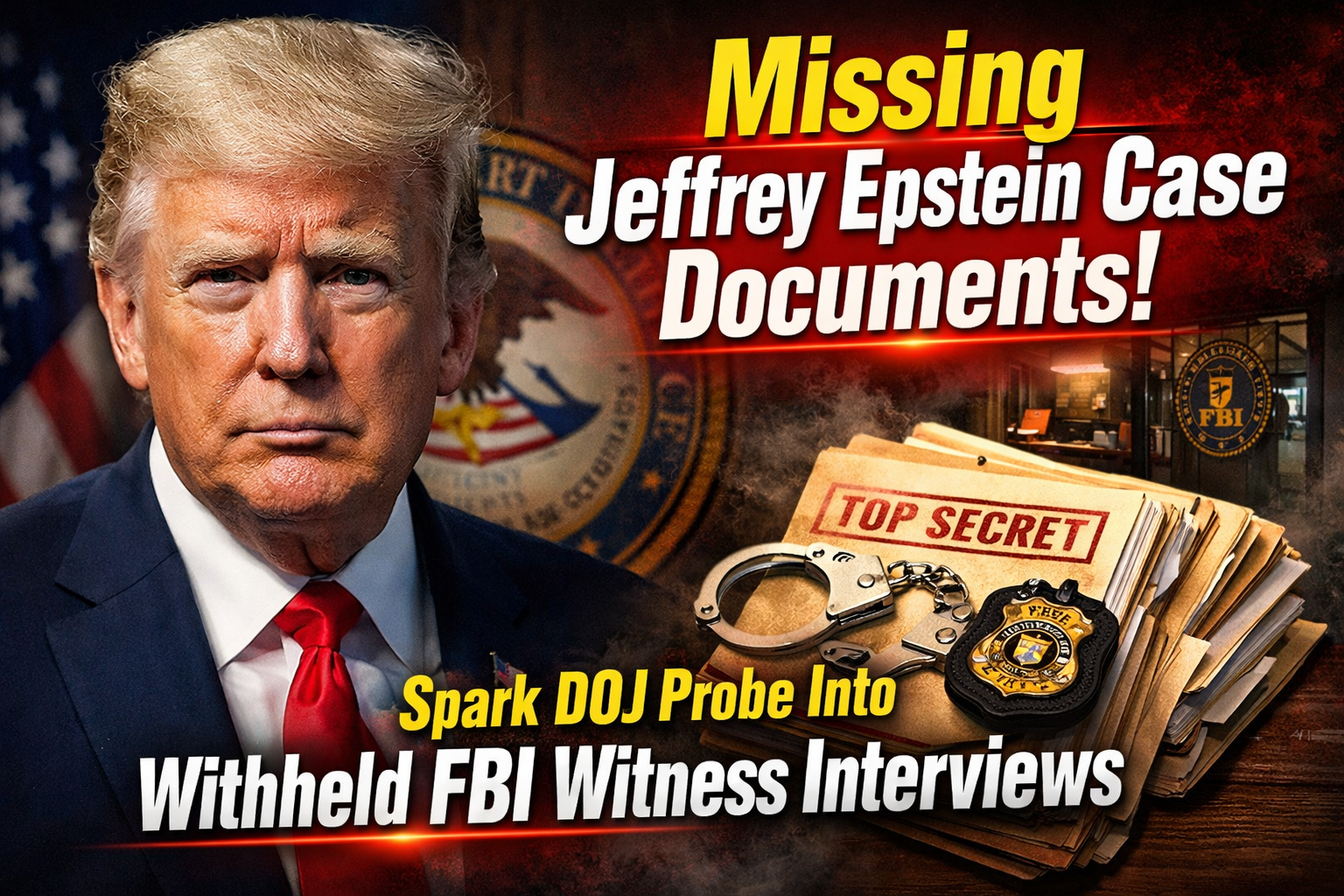
Recent discoveries of missing documents from the Jeffrey Epstein case files have ignited a firestorm, prompting the Department of Justice to launch an internal probe into potentially withheld FBI witness interviews. These gaps, particularly those linked to allegations involving high-profile figures, raise serious questions about transparency and accountability in one of the most notorious investigations in modern history.
The Spark of the Controversy
The controversy erupted when independent journalists and congressional oversight teams noticed glaring omissions in the massive trove of Epstein-related files released by the DOJ late last year. Mandated by the Epstein Files Transparency Act, the public database promised full disclosure of investigative materials, including FBI interviews with victims and witnesses. Yet, cross-referencing evidence logs from Ghislaine Maxwell’s trial revealed dozens of pages unaccounted for—over ninety records from roughly three hundred twenty-five FBI witness interviews.
Central to the uproar are three specific interviews with a woman who alleged repeated abuse by Epstein starting at age thirteen, alongside claims of sexual assault by President Donald Trump decades ago. Only her initial interview surfaced publicly, omitting any reference to these accusations. This selective release has fueled accusations of a deliberate cover-up, especially as the administration touts the files as exonerating Trump.
Unpacking the Missing Files
Investigative outlets pored over serial numbers stamped on FBI case logs, emails, and discovery documents provided to Maxwell’s defense. While most files appeared cataloged, a significant portion—more than a quarter—vanished from the online repository. Notes from subsequent interviews with the accuser, along with accompanying memos, remain absent, despite similar materials from other witnesses being disclosed.
The DOJ initially claimed withholdings were limited to privileged or duplicate items. A follow-up statement cited an ongoing federal investigation, but offered no specifics on why these particular records stayed buried. Critics point out this contradicts the Transparency Act’s intent, which set a firm deadline for public access, though full rollout lagged by weeks.
Overview of Missing Document Categories
| Category | Estimated Pages Missing | Key Examples | Potential Impact |
|---|---|---|---|
| Witness Interviews | Over 50 | Three with Trump accuser | Undermines victim credibility checks |
| Accompanying Notes | Dozens | FBI memos from 2019 sessions | Blocks full context analysis |
| Evidence Logs Cross-Refs | 90+ records | Maxwell trial discovery items | Questions completeness of release |
| Victim Statements | Multiple | Epstein abuse claims tied to others | Fuels conspiracy narratives |
This table highlights the scale, drawing from public logs versus released content.
DOJ’s Internal Probe Takes Shape
In response to mounting pressure, the DOJ announced a formal investigation into the handling of these files. Led by internal watchdogs, the probe examines why cataloged materials were excluded, who authorized removals, and whether political influence played a role. Congressional Democrats, spearheaded by Rep. Robert Garcia on the House Oversight Committee, launched a parallel inquiry, demanding immediate unredacted access.
Garcia labeled the omissions a “grave offense,” arguing they shield direct evidence of potential presidential misconduct. Subpoenas loom, with threats of contempt charges if compliance falters. The White House dismissed the claims as partisan smears, insisting Trump severed Epstein ties in the early 2000s and faces no charges.
Historical Context of Epstein Files
Jeffrey Epstein’s 2019 death by suicide halted his federal sex-trafficking trial, but not the scrutiny. Years of civil suits, victim testimonies, and FBI probes painted a web of elite enablers. Maxwell’s 2022 conviction on trafficking charges relied heavily on witness accounts, many sourced from those same interviews now in question.
Past releases trickled out amid lawsuits, but the Transparency Act aimed for comprehensive dumping. Delays plagued the process—millions of pages surfaced piecemeal, redacted for privacy. The Trump accuser’s story first bubbled in DOJ presentations during Maxwell’s case, lending it internal weight as testimony from a key government witness.
Allegations Against Trump Under Scrutiny
The withheld interviews reportedly detail a woman’s claims of physical and sexual assault by Trump in the 1980s, intertwined with her Epstein victimization. While unverified, their credibility stems from her role in Maxwell’s downfall. No criminal charges ever materialized against Trump, who has denied all Epstein links beyond social acquaintance.
Public reaction splits sharply. Supporters view the uproar as election-year sabotage, noting Trump’s vows for full declassification. Detractors see stonewalling as proof of deeper rot, demanding independent review. Media analyses stress the accuser’s statements lack corroboration, yet their suppression invites suspicion.
Broader Implications for Transparency
This scandal tests the guardrails of executive power. If proven, selective withholding violates congressional mandates and erodes public trust in justice institutions. It echoes past controversies, like delayed Clinton-era files or FBI’s Crossfire Hurricane redactions, where politics allegedly tainted probes.
Victims’ advocates decry the chill on future whistleblowers. Full disclosure could validate or debunk claims, but opacity breeds doubt. Legal experts predict court battles over privilege claims, potentially reaching the Supreme Court.
Timeline of Key Events
| Date/Event | Development |
|---|---|
| 2019 | FBI interviews accuser; Epstein dies |
| 2022 | Maxwell convicted using witness materials |
| Late 2025 | Transparency Act passes; phased file releases |
| Early 2026 | DOJ database goes live, gaps noticed |
| Mid-February 2026 | Media exposes missing Trump-related interviews |
| Late February 2026 | DOJ probe announced; Congress demands docs |
This chronology underscores the rapid escalation.
Political Ramifications
For the Trump administration, timing stings amid policy wins like tariffs. Claims of exoneration now ring hollow, handing ammunition to opponents. Democrats leverage it for impeachment whispers, though evidentiary hurdles loom without the files.
Republicans counter with accusations of media bias, citing incomplete context in reports. Bipartisan calls for an inspector general audit grow, aiming to insulate findings from partisanship.
Victim Perspectives and Support
Survivors, long sidelined, voice frustration over politicized handling. Groups like those aiding Epstein victims push for unredacted releases to honor their courage. The accuser remains anonymous, her story tangled in legal limbo.
Support networks highlight systemic failures—delayed justice, elite impunity. Renewed focus could spur reforms, like mandatory timelines for sensitive probes.
Media and Public Reaction
Outlets from NPR to CNN dissected logs, amplifying discrepancies. Social media erupts with theories, from deep-state sabotage to routine bureaucracy. Polls show trust in DOJ dipping, with independents most skeptical.
Fact-checkers urge caution: absence isn’t proof of malfeasance. Yet, the optics—missing files tied to the president—demand answers.
Legal Pathways Forward
The DOJ probe could yield disciplinary actions or referrals. Congress wields subpoena power, enforceable via courts. If stonewalled, special counsel appointment beckons, mirroring Mueller or Durham models.
Civil suits by journalists or victims offer side doors, challenging withholdings under FOIA precedents. Resolution may drag months, prolonging the saga.
Challenges in the Investigation
Probes face hurdles: chain-of-custody traces, redactions for sources, and political heat. Classifying materials as “ongoing investigation” risks abuse. Whistleblower protections become crucial if insiders surface.
Balancing privacy with public right-to-know tests DOJ credibility. Precedents like the 9/11 files warn of endless delays.
What Comes Next for Stakeholders
Victims seek closure, politicians jockey for narrative control, and the public craves truth. A full dump could deflate conspiracies; further stonewalling amplifies them.
Businesses tied to Epstein orbits watch warily, as fresh scrutiny ripples. For Trump, it’s a distraction from economic agendas, demanding swift clarity.
Long-Term Reforms Proposed
Experts advocate overhaul: independent transparency czars, AI-assisted log matching, victim vetoes on personal details. Bipartisan bills eye automatic declassification post-probe closure.
Restoring faith requires action over words—release the files, probe impartially, prosecute if warranted. Only then can the Epstein shadow lift.
This saga underscores fragile democracy threads: when justice bends to power, doubt festers. Stakeholders must prioritize facts over fealty, ensuring withheld truths see daylight. The probe’s outcome will define accountability eras ahead, a litmus for institutional integrity.

Abhinav Jain is a legal researcher and writer passionate about simplifying complex laws for everyday readers. With a keen interest in Indian constitutional, civil, and digital laws, he focuses on creating accessible, well-researched articles that promote legal awareness among students, professionals, and citizens alike.