
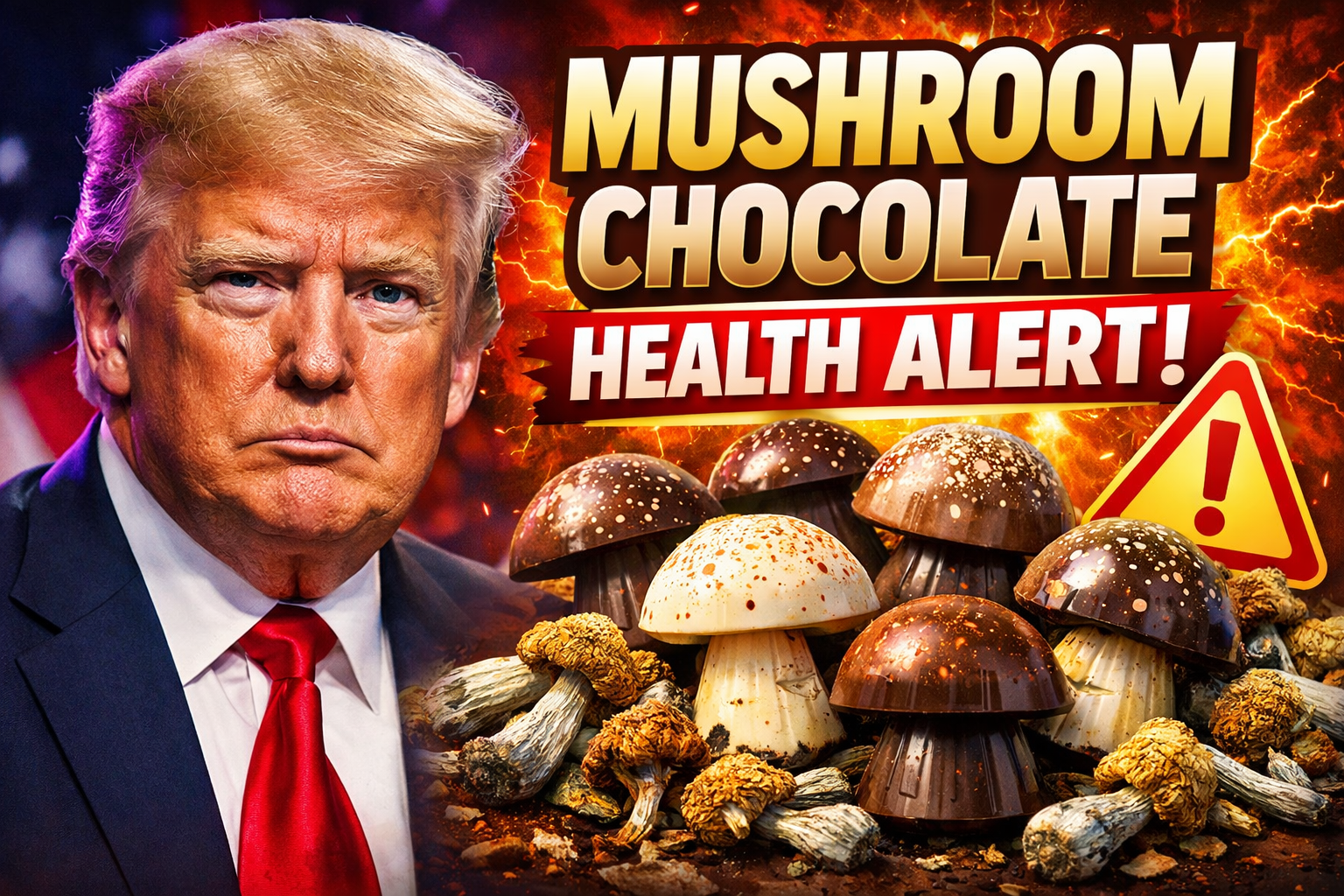
Mushroom chocolates promising mental clarity, stress relief, and enhanced focus have surged in popularity, but a alarming health crisis linked to Diamond Shruumz products has prompted urgent warnings from the Centers for Disease Control and Prevention. Health authorities nationwide are investigating reports of severe illnesses, including hospitalizations and potential deaths, tied to these mushroom-infused treats marketed as natural wellness aids.
The Diamond Shruumz Crisis Unfolds
Diamond Shruumz burst onto the market as a trendy alternative to traditional supplements, blending proprietary mushroom extracts—like lion’s mane, reishi, and cordyceps—into chocolate bars, cones, and gummies. Sold online and in smoke shops, wellness stores, and convenience outlets, the products claimed to deliver microdosing benefits without psychoactive highs. Vibrant packaging touted flavors like “Blueberry Dream” and “Cookies & Cream,” appealing to health-conscious consumers seeking calm amid busy lives.
Trouble emerged in spring 2024 when poison control centers flagged clusters of severe reactions. Initial cases surfaced in Arizona, where four individuals suffered seizures and central nervous system depression after consuming the bars. Rapid escalation followed: by late summer, reports spanned dozens of states, prompting the Centers for Disease Control and Prevention to issue a Health Alert Network advisory. Laboratories tested samples, uncovering unregulated compounds far beyond label claims, including synthetic muscimol analogs and undisclosed adulterants mimicking psilocybin effects.
The Centers for Disease Control and Prevention, alongside the Food and Drug Administration and America’s Poison Centers, mobilized a multi-agency probe. Case counts climbed steadily, with state health departments applying broad definitions: any moderate-to-severe illness or death post-consumption of Diamond Shruumz or similar mushroom chocolates since early 2024. Retailers yanked products amid voluntary recalls, but online resale persisted through third-party vendors.
Scope of Reported Illnesses
By October 2024, the Centers for Disease Control and Prevention tallied 180 confirmed cases across 34 states, with 73 hospitalizations. Of these, 118 directly involved Diamond Shruumz products, while 36 linked to unspecified mushroom chocolate brands, hinting at industry-wide risks. Symptoms struck swiftly—within hours of ingestion—including nausea, vomiting, diarrhea, seizures, confusion, irregular heart rhythms, and loss of consciousness.
Severity stood out: over 60 percent of affected individuals required emergency care, far exceeding typical foodborne outbreaks. Vulnerable groups faced amplified dangers—children mistaking gummies for candy, adults with underlying conditions experiencing cardiac events. Three potential deaths drew scrutiny: two in adults with multi-organ failure, one pending toxicology in a teen. Poison centers logged exposures peaking mid-summer, with hotspots in California, Texas, Florida, and New York.
Demographics skewed young: median age hovered around 30, split evenly by gender. Many reported low doses—one bar or gummy—yet reactions rivaled high-dose hallucinogen overdoses. Follow-up surveys revealed lingering effects: weeks of cognitive fog, muscle tremors, and anxiety in twenty percent of survivors.
| Symptom Category | Frequency (% of Cases) | Typical Onset Time | Common Outcomes |
|---|---|---|---|
| Gastrointestinal | 85% | 30-120 min | Vomiting, dehydration |
| Neurological | 70% | 1-6 hours | Seizures, hallucinations |
| Cardiovascular | 45% | 2-12 hours | Tachycardia, hypertension |
| Respiratory | 25% | 4-24 hours | Shortness of breath, distress |
| Other (e.g., fever) | 60% | Variable | Hospitalization, ICU admission |
This table highlights the multi-system assault, complicating treatment.
What Makes These Products Dangerous
Mushroom chocolates lure with pseudoscience: lion’s mane for focus, reishi for immunity, cordyceps for energy. Legitimate adaptogens offer mild benefits in controlled doses, but Diamond Shruumz bypassed oversight. Lab analyses detected muscimol—a potent Amanita muscaria toxin—spiked to levels causing delirium, alongside synthetic psychedelics evading standard drug tests.
Proprietary blends obscured dosages; bars contained 15 “proprietary servings,” but extraction methods concentrated toxins unpredictably. Heat processing degraded beneficial compounds while activating neurotoxins. Cross-contamination risks loomed from unregulated farms sourcing mycelium laced with heavy metals or pesticides.
Unlike pharmaceuticals, these fell into a regulatory gray zone: neither food nor drug, evading pre-market approval. Vendors marketed as “dietary supplements,” dodging Food and Drug Administration rigor. Heat stability faltered—shipping melted chocolates, altering potency unpredictably.
Centers for Disease Control and Prevention Investigation Details
The Centers for Disease Control and Prevention activated its outbreak response playbook: case surveillance via National Poison Data System, whole-genome sequencing of contaminants, and traceback to manufacturers. Arizona’s initial cluster triggered alerts; poison centers nationwide corroborated patterns.
Field teams interviewed patients, tracing purchases to Propubes LLC, the Texas-based producer. FDA inspections revealed unsanitary facilities and falsified labels. Seizure orders halted distribution, but 150,000 units already circulated. Epidemiologists modeled attack rates: one in 500 consumers affected, assuming full market penetration.
Post-outbreak phase shifted to prevention. The Centers for Disease Control and Prevention issued multilingual advisories, urging disposal of products and medical follow-up for symptoms. Collaborations with retailers installed warning signage; social media campaigns targeted TikTok trends glamorizing microdosing.
State and Local Responses
California’s Department of Public Health issued statewide bans, linking 26 illnesses to hospitalizations. South Carolina reported seven cases, all admitted. Local health officers coordinated with emergency rooms, stocking antidotes like benzodiazepines for seizures.
Retail sweeps removed shelves stock; e-commerce platforms suspended listings. Class-action lawsuits mounted against Propubes, alleging negligence and false advertising. State attorneys general probed deceptive marketing, fining distributors.
Vulnerable Populations at Risk
Children faced outsized threats: gummies mimicked candy, with 12 cases under 18. Teens experimenting with “natural highs” overlooked warnings. Elderly users sought sleep aids, suffering amplified cardiac strain. Pregnant individuals risked fetal exposure to neurotoxins.
Athletes chasing nootropics nootropics and professionals microdosing for productivity joined victims. Chronic illness patients—epilepsy, heart disease—endured exacerbated flares.
Broader Mushroom Chocolate Market Risks
Diamond Shruumz exposed an unregulated boom: thousands of brands peddle similar products, often rebranded imports. Competitors like TRE House and Urb Mushrooms face scrutiny, with poison centers logging 300-plus exposures annually. Amazon and Etsy brim with unverified sellers.
Legitimate functional mushrooms—powdered supplements from reputable firms—contrast sharply, tested for purity. Consumers confuse categories, equating Instagram hype with safety.
Health Authority Recommendations
The Centers for Disease Control and Prevention advises:
- Discard all Diamond Shruumz products immediately; do not sell or donate.
- Seek medical care for symptoms; mention mushroom chocolate ingestion.
- Avoid unverified mushroom edibles; stick to FDA-regulated supplements.
- Report exposures to poison control (1-800-222-1222) or local health departments.
Physicians monitor electrolytes, anticonvulsants for seizures, supportive care paramount. No specific antidote exists; recovery spans days to weeks.
Regulatory Gaps Exposed
Functional foods evade patchwork oversight. Food and Drug Administration lacks authority over novel ingredients pre-market; adverse events trigger post-hoc recalls. Dietary supplement laws shield sellers from liability unless adulterated.
Calls intensify for reform: mandatory pre-approval for mushroom extracts, potency labeling, Good Manufacturing Practices enforcement. States eye bans on synthetics mimicking Schedule I drugs.
Consumer Education and Prevention
Shop savvy: verify third-party testing (NSF, USP seals), research brands via National Poison Data System. Question “proprietary blends”—demand transparency. Start low, go slow with unknowns; consult physicians.
Social media influencers bear responsibility: platforms throttle unverified claims. Wellness podcasts pivot to evidence-based adaptogens like pharmaceutical-grade ashwagandha.
Long-Term Health Implications
Survivors report persistent issues: neuropathy, memory lapses, PTSD from seizures. Longitudinal studies track cohorts; neurotoxicity risks linger. Industry self-regulation falters—trade groups urge voluntary testing amid lawsuits.
Lessons from the Outbreak
Diamond Shruumz underscores wellness hype’s perils: natural does not mean safe. Rigorous science lags fad-driven markets. Vulnerable consumers pay dearly for untested promises.
Authorities closed the investigation by late 2024, transitioning to surveillance. Yet, vigilance endures—new brands emerge weekly. Empowered choices safeguard health: question labels, prioritize evidence, heed alerts.

Abhinav Jain is a legal researcher and writer passionate about simplifying complex laws for everyday readers. With a keen interest in Indian constitutional, civil, and digital laws, he focuses on creating accessible, well-researched articles that promote legal awareness among students, professionals, and citizens alike.