
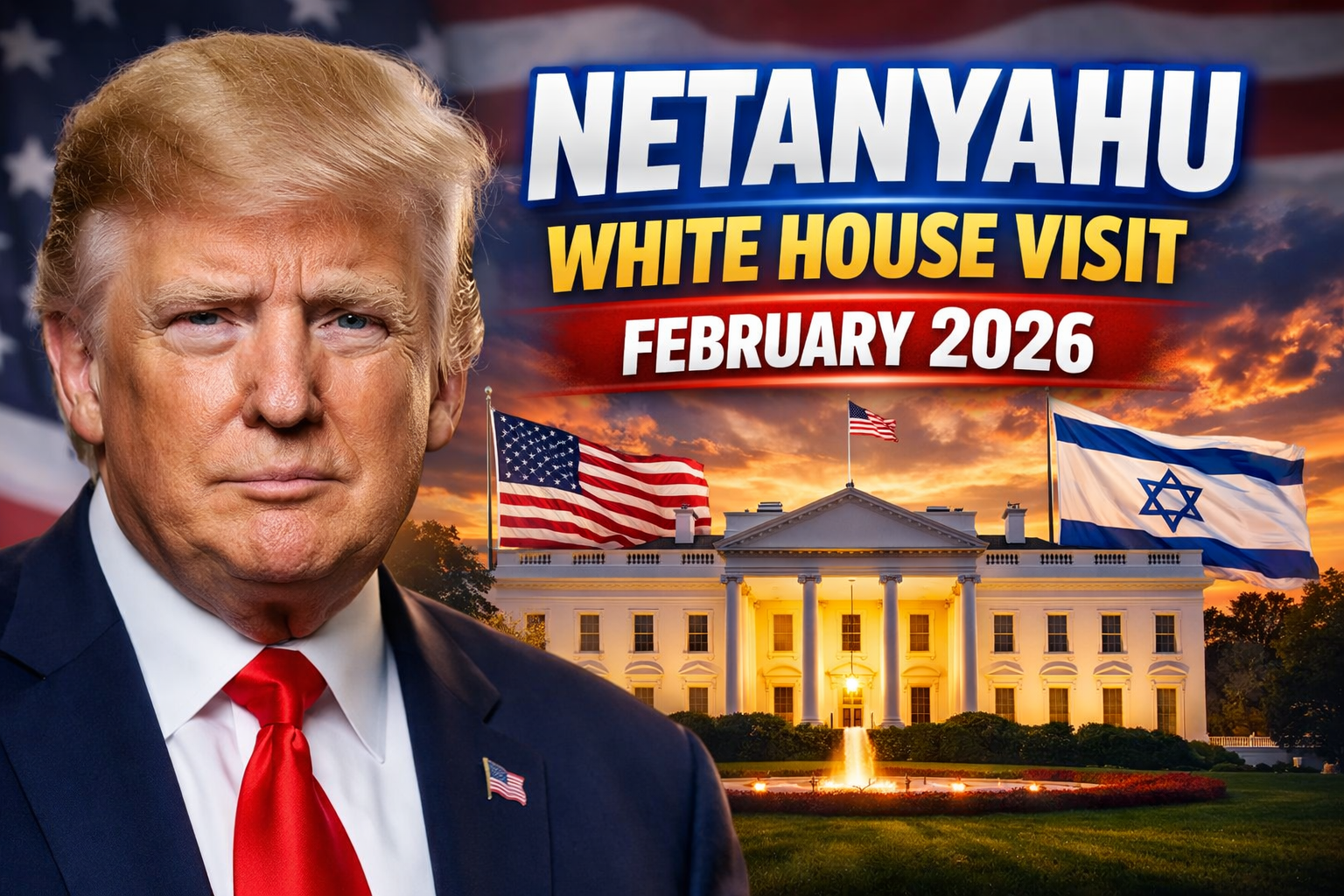
Israeli Prime Minister Benjamin Netanyahu arrived in Washington for a high-stakes White House meeting with President Donald Trump on February 11, 2026, prioritizing discussions on US-Iran nuclear negotiations. Originally scheduled later, the trip advanced amid Israeli concerns over Tehran’s missile program and proxy support. The talks underscore deepening US-Israel alignment under Trump’s second term while navigating fragile Middle East diplomacy.
Background on the Rescheduled Visit
Netanyahu’s itinerary shifted urgently from February 18, reflecting Israel’s unease with early-stage US-Iran talks held in Oman the prior week. Before departing, he emphasized Iran as the primary agenda item, promising to outline principles essential for regional peace. This marks their seventh encounter since Trump’s January 2025 inauguration, building on recent meetings like December’s Mar-a-Lago summit.
Israeli officials described the move as proactive influence on negotiations, sharing fresh intelligence on Iran’s nuclear advances, missile developments, and terror financing. Advance visits by US envoys Steve Witkoff and Jared Kushner to Jerusalem set the stage, with Netanyahu opting for in-person delivery to ensure unfiltered transmission.
The timing coincides with Gaza ceasefire efforts via Trump’s Board of Peace, though Netanyahu’s focus tilts toward Tehran. Critics in Israel question juggling multiple fronts, but supporters hail the “unique closeness” between leaders.
Core Objectives of Netanyahu’s Agenda
Netanyahu aims to steer US demands beyond nuclear curbs, insisting on curbs to ballistic missiles, proxy funding, and uranium enrichment elimination. Israel views incomplete deals as existential threats, recalling past strikes on Iranian sites that disrupted prior talks. He seeks assurances of operational freedom, preventing US vetoes on preemptive actions.
Gaza features secondarily, with discussions on ceasefire extensions and hostage releases. Broader regional security, including proxy threats from Hezbollah and Houthis, rounds out priorities. Netanyahu positions Israel as a bulwark against Iranian expansion, leveraging shared intelligence for joint strategies.
US-Iran Nuclear Talks Context
US-Iran indirect negotiations resumed post-2025 escalations, focusing initially on nuclear rollback. Oman-mediated sessions last week yielded positive signals, with follow-ups planned soon. Tehran prioritizes sanctions relief and enrichment rights, dismissing missile talks as extraneous.
Trump’s “maximum pressure” evolved into pragmatic engagement, balancing deterrence with de-escalation. Enriched uranium stockpiles near weapons-grade levels prompt urgency, per IAEA reports. Israel fears a “bad deal” echoing 2015’s JCPOA, which it opposed vehemently.
Prior Israeli airstrikes in June targeted nuclear and military assets, halting talks temporarily. Trump urged restraint then, highlighting alliance tensions over unilateral moves.
| Negotiation Focus | US Position | Iran Position | Israeli Concerns |
|---|---|---|---|
| Nuclear Enrichment | Full halt, inspections | Limited rights retained | Zero tolerance, breakout prevention |
| Ballistic Missiles | Caps demanded | Non-negotiable | Range threats to homeland |
| Proxy Support | Funding cuts required | Denies involvement | Hezbollah, Houthis armed |
| Sanctions Relief | Tied to compliance | Immediate full lift | Rewards aggression |
This table contrasts stances, revealing friction points.
Historical US-Israel Dynamics Under Trump
Trump’s first term delivered Jerusalem embassy move, Golan recognition, and Abraham Accords, cementing Netanyahu’s affinity. Post-reelection, ties intensified with arms flows and Iran hawkishness. Six prior meetings yielded Gaza peace pushes and anti-Iran coalitions.
Netanyahu bypassed Biden-era strains, where aid conditions irked Jerusalem. Trump’s Board of Peace builds on accords, eyeing Saudi normalization contingent on Palestinian progress. Critics decry favoritism, but polls show bipartisan US backing for Israel.
Potential Outcomes from White House Discussions
Netanyahu seeks explicit red lines: no enrichment paths, missile range limits under 2,000 km, and proxy dismantlement. Success might harden US postures, derailing soft deals. Trump could pledge intelligence sharing or joint exercises signaling resolve.
Gaza talks advance via Board of Peace, potentially unlocking aid or reconstruction. Risks include leaks fueling Iranian hardliners or domestic US divisions.
Iranian Perspective and Reactions
Tehran dismisses Netanyahu’s input, viewing him as a spoiler. Officials reiterate nuclear program’s peaceful nature, rejecting linkage to missiles. Proxies ramp rhetoric, with Hezbollah drills and Houthi shipping attacks testing resolve.
Supreme Leader Khamenei’s circle eyes sanctions relief amid economic woes, but conservatives demand reciprocity. Oman talks signal flexibility, yet Netanyahu’s visit prompts defiance vows.
Regional Implications and Proxy Conflicts
Talks ripple across Levant: Syria hosts Iranian assets, Lebanon braces for Hezbollah fallout. Abraham states like UAE watch warily, balancing commerce with security. Gaza ceasefire fragility amplifies stakes—breakdowns could greenlight escalations.
Saudi Arabia conditions normalization on Iran curbs, aligning with Netanyahu’s pitch. Broader “axis of resistance” faces pressure if US-Israel duo tightens sanctions.
Domestic Politics in Israel and US
In Israel, Netanyahu’s coalition hinges on hardline security stances; concessions risk collapse. Polls show public support for tough Iran lines, boosting his image amid judicial probes.
US Republicans rally behind Trump-Netanyahu axis, while Democrats urge balanced diplomacy. Jewish lobbies like AIPAC push missile inclusions, influencing Congress.
Economic Dimensions of the Talks
Iran sanctions cost global energy markets billions; deals could stabilize oil near $70/barrel. Israeli tech and defense sectors eye export boosts from alliances. US firms anticipate Iran market access post-deal.
| Economic Factor | Pre-Deal Impact | Potential Post-Deal Shift |
|---|---|---|
| Oil Prices | Volatility from threats | Stabilization, lower costs |
| Defense Spending | Heightened US-Israel aid | Redirected to proxies |
| Sanctions Revenue | Iran smuggling surges | Legit trade revival |
These factors intertwine security with markets.
Media and Public Reactions
Global outlets frame the visit as high-wire diplomacy: CNN highlights strike options, Times of Israel stresses principles. Social media amplifies divides—pro-Israel voices urge firmness, others decry warmongering.
Iranian state media mocks “Zionist plots,” while Arab street mixes wariness with anti-Iran sentiment.
Challenges Facing Negotiations
Israel doubts deal viability, citing Iran’s bad faith. Technical hurdles like verifiable enrichment halts persist. Proxy ceasefires demand enforcement amid mutual distrust.
Trump balances MAGA base’s Iran skepticism with deal-making legacy. Netanyahu navigates war fatigue post-Gaza.
Strategic Alternatives Discussed
Netanyahu floats military options, from cyber to airstrikes, seeking US cover. Diplomatic off-ramps include phased sanctions for compliance. “Maximum pressure 2.0” blends talks with deterrence.
Global Powers’ Involvement
Russia and China back Iran, supplying arms and vetoing UN measures. Europe pushes JCPOA revival, clashing with US-Israel hawks. IAEA inspections prove pivotal.
Long-Term Security Vision
Netanyahu envisions Iran-denuclearized Middle East, enabling accords expansion. Trump eyes historic wins: Gaza peace, Iran containment. Success reshapes alliances; failure risks escalation.
Preparing for Post-Visit Developments
Watch Oman follow-ups, Israeli Knesset debates, and proxy incidents. Markets await signals on strikes or breakthroughs.
Netanyahu’s February sprint to the White House crystallizes US-Israel entente against Iranian ambitions. Principles he champions—enrichment bans, missile curbs, terror halts—test Trump’s deal craft. Outcomes will echo from Tehran to Tel Aviv, defining 2026’s security arc.

Abhinav Jain is a legal researcher and writer passionate about simplifying complex laws for everyday readers. With a keen interest in Indian constitutional, civil, and digital laws, he focuses on creating accessible, well-researched articles that promote legal awareness among students, professionals, and citizens alike.