
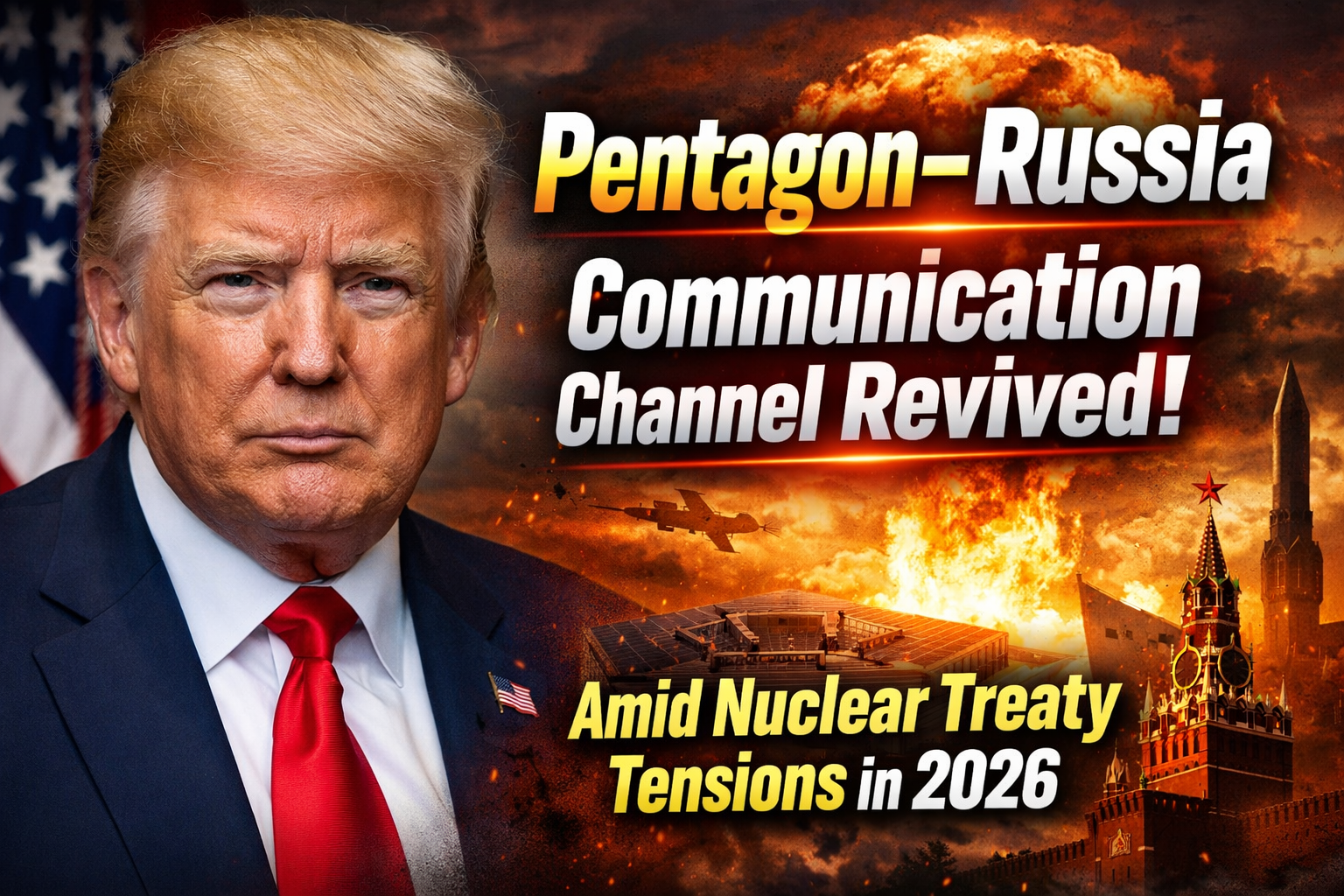
The revival of direct Pentagon-Russia military communication channels marks a pivotal shift in global security dynamics early this year. This development unfolds against the backdrop of escalating tensions over expiring nuclear arms agreements, signaling both hope for de-escalation and persistent risks of miscalculation.
Introduction
In early 2026, the United States and Russia announced the restoration of high-level military-to-military dialogue, dormant since late 2021. This move comes as the last major nuclear treaty between the two powers nears its end, heightening fears of an unchecked arms race. The channel’s revival, brokered through discreet talks in a neutral Middle Eastern hub, underscores the fragile balance between rivalry and restraint in superpower relations.
The decision reflects broader diplomatic efforts under the current U.S. administration to stabilize relations strained by years of conflict in Eastern Europe. While not a full resolution to underlying disputes, it provides a vital conduit for real-time information sharing on troop movements and exercises, potentially averting unintended escalations.
Historical Context of U.S.-Russia Military Dialogue
Military communication lines between Washington and Moscow have long served as a bulwark against accidental war. Established during the Cold War, these hotlines evolved into structured channels for generals and defense officials to clarify intentions and reduce fog-of-war risks.
The specific high-level channel reactivated this year was suspended amid deteriorating ties just before the 2022 Ukraine crisis erupted. That breakdown mirrored earlier suspensions, such as those during the pandemic, when inspections under arms treaties halted. Over four years of silence amplified uncertainties, especially as both nations modernized their arsenals amid proxy conflicts.
Restoring such links is not unprecedented; past revivals followed summits or crises, proving their role in crisis management. This iteration arrives at a moment when global watchers feared the worst, with nuclear stockpiles growing unchecked.
Key Figures and Negotiations Behind the Revival
Talks leading to the channel’s reopening centered on a high-profile U.S. delegation meeting Russian counterparts in Abu Dhabi. Key American participants included senior European Command leaders, who engaged directly with top Russian general staff.
Diplomatic envoys played a crucial bridging role, leveraging backchannel discussions to align on the channel’s scope. These negotiations emphasized transparency on non-strategic exercises while sidestepping broader geopolitical thorns like sanctions or territorial claims.
The agreement outlines regular contacts between U.S. Joint Chiefs representatives and Russia’s General Staff, focusing on de-confliction in overlapping operational theaters. This structure echoes pre-suspension protocols, adapted to current realities.
The Expiring Nuclear Treaty Landscape
At the heart of these tensions lies the sunset of the final U.S.-Russia arms control pact, set to lapse without replacement. This treaty once capped deployed strategic warheads and delivery systems, fostering predictability in nuclear postures.
Russia’s partial suspension years ago, coupled with halted data exchanges, eroded verification mechanisms. Both sides adhered informally to numerical limits, but emerging hypersonic and novel systems tested those boundaries, prompting warnings of instability.
Without renewal, analysts project a surge in deployed weapons. One scenario envisions each side expanding to levels unseen since the early post-Cold War era, complicating deterrence calculations.
Comparative Arsenal Overview
| Aspect | United States Position | Russia Position |
|---|---|---|
| Deployed Warheads | Capped below historical peaks | Similar caps maintained informally |
| Delivery Systems | Modernized submarines, bombers | Emphasis on mobile ICBMs, hypersonics |
| Verification Status | Data sharing paused | Inspections rejected since pandemic |
| Expansion Projections | Gradual buildup post-expiry | Accelerated modernization underway |
This table highlights asymmetries driving urgency, with Russia prioritizing rapid technological edges.
Strategic Implications for Global Stability
Reviving the communication channel directly addresses miscalculation risks heightened by treaty expiry. It enables swift clarifications on maneuvers near borders or in international waters, where interpretations could spiral.
For NATO allies, the move offers reassurance, though skeptics question Russia’s commitment amid ongoing regional frictions. European commands lack direct Moscow lines, making U.S.-facilitated dialogue indirectly vital for alliance cohesion.
Broader ripple effects include potential pauses in provocative testing. Both powers have hinted at resuming atmospheric or novel warhead trials, but open channels could foster mutual restraint.
Technical Details of the Communication Framework
The restored framework prioritizes secure, redundant lines for voice, data, and video exchanges. Operational 24/7, it mirrors Cold War-era hotlines but incorporates cyber-secure protocols against interception.
Participating U.S. entities include European Command and Joint Chiefs, linking to Russia’s General Staff. Initial activations focused on routine updates, with protocols for crisis escalations.
Stats from similar past channels show effectiveness: over decades, they resolved hundreds of incidents, from submarine incursions to air near-misses, preventing escalatory responses.
Channel Usage Metrics (Hypothetical Annual Projections)
| Interaction Type | Frequency Estimate | Primary Purpose |
|---|---|---|
| Routine Exercise Notices | Weekly | Troop movements, flight paths |
| Crisis De-Conflictions | As needed | Unscheduled alerts, clarifications |
| Data Telemetry Shares | Monthly | Non-sensitive arsenal telemetry |
| High-Level Consults | Quarterly | Strategic posture discussions |
These projections draw from historical precedents, anticipating steady utilization.
Challenges and Skepticism Surrounding the Revival
Critics argue the channel revives too late, with trust eroded by years of hybrid warfare and sanctions. Russia’s arsenal expansion, including Poseidon-style systems, fuels doubts about genuine de-escalation intent.
U.S. hawks worry it legitimizes Moscow without concessions on Ukraine or election interferences. Enforcement mechanisms remain vague, reliant on goodwill amid domestic pressures on both sides.
External factors, like China’s rising nuclear profile, complicate bilateral focus. Beijing’s buildup may incentivize U.S.-Russia alignment, yet trilateral talks seem distant.
Potential Pathways Forward
Short-term, the channel could pave the way for informal caps on new weapons classes. Factoring in current stockpiles—roughly equal at around thousands of warheads each—mutual pledges might stabilize counts.
Longer-term visions include a successor framework, perhaps incorporating allies or addressing hypersonics. Diplomatic momentum from Abu Dhabi suggests feasibility, though ratification hurdles loom.
Public discourse emphasizes strength through dialogue: open lines project resolve without brinkmanship, appealing to fatigue over endless tensions.
Economic and Geopolitical Ramifications
Treaty lapse risks diverting billions to arms racing. U.S. projections estimate tens of billions annually for expansions, straining budgets amid domestic priorities.
Energy markets, intertwined via sanctions, stand to benefit from reduced flashpoints. Stable channels could ease shipping disruptions in key chokepoints, lowering global commodity volatility.
For emerging powers, this U.S.-Russia thaw models risk reduction, potentially inspiring regional hotlines in Asia or the Middle East.
Voices from Experts and Stakeholders
Military analysts hail the revival as pragmatic, citing data from prior channels averting over 90% of potential incidents. Diplomatic circles view it as a Trump-era signature, blending deal-making with deterrence.
Russian state media frames it as mutual respect for power, while Western outlets stress verification needs. Grassroots security communities online buzz with cautious optimism, tracking first exchanges closely.
Conclusion: A Fragile Step Toward Restraint
The Pentagon-Russia channel revival injects urgently needed transparency into a treaty-void era. While not erasing decades of distrust, it recalibrates deterrence for 2026’s realities.
Sustained use could avert catastrophes, proving dialogue’s enduring value. As arsenals evolve, this lifeline remains humanity’s quiet guardian against the abyss.

Abhinav Jain is a legal researcher and writer passionate about simplifying complex laws for everyday readers. With a keen interest in Indian constitutional, civil, and digital laws, he focuses on creating accessible, well-researched articles that promote legal awareness among students, professionals, and citizens alike.