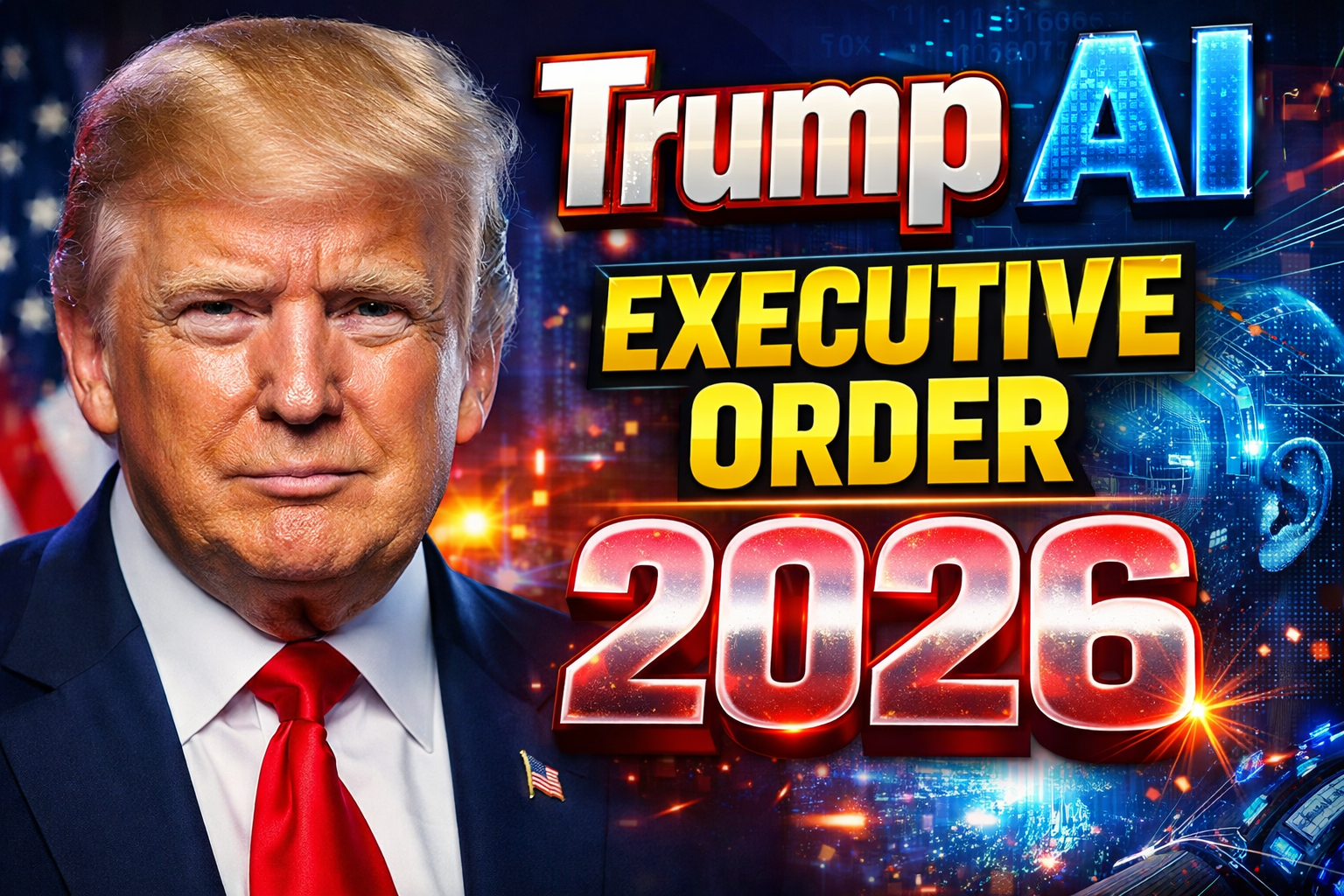
President Donald Trump’s aggressive push to centralize AI regulation hit a fever pitch in early 2026 with his Executive Order on Ensuring a National Policy Framework for Artificial Intelligence, sparking fierce debates over federal supremacy versus state rights. Signed in late 2025 but ramping up enforcement this year, the order challenges dozens of state laws as burdensome to innovation, while figures like Florida Governor Ron DeSantis counter with their own protective measures. This clash extends to critical areas like insurance, where opaque algorithms decide premiums and claims, leaving consumers demanding transparency.
Trump’s Executive Order Core Provisions
The Executive Order, issued December 11, 2025, aims to forge a unified national AI strategy that prioritizes American competitiveness over a patchwork of state rules. It directs the Department of Justice to form an AI Litigation Task Force, launching January 10, 2026, tasked with suing states over laws deemed to unconstitutionally burden interstate commerce or violate free speech by forcing AI outputs to embed bias or excessive disclosures. Commerce Secretary duties include a March 2026 review flagging “onerous” state measures, such as those mandating alterations to “truthful” AI results.
Federal agencies must condition grants and programs like Broadband Equity Access on states avoiding conflicting AI regs, while the FCC explores preemptive national disclosure standards. This builds on Trump’s earlier revocation of Biden-era AI orders, emphasizing minimal burdens to keep the US ahead of China in AI dominance. Critics argue it favors Big Tech lobbies, but proponents see it as essential for seamless deployment across borders.
Implementation has already stirred action, with initial evaluations targeting laws in Colorado and California that prohibit algorithmic discrimination, claiming they compel false outputs to equalize impacts on protected groups. The order’s teeth lie in its funding levers and court challenges, potentially reshaping the regulatory landscape by mid-year.
Federal-State AI Regulation Clash
The US AI regulatory arena in 2026 embodies classic federalism tensions, with nearly forty states enacting AI laws since 2024—covering transparency, bias mitigation, and deepfake bans—now under federal crosshairs. Trump’s EO explicitly calls out a “patchwork” stifling innovation, arguing states overreach into interstate commerce, a domain reserved for Congress. States retort that absent federal legislation, they must protect residents from AI harms like discriminatory hiring tools or biased lending algorithms.
Colorado’s AI Act, banning unfair discrimination, and California’s developer transparency mandates top the hit list, facing DOJ suits that could escalate to the Supreme Court. Texas pushes governance standards, while others mandate watermarking for AI content. Federal preemption claims hinge on implied authority via commerce clause, but legal experts predict mixed rulings preserving state police powers in consumer protection.
This standoff creates compliance nightmares for businesses operating nationwide, forcing dual-track adherence amid lawsuits. Early 2026 saw Commerce’s preliminary reviews, signaling referrals for at least a dozen states, heightening uncertainty.
DeSantis’ Florida AI Bill of Rights
Florida Governor Ron DeSantis, a Trump ally yet states’ rights champion, unveiled his AI Bill of Rights in December 2025, filed as Senate Bill 482 for the 2026 session starting January. This sweeping proposal mandates disclosures when users interact with AI chatbots, parental controls for minors—including conversation access, access limits, and alerts for risky behavior—and bans unauthorized use of individuals’ name, image, or likeness in AI training or outputs.
It prohibits state agencies from using Chinese AI tools like DeepSeek, enforces data privacy mirroring existing laws, and bars selling de-identified personal data. Notably, it restricts insurers from sole reliance on AI for claims decisions, requiring explanations and regulatory audits to prevent unfair practices. DeSantis frames it as safeguarding Floridians’ privacy and security without stifling innovation, positioning Florida as a pro-consumer leader.
As of February 2026, the bill advances through committees, with strong Republican support but scrutiny over enforcement costs. If passed, it directly tests Trump’s EO, as Florida weighs federal funding against local protections, exemplifying red-state pushback.
Insurance Algorithm Transparency Mandates
AI’s infiltration of insurance—scoring risks, pricing policies, and processing claims—has ignited demands for “black box” demystification, amplified by 2026 regs. The National Association of Insurance Commissioners’ model bulletin requires insurers to document AI systems with governance, bias testing, data quality checks, and vendor oversight, ensuring AI aids but never solely decides outcomes. States adopting this, like Florida’s bill, mandate explanations for AI-influenced decisions and allow regulator inspections.
Transparency rules prohibit discriminatory proxies and enforce “right to explanation” for premium hikes or denials. Federal efforts lag, but Trump’s EO could preempt state mandates if deemed burdensome, pitting insurer efficiency against consumer fairness. Early cases show regulators probing AI for redlining patterns, with fines looming for non-compliance.
In practice, carriers must audit third-party tools, report biases, and human-review high-stakes calls, balancing innovation with accountability amid rising cyber risks and climate-driven claims surges.
Key Regulatory Comparisons
This table highlights friction points driving 2026 battles.
Business and Legal Implications
Enterprises face skyrocketing compliance costs, with AI developers registering models in multiple jurisdictions while bracing for federal overrides. Insurers overhaul claims workflows for auditability, potentially slowing adoption but curbing lawsuits over biased denials. Legal battles could clarify preemption, benefiting national players but frustrating localized protections.
Consumers gain tools like Florida’s parental controls, yet risk uneven safeguards if states lose. Tech giants cheer streamlined rules, but startups decry funding threats to pro-innovation states.
Road Ahead for AI Governance
By mid-2026, Commerce reviews and initial lawsuits will test EO’s reach, possibly yielding Supreme Court precedents. DeSantis’ bill, if enacted, invites direct confrontation, while NAIC pushes uniform insurance models to preempt chaos. Global eyes watch, as US fragmentation cedes ground to EU’s AI Act.
Optimists predict balanced federal minima with state experimentation; pessimists foresee paralysis. NIST’s AI centers signal federal capacity-building, hinting at comprehensive legislation post-midterms.
These developments—EO challenges to 38 states, Florida’s bold rights framework, insurance transparency surges—define a pivotal year, urging stakeholders to monitor courts and capitols closely.

Abhinav Jain is a legal researcher and writer passionate about simplifying complex laws for everyday readers. With a keen interest in Indian constitutional, civil, and digital laws, he focuses on creating accessible, well-researched articles that promote legal awareness among students, professionals, and citizens alike.