
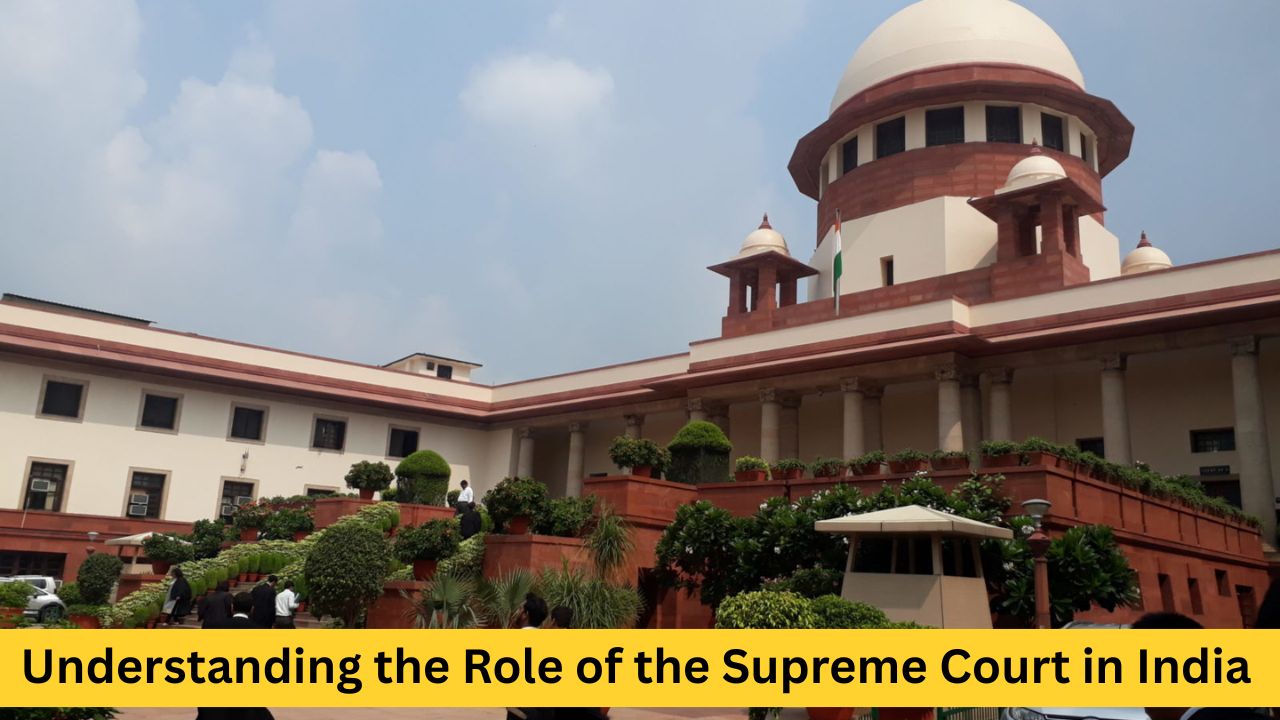
The Supreme Court of India stands at the apex of the country’s judicial hierarchy, wielding vast authority and responsibility. It serves not only as the final court of appeal but also as the guardian of the Constitution and protector of citizens’ fundamental rights. This article provides an in-depth understanding of the role of the Supreme Court in India, exploring its functions, powers, and significance in the democratic framework.
The Supreme Court as the Apex Judicial Body
Established under the Constitution of India in 1950, the Supreme Court is the highest judicial authority in the country. Located in New Delhi, it symbolizes the ultimate source of judicial power in the Indian legal system. Its primary purpose is to ensure that justice is administered fairly, impartially, and in accordance with constitutional mandates.
Key Functions of the Supreme Court
Final Court of Appeal
The Supreme Court is the court of last resort. It hears appeals from High Courts and other tribunals across the country in civil, criminal, and constitutional cases. Its verdicts are binding on all lower courts, ensuring uniformity in the interpretation and application of the law.
Guardian of the Constitution
By virtue of its jurisdiction, the Supreme Court acts as the protector of the Constitution. It interprets constitutional provisions and ensures that laws passed by the legislature and actions by the executive comply with constitutional principles.
Judicial Review
One of the most significant powers of the Supreme Court is judicial review. This means the Court has the authority to strike down any law or executive act that contravenes the Constitution. This upholds the supremacy of the Constitution and safeguards the balance of power between the Union and the states as well as the fundamental rights of citizens.
Enforcement of Fundamental Rights
Under Article 32 of the Constitution, the Supreme Court can issue writs such as habeas corpus, mandamus, prohibition, quo warranto, and certiorari to enforce fundamental rights. This writ jurisdiction empowers citizens to approach the Supreme Court directly when their rights are violated.
Original and Appellate Jurisdiction
The Supreme Court has original jurisdiction in disputes involving the Union and one or more states or between states themselves. It also has broad appellate jurisdiction to review decisions of High Courts and tribunals.
Advisory Jurisdiction
The President of India can seek the Court’s advice on important questions of law or fact under Article 143. Although advisory opinions are not binding, they hold significant legal and moral authority.
Powers and Responsibilities
Structuring the Judiciary
The Supreme Court supervises the appointment and transfer of judges in High Courts and ensures the judicial system functions efficiently and independently.
Suo Moto Actions
The Court can initiate hearings on its own (suo moto) in matters of public interest, thereby acting proactively to protect rights and uphold justice.
Court of Record
It is designated a Court of Record with the power to punish for contempt, which enables it to maintain the dignity of the judiciary.
The Supreme Court’s Role in Democracy
The Supreme Court of India plays a pivotal role in preserving democratic values and governance. Acting as a check on legislative and executive excesses, the Court maintains the balance of power and prevents arbitrary actions. Its judgments often clarify complex issues and guide government policy, thereby strengthening the rule of law.
Conclusion
The Supreme Court is the cornerstone of India’s judiciary and democracy. Through its extensive powers—including appellate and original jurisdiction, judicial review, and enforcement of fundamental rights—it shapes the country’s legal landscape. As the highest guardian of the Constitution, the Supreme Court ensures that justice prevails and that the rights of every citizen are protected under the law.

Abhinav Jain is a legal researcher and writer passionate about simplifying complex laws for everyday readers. With a keen interest in Indian constitutional, civil, and digital laws, he focuses on creating accessible, well-researched articles that promote legal awareness among students, professionals, and citizens alike.