
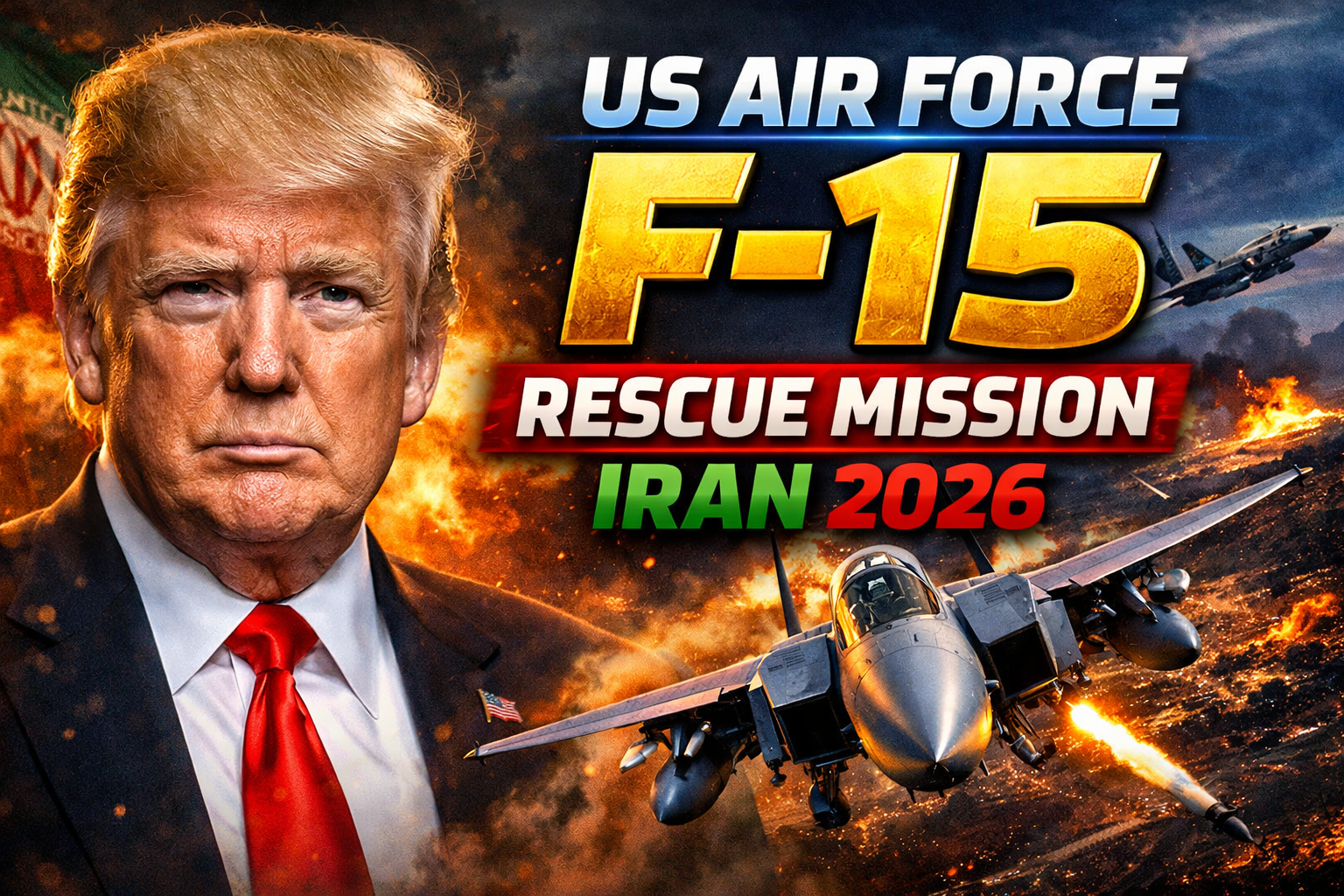
In early April 2026, the United States launched one of the most audacious combat‑search‑and‑rescue (CSAR) operations in recent memory after an F‑15E Strike Eagle was shot down over Iranian territory during the ongoing war with Iran. The mission, conducted over a 48‑hour period, successfully recovered both crew members of the two‑seat fighter—the pilot and the weapon systems officer (WSO)—deep inside enemy‑controlled territory, and has already been described in Washington and on international‑news‑channels as a “textbook rescue” and, by President Donald Trump, a “miraculous” operation. The Iran‑drawn F‑15 shoot‑down marked the first loss of an American fighter in the conflict, and the successful extraction of the aircrew served as both a morale‑boost for the US‑led coalition and a demonstration of Washington’s ability to execute precision‑intrusion missions even over heavily defended land.
The Downed F‑15E Strike Eagle
The incident began on Friday, April 3, 2026, when an F‑15E Strike Eagle belonging to the 494th Fighter Squadron was struck by Iranian air‑defence fire while conducting a strike‑or‑escort mission in the opening phase of the US‑Iran‑Israel war. The jet was hit by what Iranian state media described as a “Third Khordad”‑class surface‑to‑air missile system, part of Iran’s layered‑air‑defence network, which reputedly combined radar‑guided and passive‑infrared‑detection capabilities to track the high‑speed, low‑observable‑signature aircraft. The missile impact caused the aircraft to break up in mid‑air, forcing the two‑person crew—the pilot and the WSO—to eject over mountainous terrain in central Iran.
The loss of the F‑15E was a major propaganda‑coup for Tehran, which immediately declared that the skies over Iran were now under “full control” and that the downed jet symbolized the vulnerability of even advanced‑Western‑aircraft. Iranian officials and state‑run media outlets began broadcasting grainy footage purporting to show the wreckage of the aircraft, while lesser‑known opposition‑media channels circulated claims that one of the crew members had already been captured. The Pentagon initially declined to confirm the status of the crew, but made it clear that a full‑scale search‑and‑rescue operation was underway, with the US‑military‑command structure springing into high‑geared mode, coordinating with Air Force, Navy, Marine Corps, and special‑operations elements.
The 48‑Hour Survival Story
Before the rescue operation itself became the headline, the story of the surviving pilot captivated military‑analysts and the public alike. After ejecting from the stricken F‑15E, the pilot landed in rugged, high‑altitude terrain, likely in the arid mountains near Iran’s Isfahan‑region, more than 7,000 feet above sea level. With only a survival‑rucksack and basic emergency‑equipment, he reportedly spent nearly 48 hours eluding Iranian ground‑forces, hiding in rock‑crevices, and hiking through remote valleys while transmitting intermittent signals to US‑search‑and‑rescue‑forces.
According to accounts that later emerged in US‑and‑international‑media reports, the airman used his survival‑radio and GPS‑beacon to maintain intermittent contact with US‑airborne‑and‑space‑based‑tracking‑assets, which relayed his approximate position to the rescue‑command hub. The 48‑hour window was a critical race‑against‑time: the US‑military urgently needed to extract the crew before Iranian forces could secure the crash‑site or capture them, while the airmen in the cockpit had to stay alive, concealed, and uninjured enough to follow the pre‑ordained escape‑and‑evasion‑procedures.
The WSO, who had also successfully parachuted into the region, was reported to have been located and rescued by US‑forces within hours of the crash, underscoring the effectiveness of the US‑military‑search‑and‑rescue‑network and the rapid‑response‑capabilities of the CSAR‑assets deployed in the region. The pilot’s 48‑hour ordeal, however, became the focal‑point of the operation, as the Pentagon and the White House worked to keep the public updated without tipping off Iranian forces to the rescuers’ likely extraction‑window.
The Rescue Operation: Combat Search and Rescue in Iran
The US‑led rescue operation, formally a combat‑search‑and‑rescue mission, unfolded over the night of April 4 and into the early hours of April 5, 2026. The operation combined the precision‑attack‑airpower of the US‑Air‑Force‑with the stealth‑and‑infiltration‑capabilities of US special‑operations forces and, according to some reports, support from Israeli‑special‑forces and intelligence‑assets operating in the region. The geographic location of the operation, deep in Iranian‑controlled territory, placed the rescuers in one of the most heavily‑defended‑air‑and‑land‑environments of the modern era.
The operation reportedly began with a series of preparatory‑air‑strikes targeting Iranian‑air‑defence‑sites, radar‑emitters, and nearby‑military‑installations, part of a broader‑effort to suppress Iran’s anti‑aircraft‑network and create a brief‑window of reduced‑detection‑and‑fire‑power for the CSAR‑assets. The F‑15E‑rescue‑package likely included a mix of long‑range‑refueling‑tankers, electronic‑warfare‑aircraft, close‑air‑support‑planes, and helicopters‑flying at low‑altitude to avoid Iranian‑radar‑and‑infrared‑detection‑sensors. The use of stealth‑‑and‑low‑observable‑aircraft and the possible‑involvement of Israeli‑spy‑and‑recon‑units helped mask the scope and direction of the rescue‑force, preventing Iran from fully concentrating its resources on the extraction‑site.
The actual extraction‑itself, according to Pentagon‑and‑media‑briefings, was conducted by a small‑team of US special‑operations‑forces, supported by rotary‑wing‑aircraft and fixed‑wing‑escort‑fighters. The team infiltrated the mountainous‑area on foot and by helicopter, likely under the cover of darkness, and rendezvoused with the isolated pilot in a pre‑designated‑safe‑zone that had been identified through satellite‑imagery, signals‑intelligence, and the airman’s own GPS‑transmissions. The operation emphasized minimal‑time‑on‑the‑ground, with the team securing the pilot, fast‑roping him to a waiting‑helicopter, and exfiltrating the entire package back across the Iranian‑border into Syrian‑or‑Iraqi‑airspace, where the airman was transferred to a medical‑evacuation‑aircraft for further care.
The US‑military‑has described the operation as a “low‑casualty‑success,” with no reported‑fatalities among the rescue‑team itself, despite the intense‑risk of encountering Iranian‑ground‑forces, including the Islamic‑Revolutionary‑Guard‑Corps (IRGC) and local‑militias. The successful‑rescue of both crew members within a 48‑hour window of the F‑15E’s shoot‑down is being hailed as a tactical‑and‑strategic‑victory, demonstrating the US‑military’s‑ability to conduct deep‑intrusion‑rescue‑missions against a heavily‑armed‑regime.
Iranian Claims and Contradictory Narratives
Iranian‑officials have, unsurprisingly, offered a different‑telling of events. IRGC‑commanders and state‑television‑spokespersons have claimed that the US‑rescue‑operation was “completely foiled,” alleging that Iranian‑air‑defence‑forces shot down a second‑US‑aircraft that had been involved in the rescue‑attempt over the southern‑Isfahan‑region. State‑media clips have broadcast imagery of what are purported to be burning‑aircraft‑wreckage and radar‑tracks supposedly showing the downing of the alleged rescue‑aircraft, though independent‑verification of these claims has proven difficult.
Iran’s narrative appears designed to offset the propaganda‑impact of the US‑rescue, attempting to portray the operation as a failed‑incursion‑that‑cost the US‑an‑additional‑aircraft and‑personnel. The US‑military and US‑government‑have not confirmed the loss of a second‑aircraft, and Western‑intelligence‑sources have suggested that the Iranian‑claims may be a mix of disinformation, mis‑attributed‑imagery, and post‑facto‑justification‑for‑the‑failure to prevent the F‑15E‑crew’s extraction. The discrepancy in the two‑narratives is typical in wartime‑propaganda, with each side seeking to control the perception of the event’s outcome.
The Strategic and Political Impact
The successful‑rescue of the F‑15E‑crew has had a significant‑strategic‑and‑political‑impact on the Iran‑war. For the US‑military‑and‑the Trump‑administration, the operation is being framed as a demonstration of American‑determination and‑capability, even in the face of the first‑loss of an American‑fighter in the conflict. The Pentagon has used the operation to highlight the effectiveness of the US‑CSAR‑network, the advanced‑air‑and‑space‑tracking‑systems, and the seamless‑coordination‑between special‑operations‑forces, the Air Force, and allied‑military‑and‑intelligence‑partners.
The rescue has also had a morale‑boosting‑effect on the US‑coalition and the wider‑military‑community, reinforcing the idea that no‑crewman‑will be left behind, even in the most‑hostile‑environments. The operation has been compared to historic‑rescue‑missions such as the Mayaguez‑rescue‑of‑1975 or the 1993‑Iraq‑CSAR‑operations, but with the added‑layer of advanced‑electronics, satellite‑tracking, and low‑observable‑air‑power that make such rescues far more feasible today. The successful‑extraction of the downed‑pilot after 48‑hours of evasion in Iranian‑mountains has become a symbolic‑story of resilience, ingenuity, and the US‑military’s‑commitment to its personnel.
For Iran, the rescue‑operation has been a humiliating‑setback, undermining the narrative of total‑air‑dominance that Tehran had sought to project after the F‑15E’s downing. The fact that the US‑was able to infiltrate Iranian‑airspace, neutralize‑or‑suppress‑critical‑air‑defence‑sites, and extract the crew without suffering a confirmed‑loss has been interpreted as a signal that Iran’s defensive‑network is vulnerable to precisely‑targeted‑attacks and‑sophisticated‑infiltration‑tactics. Iranian‑officials have responded with rhetoric about “increased‑vigilance” and the strengthening of border‑defences, but the psychological‑impact of the failure to keep the US‑airmen in captivity may resonate within the Iranian‑military‑and‑political‑elite.
What the Mission Tells Us About Modern Warfare
The 2026 F‑15‑rescue‑operation in Iran is a textbook‑case of modern‑combat‑search‑and‑rescue, blending advanced‑air‑and‑space‑capabilities with the ground‑skills of special‑operations‑forces. The operation underscores the continued importance of CSAR‑assets in contemporary‑warfare, even as the battlefield‑has become denser‑with anti‑air‑defences and electronic‑countermeasures. The US‑military’s ability to track the downed‑airman, coordinate multiple‑branches‑of‑the‑force, and execute a low‑risk‑extraction‑in enemy‑airspace demonstrates the sophistication of the modern‑US‑military‑apparatus.
The mission also highlights the growing‑importance of allied‑and‑foreign‑intelligence‑support in US‑operations. Reports of Israeli‑assistance in the rescue suggest that the US‑is increasingly relying on intelligence‑and‑recon‑partnerships to conduct high‑risk‑operations in heavily‑defended‑regions. The involvement of ally‑forces in the operational‑planning‑and‑execution of the rescue underscores the interconnected‑nature of the US‑led‑coalition in the Iran‑war, and the way that the conflict is being fought through a network of overlapping‑capabilities rather than a single‑monolithic‑force.
The 48‑hour‑survival‑and‑rescue‑story of the F‑15E‑pilot is a powerful reminder that the human‑element remains central to the outcome of modern‑warfare. The airman’s ability to stay alive, hide, and transmit his position was as critical as the technological‑and‑tactical‑resources deployed by the rescue‑team. The combination of training, discipline, and advanced‑equipment has enabled the US‑military to turn a potentially‑catastrophic‑loss into a morale‑boosting‑success, and the 2026 Iran‑F‑15‑rescue‑mission is likely to become a case‑study in future‑US‑military‑training‑and‑doctrine‑programs.
The Road Ahead in the Iran War
The successful‑rescue of the downed‑F‑15E‑crew has reshaped the narrative of the Iran‑war, at least in the short term. The US‑military’s‑demonstration of capability in rescuing personnel from Iranian‑airspace may embolden the US‑and‑its‑allies to continue high‑risk‑operations in the region, confident that their personnel will be recovered even in the face of intense‑air‑defensive‑resistance. The operation has also underlined the limitations of Iran’s air‑defence‑network, which has proven vulnerable to precision‑strikes and‑electronic‑warfare‑tactics.
For Iran, the failure to keep the US‑airmen in captivity may lead to a re‑evaluation of its defensive‑strategy, with an emphasis on tightening border‑security and improving‑intelligence‑gathering‑networks. The propaganda‑loss of the rescue may also prompt Tehran to escalate its rhetoric and potentially‑increase its use of proxies and asymmetrical‑tactics in the region. The 2026‑F‑15‑rescue‑mission, therefore, is not just a tactical‑and‑strategic‑event; it is a turning‑point in the psychological‑and‑propaganda‑battle between the US‑and‑Iran.
The 2026‑US‑Air‑Force‑F‑15‑rescue‑mission in Iran stands as a landmark in the history of modern‑military‑operations, demonstrating the power of combined‑air‑and‑special‑operations‑forces to execute high‑risk‑extraction‑in heavily‑defended‑regions. The successful‑rescue of the downed‑pilot and‑WSO after 48‑hours of evasion in Iranian‑mountains is a testament to the resilience of the US‑military‑personnel and the sophistication of the rescue‑network that supports them.

Abhinav Jain is a legal researcher and writer passionate about simplifying complex laws for everyday readers. With a keen interest in Indian constitutional, civil, and digital laws, he focuses on creating accessible, well-researched articles that promote legal awareness among students, professionals, and citizens alike.