
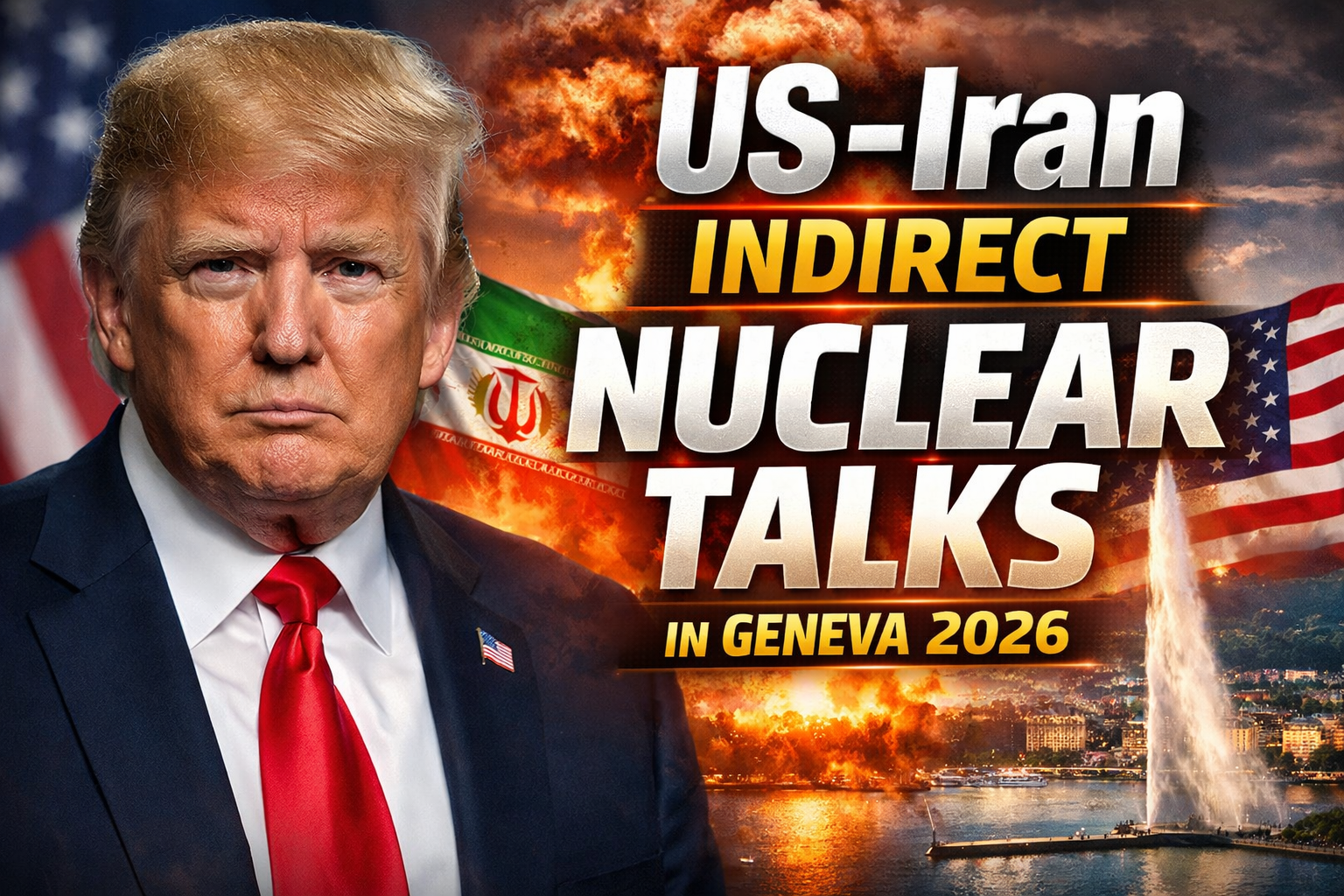
Diplomacy in Geneva has rarely looked this tense. In the early weeks of 2026, the United States and Iran are locked in a high‑stakes round of indirect nuclear negotiations, with Oman acting as mediator and the shadow of possible military escalation looming larger by the day. The talks—held in neutral Swiss soil while American forces fan out across the Middle East in their largest deployment since the Iraq invasion—reflect a paradox at the heart of Washington’s strategy: the Trump administration simultaneously builds war‑fighting capacity and pushes for a deal that could permanently cap Iran’s nuclear ambitions.
The Geneva Setting: Neutral Ground, High Stakes
Geneva, long a preferred venue for discreet superpower maneuvering, now serves as the backdrop for a confrontation that could reshape the strategic map of the Middle East. The 2026 talks mark the third round of indirect negotiations between Washington and Tehran since Donald Trump resumed the presidency in January 2025, and the atmosphere is one of fragile optimism. Delegates from both sides exchange proposals through Omani intermediaries in discreet conference rooms at a major Swiss hotel, while heavy security details patrol the perimeter.
Publicly, officials on both sides describe the talks as “constructive” and “positive,” but they stop short of announcing breakthroughs. The American delegation, led by senior envoys including Steve Witkoff and Jared Kushner, is under strict instructions to maintain leverage by pairing every diplomatic gesture with military signaling. The Iranian side, headed by Foreign Minister Abbas Araghchi, repeatedly emphasizes that its nuclear program is peaceful and that it will only negotiate within narrow parameters focused on technology and sanctions.
Why Geneva Matters
- Geneva offers proven diplomatic infrastructure, international law expertise, and a tradition of neutrality that both sides can exploit.
- The city’s proximity to European capitals and defense‑policy hubs allows quick consultations with France, Germany, and the United Kingdom, all of which remain invested in any new Iran‑centric nuclear framework.
- The choice of Geneva also signals that Washington treats the process as serious, multilateral‑style diplomacy rather than a one‑off symbolic gesture.
The Trump Administration’s Dual Strategy
The Trump White House has adopted a dual‑track approach: diplomacy from a position of maximum pressure, backed by visible force. The 2026 Geneva talks are not unfolding in a vacuum; they coincide with a massive American military buildup in the Middle East, including forward‑based aircraft, carrier groups, and long‑range strike assets, designed to signal that the United States is prepared to act if diplomacy fails.
Trump himself has repeatedly stated that he “prefers a deal” but has also warned in televised remarks that he reserves the right to order targeted strikes if Iran does not accept what Washington describes as a “comprehensive and verifiable” arrangement. This posture has been echoed by Vice President JD Vance and senior military commanders, who have emphasized that time is not unlimited. At the same time, American representatives in Geneva have floated a package of incentives, including limited nuclear‑energy cooperation and the possibility of phased sanctions relief, contingent on Iran’s acceptance of strict limits on enrichment and stockpiles of highly enriched uranium.
Key Elements of the American Position
- Insistence on broader constraints: The United States wants an agreement that goes beyond the narrow nuclear limits of the 2015 JCPOA to cover ballistic‑missile development, regional proxy activity, and procedures for snap‑back sanctions.
- Red‑line on enrichment: Washington demands that Iran reduce enriched‑uranium stockpiles and cap enrichment levels far below weapons‑grade, while allowing limited enrichment for civilian power under strict monitoring.
- Verification and transparency: The Trump team insists on intrusive, real‑time monitoring by the International Atomic Energy Agency (IAEA), including access to previously restricted sites and rapid‑inspections protocols.
Tehran’s Perspective and Red Lines
For Iran, these talks are framed as a defense of national sovereignty and a test of whether Washington is serious about a durable agreement or simply using negotiations to create a domestic pretext for escalation. Tehran wants a narrow deal that focuses almost exclusively on the nuclear file and the lifting of sanctions that have strangled its economy, particularly those affecting oil exports, financial connectivity, and key sectors such as transportation and technology.
Iranian officials argue that their program is peaceful and that they have the right, under international law, to enrich uranium for civilian purposes. They reject any external limits on missile development or regional alliances, insisting that these issues are matters of defense policy and alliances, not nuclear negotiations. At the same time, Tehran cannot ignore the economic drain of sanctions and the domestic unrest they have fueled; the leadership is under pressure to show that it can secure tangible relief without surrendering its red lines.
Core Iranian Demands
- Immediate or rapid sanctions relief: Iran wants a clear, time‑bound roadmap for the removal of sanctions, especially those affecting energy exports and banking access.
- Recognition of peaceful nuclear rights: Tehran insists that any agreement must acknowledge its right to a civilian nuclear program, including enrichment under IAEA safeguards.
- No linkage to missiles or proxies: Iranian negotiators resist American demands to tie the nuclear deal to limitations on missile ranges or restrictions on regional armed groups.
The Geneva Dynamics: What Has Changed Since 2015
Compared with the 2015 JCPOA negotiations, the 2026 Geneva talks are marked by several structural shifts. The JCPOA was a direct, multilateral process involving the United States, Iran, the United Kingdom, France, Germany, Russia, and China, with the European Union acting as coordinator. The current round is indirect, with Oman acting as the primary conduit between Washington and Tehran. This format reflects both the deep mistrust that persists and the political constraints each side faces at home.
Trump’s first term already saw the collapse of the 2015 deal when he withdrew the United States in 2018 and reinstated stringent sanctions. The Biden administration later pursued a return to the JCPOA framework, but talks stalled over issues of verification, timing, and sanctions relief. The Trump administration that returned to power in 2025 has adopted a more coercive tone, combining the threat of military action with the promise of technological and economic assistance if Iran meets American demands.
Evolution of the Negotiation Format
| Feature | 2015 JCPOA talks | 2026 Geneva talks |
|---|---|---|
| Direct or indirect | Direct, multilateral | Indirect, mediated by Oman |
| Key external actors | P5+1 plus EU | Oman‑mediated, with European observers |
| Main focus | Narrow nuclear limits | Broader regional security issues |
| Sanctions relief | Gradual, tied to compliance | Phased, with tougher conditions |
| Verification mechanism | IAEA‑based, with some access issues | Demands for much more intrusive monitoring |
The Shadow of Military Escalation
The Geneva talks are not taking place in a quiet, neutral space. Instead, they are embedded in an environment of intense military signaling. The United States has assembled what several defense analysts describe as the largest regional force package since the 2003 Iraq campaign, including aircraft‑carrier strike groups, strategic‑bomber rotations, and advanced missile‑defense assets. American officials insist these deployments are defensive and meant to reassure regional allies, but Tehran and many regional observers interpret them as a coercive backdrop for the negotiations.
Iran, for its part, has conducted large‑scale military exercises, including naval drills in the strategically critical Strait of Hormuz, and has hinted at the possibility of retaliating with force if it believes its territory or nuclear facilities are targeted. The Iranian Revolutionary Guard has sharply increased rhetoric in state‑linked media, warning that any strike would be answered “with full force.” This dynamic creates a dangerous feedback loop: the more heavily the United States deploys, the more Tehran feels surrounded; the more Tehran threatens, the more Washington feels justified in maintaining high readiness.
Possible Scenarios From Geneva
- Successful narrow deal: Washington and Tehran sign a limited agreement that caps enrichment, reduces stockpiles, and unlocks phased sanctions relief, while leaving missile and regional issues unresolved.
- Broader but fragile framework: The two sides agree on comprehensive constraints on nuclear, missile, and some proxy activities, but with only partial or temporary sanctions relief, setting the stage for future disputes.
- No breakthrough: Talks end without a substantive agreement, and the Trump administration moves toward a calibrated military‑pressure campaign, possibly including limited strikes or intensified covert operations.
The Role of Oman and Other Mediators
Oman’s role as mediator is crucial. As a Gulf state that has traditionally pursued a balancing policy between Iran and the United States, Muscat has developed long‑standing back‑channel relationships with both capitals. The Omani foreign minister, Badr Al‑Busaidi, has described the Geneva talks as an opportunity to explore “creative and positive ideas,” and diplomats close to the process report that Muscat has floated several innovative proposals aimed at bridging the gap on verification and sanctions.
European powers, meanwhile, are watching closely but remain somewhat on the sidelines. While France, Germany, and the United Kingdom were core participants in the original JCPOA, Washington’s push for a more expansive deal has complicated their coordination with Tehran. European officials privately worry that Trump’s coercive style could derail any agreement, but they also recognize that a new deal—however narrow—would be better than a slide toward open conflict.
Benefits of Oman’s Mediation
- Oman enjoys a measure of trust with both sides, allowing it to convey sensitive proposals without immediately triggering domestic backlash.
- Muscat’s non‑bloc status and relatively low profile reduce the risk of the talks being seen as a Western‑led containment exercise.
- Omani mediation also allows America and Iran to negotiate without the political optics of direct, face‑to‑face meetings, which would be domestically difficult for both governments.
Domestic Politics on Both Sides
No negotiation of this scale can be understood without looking at the domestic political landscape in Washington and Tehran. In the United States, the Trump administration is navigating a polarized political environment. The president’s base tends to favor a hard‑line posture toward Iran, while some business and financial interests see the removal of sanctions as a potential boon for energy markets and trade. The mid‑term congressional cycle and the run‑up to 2028 elections add another layer of pressure: any deal will be scrutinized not only for its strategic merits but also for its political consequences.
In Iran, the decision‑making process is divided among competing factions within the state‑security apparatus. The supreme leader, the president, and the Revolutionary Guard each have different risk appetites and priorities. Hard‑liners oppose any concessions that appear to concede to American pressure, while pragmatists within the government and clerical establishment see a negotiated settlement as a way to restore economic stability and international space. Public opinion in Iran is deeply skeptical of the United States, but frustration over unemployment, inflation, and limited access to global markets has also created a latent demand for some form of relief.
What Is at Stake for the Region
The outcome of the 2026 Geneva talks will have far‑reaching implications far beyond the American‑Iranian bilateral relationship. A successful agreement could reduce the risk of a regional war, limit the spread of nuclear capabilities, and create space for other regional actors to recalibrate their strategies. Israel, a key American ally, has long viewed Iran’s nuclear program as an existential threat and has signaled that it will not accept any deal it perceives as weak. If the Trump administration reaches a deal that Israel finds insufficient, Tel Aviv could pursue unilateral action, dramatically raising the risk of wider conflict.
Other Gulf states, including Saudi Arabia and the United Arab Emirates, have their own calculations. They want to see Iran’s nuclear program constrained but also worry that any return to broad sanctions‑relief could indirectly strengthen Iranian influence in regional conflicts. The European Union, meanwhile, faces the challenge of balancing its desire for stable energy markets and regional security with its own concerns about human‑rights issues and Iran’s regional behavior.
The Path Forward
As the Geneva talks continue, the overriding question is whether the United States and Iran can find a formula that satisfies both sides’ minimum requirements. For Washington, that means a deal that demonstrably rolls back Iran’s nuclear capabilities and creates a credible deterrent against cheating. For Tehran, it means a deal that offers real economic relief without undermining its sense of sovereignty or security.
Success will likely require creative compromises: a phased approach to sanctions relief, shared guarantees for continued monitoring, and a recognition that no single agreement can resolve all outstanding disputes. If the two sides fail to bridge the gap, the world may face not only a nuclear crisis but also the specter of a broader regional war that none of the major players truly wants. In that sense, the Geneva negotiations are not just about uranium and centrifuges; they are a test of whether diplomacy can still prevail when the guns are quietly being readied.

Abhinav Jain is a legal researcher and writer passionate about simplifying complex laws for everyday readers. With a keen interest in Indian constitutional, civil, and digital laws, he focuses on creating accessible, well-researched articles that promote legal awareness among students, professionals, and citizens alike.