
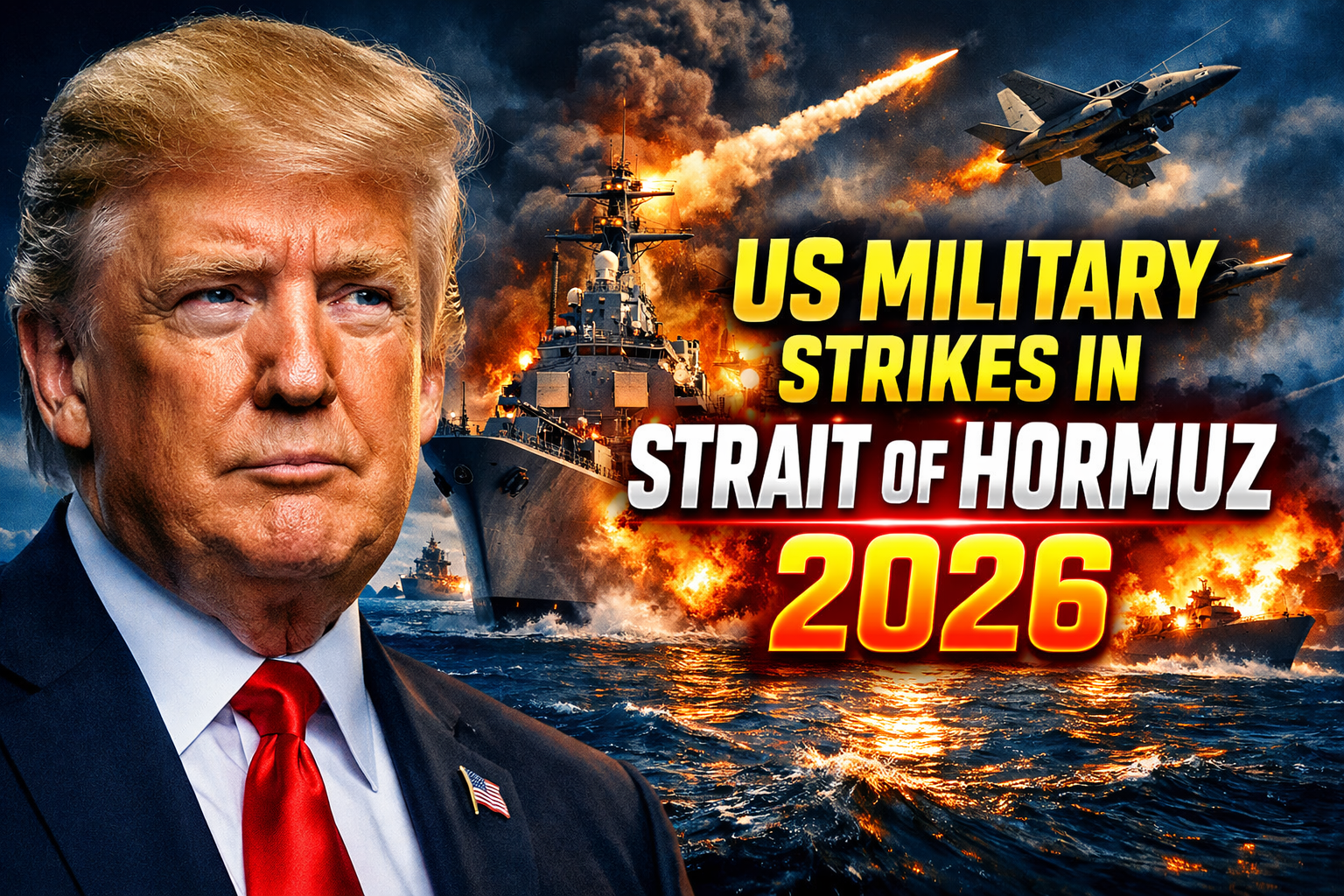
The Strait of Hormuz has become a flashpoint in the escalating Iran-Israel war, with U.S. military strikes securing the vital waterway amid soaring oil prices. Global markets reel as disruptions threaten twenty percent of the world’s oil supply, pushing crude above $100 per barrel for the first time in years.
Introduction
Tensions in the Middle East erupted into open conflict in late February 2026, drawing the United States into direct military action. Joint U.S.-Israeli operations targeted Iranian assets, prompting Tehran to threaten and disrupt shipping in the Strait of Hormuz. This narrow chokepoint, handling roughly twenty million barrels of oil daily, saw traffic grind to a halt, igniting a global energy crisis.
Oil prices surged past $100, with Brent crude hitting $108 and U.S. futures touching $110. Stock markets plummeted, inflation fears mounted, and nations scrambled for alternatives. President Donald Trump’s administration vowed to reopen the strait, deploying forces and calling for a naval coalition.
This crisis stems from failed nuclear talks and prior skirmishes, culminating in the killing of Iran’s Supreme Leader Ali Khamenei. As strikes intensify, the world watches economic fallout unfold.
Background of the Conflict
The 2026 Iran war traces roots to simmering U.S.-Iran hostilities and Israel’s security concerns. Failed Geneva nuclear negotiations in early 2026, coupled with a twelve-day air conflict the previous year, set the stage. Iran warned of Hormuz disruptions, conducting live-fire drills and partial closures as signals.
On February 28, Operation Epic Fury launched: U.S. and Israeli airstrikes hit Iranian military sites, nuclear facilities, and leadership. Over 200 Israeli jets dropped 1,200 bombs on 500 targets, including naval vessels. Iran’s retaliation included missile barrages on Israeli cities, U.S. bases in the Gulf, and strikes via Hezbollah from Lebanon.
Tehran declared the strait off-limits to enemy shipping, effectively halting tankers. IRGC threats targeted any vessel, expanding chaos to UAE, Qatar, and Bahrain ports. President Trump eased Russian oil sanctions to boost supply, while criticizing allies for tepid responses.
US Military Strikes in the Strait
U.S. forces swiftly asserted dominance. CENTCOM reported over 6,000 combat flights, destroying more than 100 Iranian naval vessels, including ships and a submarine. Strikes dropped 5,000-pound bombs near Hormuz, establishing air superiority and securing passage.
Deployments escalated: the USS Tripoli carried 2,500 Marines from the 31st Marine Expeditionary Unit for crisis response. Amphibious warships patrolled, ready for evacuations or interdictions. Defense Secretary Pete Hegseth managed disruptions, assuring no panic needed.
Trump called for a multinational naval coalition, offering U.S. support to oil-dependent nations. While Iran claimed control without full blockade, U.S. escorts protected tankers. Admiral Cooper praised 50,000 deployed troops, especially logisticians sustaining 24/7 operations.
| US Military Action | Details | Outcome |
|---|---|---|
| Operation Epic Fury | 200+ jets, 1,200 bombs on 500 targets | Destroyed air defenses, missile launchers, naval assets |
| Air Superiority Campaign | 6,000+ combat flights | Total dominance over Hormuz airspace |
| Naval Engagements | Strikes on 100+ IRGC vessels, 1 submarine | Secured initial shipping lanes |
| Marine Deployment | 2,500 Marines on USS Tripoli | Ready for maritime security, evacuations |
| Coalition Call | Warships from allies invited | Partial responses; U.S. leads escorts |
Iranian Responses and Escalation
Iran hit back hard, launching drones and missiles at Tel Aviv, using cluster bombs on civilians—condemned widely. IRGC Navy Commander Alireza Tangsiri denied losses, asserting strait control. Foreign Minister Abbas Araghchi insisted passage remains open for neutrals.
Strikes expanded: Azadi Square in Tehran, metro stations, and Gulf refineries. Parliament Speaker Mohammad Bagher Ghalibaf warned of oil market havoc. Hezbollah rockets from Lebanon prompted Israeli counters, widening the theater.
Iran rejected de-escalation after Israel killed its top security chief. Retaliatory attacks on commercial ships intensified, sinking tankers and spiking insurance costs.
Oil Price Surge and Market Chaos
Disruptions removed twenty million barrels daily, vaulting Brent to $108 and WTI to $110—highest since 2022. Analysts eyed $150 if prolonged. Goldman Sachs pegged a $14 risk premium for a four-week Hormuz halt.
Asia hoarded reserves: Japan and South Korea tapped stockpiles; China curbed exports. Europe faced jet fuel at $190 equivalent, half imports via Hormuz. U.S. gasoline futures spiked, reigniting inflation.
Dow futures dropped 800 points; global equities sold off. IEA released reserves, but traders feared stagflation: 0.7% inflation hike, 0.4% growth drag per sustained $100 oil.
| Oil Price Metrics | Pre-Crisis | Peak 2026 | Projected Risk |
|---|---|---|---|
| Brent Crude | $66 | $108 | $150 (full blockade) |
| WTI Crude | $62 | $110 | $130+ |
| Jet Fuel (Europe) | $80 equiv. | $190 equiv. | Supply shortages |
| Risk Premium | $4 | $14 | $20+ (extended) |
| Daily Hormuz Flow | 20M bpd | Halted | Partial resumption |
Global Economic Impacts
The shockwave hit worldwide. Iran’s 1.6 million bpd exports to China vanished, forcing sourcing shifts. OPEC+ hiked output, but spare capacity strained. Aviation grounded flights; shipping rerouted via costly paths.
Inflation roared back, central banks paused cuts. U.S. consumers faced pump prices doubling; Europe rationed fuel. India, heavy importer, saw rupee plunge. Goldman warned of recession risks if blockade persists.
Positive notes: U.S. shale ramped; Russia filled gaps post-sanctions ease. Yet, downstream pain dominated—refineries idled, chemicals soared.
Geopolitical Ramifications
Trump’s rhetoric hardened: vows to thwart Iran’s “desperation.” Allies split—Europe urged restraint; Gulf states hosted U.S. bases. Russia backed Tehran verbally; China sought neutrality.
Israel pressed advantages, striking western Iran. Hezbollah weakened, but proxies threatened. Naval coalition lagged; few answered Trump’s call.
Long-term: nuclear sites crippled, regime instability. U.S. sovereign AI and energy independence buffered blows.
Challenges Ahead
Reopening Hormuz demands sustained superiority amid mine threats, swarms. Casualties mount; logistics strain 50,000 troops. Diplomacy falters—Iran vows persistence.
Economic resilience tested: reserves buy time, but prolonged war risks depression. Humanitarian crises loom in struck cities.
Future Outlook
Strikes continue, aiming regime pressure. Coalition growth could normalize flows, easing prices. Yet escalation risks—full invasion or proxy wars.
U.S. leverages airpower for quick wins, eyeing de-escalation post-objectives. Oil may stabilize at $90 if partial resumption; $120+ otherwise. Global pivot to alternatives accelerates.

Abhinav Jain is a legal researcher and writer passionate about simplifying complex laws for everyday readers. With a keen interest in Indian constitutional, civil, and digital laws, he focuses on creating accessible, well-researched articles that promote legal awareness among students, professionals, and citizens alike.