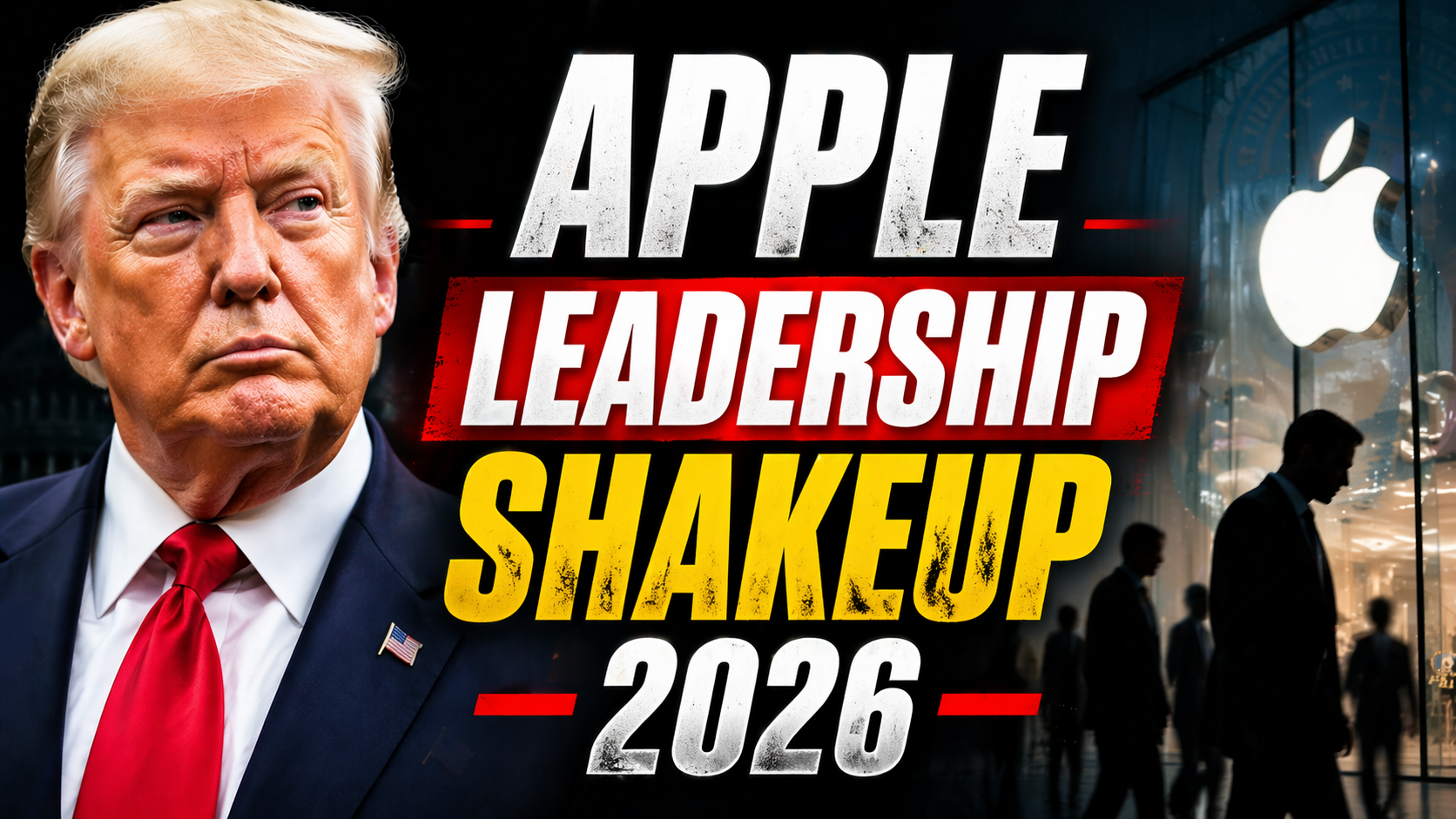
Apple’s leadership shakeup in 2026 marks the most significant inflection point in the company’s executive suite since the transition from Steve Jobs to Tim Cook more than a decade ago. As Cook prepares to step back from the day‑to‑day role of chief executive and move into the position of executive chairman, the spotlight has shifted squarely onto longtime insider John Ternus, who is now confirmed as Apple’s next CEO. This move is not a surprise in Silicon Valley, but it is a pivotal moment: Ternus will be only the third person to lead Apple as CEO in its modern history, and the first with a hardware‑engineering background at the very top.
Why the Timing Makes This Move Unusual
Most of Apple’s big leadership changes have come in the wake of a crisis, a product misstep, or a sudden departure. The 2026 leadership shakeup is different: it is being framed as the conclusion of a long‑planned, board‑driven succession process rather than a reaction to a meltdown. Cook, who has steered Apple through its expansion from a smartphone‑centric business into a global services and ecosystem powerhouse, is stepping down from the CEO role after a 15‑year run, passing the baton rather than being forced out.
Analysts note that this timing is both a strength and a risk. On one hand, Apple is still a dominant force in consumer tech, with a market capitalization well above several trillion dollars, a loyal installed base, and a diversified mix of hardware, software, and services. On the other hand, the company faces intensifying pressure to prove that it can continue innovating in an era of AI, folded displays, and new computing paradigms. Any new CEO, even one groomed from within, will face a skeptical market that expects another transformative leap on par with the iPhone or the App Store.
Within Apple, the transition also signals that the board and senior executives have spent years rehearsing a scenario where the Jobs‑Cook era ends and a new generation of leadership takes over. Unlike transitions at many other tech giants, this is not a situation of “fire‑sale” succession; it is a deliberate, staged handoff meant to preserve institutional continuity while injecting fresh energy.
John Ternus: The Quiet Architect
If Tim Cook is the global‑operations maestro and Steve Jobs the charismatic visionary, John Ternus fits a different archetype: the quiet architect of Apple’s hardware evolution. Ternus joined Apple in 2001 and has since risen through the ranks to become the senior vice president of hardware engineering, overseeing the core engineering spine of the iPhone, Mac, iPad, and Apple Watch. In that role, he has had a hand in shaping everything from thermal and battery design to the integration of custom silicon and the physical constraints of pushing features into thinner form factors.
Publicly, Ternus is known for a low‑profile style. He rarely appears in keynote‑style product launches and rarely gives extended interviews. Yet internally, he is widely regarded as a disciplined, detail‑oriented leader who thrives on solving complex engineering trade‑offs—balancing power, performance, and cost while keeping Apple’s hallmark focus on user experience. This temperament has helped him climb the executive ladder and has made him a natural fit for a CEO seat that values execution over showmanship.
Key traits that distinguish Ternus as a leadership figure include:
- Deep technical fluency across multiple product lines, allowing him to move fluidly between mobile, desktop, and wearable domains.
- A long‑term perspective built on more than two decades inside Apple, giving him a nuanced understanding of how decisions today ripple through the ecosystem years later.
- A reputation for consensus‑building rather than top‑down edicts, which may help stabilize Apple’s notoriously insular culture as it faces faster‑paced competition.
What the Leadership Transition Looks Like
The formal structure of the 2026 leadership shakeup separates operational leadership from strategic oversight. Tim Cook will become executive chairman, remaining closely involved with the board and continuing to engage with policymakers, regulators, and global partners. In that role, he will still have a voice in Apple’s direction, but he will no longer be the person setting the daily agenda or approving product‑roadmap decisions.
John Ternus, in contrast, will take the helm as CEO, responsible for the full breadth of Apple’s business: hardware, software, services, retail, and the broader ecosystem. The transition is planned to begin in earnest over the summer, with Cook working alongside Ternus to ensure that key projects, relationships, and internal rhythms are not disrupted. The effective takeover date is set for early fall, giving markets and employees a clear endpoint for the transition period.
For Apple’s executive team, the change is both a signal and a test. Other senior leaders—such as Craig Federighi (software), Eddy Cue (services), Greg Joswiak (marketing), and Deirdre O’Brien (retail and people)—have also been discussed as potential successors in the past. The board’s decision to consolidate on Ternus suggests that it prioritizes hardware‑driven innovation and product execution over a more services‑ or software‑centric path. That does not mean Apple will abandon services like the App Store, iCloud, or Apple Music; it does mean that the company’s identity will continue to be anchored in hardware‑first thinking, at least in the near term.
Apple’s Leadership Style Under Ternus
Under Ternus, Apple’s leadership style is unlikely to undergo a dramatic personality shift, but it may evolve in subtle, important ways. Cook’s era has been defined by operational excellence, global‑supply‑chain mastery, and a relentless focus on margin discipline and services growth. Ternus’s leadership, by contrast, is expected to lean more heavily on product‑centric risk‑taking and engineering‑driven innovation.
This is not to say that Ternus will suddenly transform Apple into a chaotic startup. Instead, he is likely to emphasize:
- Closer coupling between hardware and software teams, reducing the friction that sometimes emerges when discrete product silos pursue different priorities.
- A renewed emphasis on industrial design and material science, as Apple seeks to differentiate devices in an era where chips and AI are becoming more standardized across the industry.
- More aggressive experimentation with new form factors and embedded experiences, such as spatial‑computing devices, advanced wearables, and AI‑assisted hardware features that feel more seamless than bolt‑on software gimmicks.
Internally, Ternus may also push for a flatter, more technically grounded decision‑making culture. Reports suggest he is comfortable challenging assumptions and pushing teams to justify their choices with data and prototypes rather than marketing narratives alone. This could yield tighter, more focused product roadmaps, but it may also amplify tensions with executives whose domains are more brand‑ or service‑oriented.
The AI Challenge on Ternus’s Plate
One of the most immediate and visible challenges facing Ternus is Apple’s position in the AI race. By 2026, many rivals have made aggressive moves into generative AI, on‑device intelligence, and cloud‑powered assistant features, prompting questions about whether Apple has fallen behind in integrating AI into its core experience. The company’s commitment to privacy and on‑device processing has earned praise, but it has also constrained how quickly Apple can roll out some of the more dazzling AI‑driven features seen elsewhere.
Ternus’s background as a hardware‑engineering leader gives him a unique advantage here: he can think about AI as something that is as much about silicon, thermal design, and battery efficiency as it is about algorithms. Under his leadership, Apple could lean further into:
- Tightly integrated AI chips and neural‑engine accelerators that are optimized for specific device types.
- On‑device AI assistants that feel more contextual and less dependent on cloud round‑trips, which aligns with Apple’s privacy‑first stance.
- AI‑driven photography, audio, and accessibility features that are less “flashy” but more deeply embedded in the iPhone and iPad experience.
Critics may argue that this approach is too cautious, but supporters see it as Apple’s differentiator: a more restrained, privacy‑respecting flavor of AI that still feels smart and useful. How Ternus navigates this trade‑off between speed and safety will be one of the first major tests of his tenure.
Financial and Market Implications
From a market perspective, Apple is entering this transition in a position of relative strength. Its installed base of devices is enormous, its services revenue is substantial and growing, and its balance sheet is one of the most robust in corporate America. The company’s valuation reflects confidence that it can continue to generate strong cash flows, even as the smartphone market matures and competition intensifies.
The leadership shakeup does, however, introduce new variables. Investors will watch how Ternus:
- Manages capital allocation, including dividends, buybacks, and long‑term investments in AI and hardware innovation.
- Navigates regulatory and antitrust scrutiny, especially around the App Store, Apple Pay, and the broader ecosystem.
- Handles the inevitable slowdown in hardware‑unit growth by leaning harder into services, leasing models, trade‑in programs, and subscription‑like experiences.
Analysts who have studied Apple’s internal dynamics suggest that Ternus’s product‑focused approach could unlock new value if he can successfully pivot Apple away from a “margin‑maximization” mindset toward a more experience‑oriented, ecosystem‑driven strategy. That shift would reward long‑term loyalty over short‑term profit spikes, but it would require careful calibration so that shareholders are not alienated by slower EPS growth.
The Inside‑Out View: Apple’s Culture and Team Dynamics
Perhaps the most important battlefield for Ternus is not external markets or rival products, but Apple’s internal culture. The company has a long‑standing reputation for being highly secretive, intensely competitive, and sometimes insular. Under Cook, the culture has arguably softened somewhat, with more emphasis on diversity, inclusion, and employee well‑being.
Ternus now faces the delicate task of honoring Apple’s storied design and engineering culture while modernizing it for a faster‑moving era. This means:
- Encouraging more cross‑functional collaboration between hardware, software, and services teams, whose roadmap priorities sometimes clash.
- Giving more room to younger talent and mid‑level leaders who may have felt blocked by the long‑tenured executive team.
- Navigating the symbolic weight of following not only Tim Cook but also Steve Jobs, two figures whose legacies set a very high bar for any successor.
There are also succession questions within the executive team itself. If Ternus is willing to tolerate some internal competition, Apple could see a more dynamic leadership cohort emerge over the next few years. But if he consolidates power around a narrow inner circle, the company risks repeating the same concentration‑of‑authority problems that sometimes plagued earlier eras.
What This Means for Apple’s Next Chapter
John Ternus’s rise to CEO in 2026 is not just a personnel change; it is a statement about the kind of company Apple wants to be in the AI‑era global economy. The board’s decision to put a hardware‑engineering veteran at the top signals that Apple will continue to stake its identity on physical devices, even as the world around it becomes increasingly software‑ and cloud‑driven.
Under Ternus, Apple is likely to lean into:
- Stronger hardware‑software integration, with AI features that feel native rather than glued on.
- Slower, more deliberate product launches that prioritize refinement over chasing every AI‑fueled trend.
- A more globally aware, privacy‑conscious approach to emerging technologies, which may resonate with regulators and consumers wary of unchecked AI power.
For users, this could mean devices that feel a little more conservative on the surface but that are engineered to last, respect privacy, and integrate more seamlessly into daily life. For investors, it means a company that may not always lead the headlines with the flashiest AI demos, but that continues to deliver steady, long‑term value through a tightly controlled ecosystem.
The 2026 leadership shakeup is a reminder that even the most powerful tech giants must eventually confront generational change. Tim Cook’s departure from the CEO role closes one era; John Ternus’s ascent opens another, one where Apple’s future will be shaped less by the charisma of a single visionary and more by the quiet, persistent craftsmanship of its hardware and engineering backbone.

Abhinav Jain is a legal researcher and writer passionate about simplifying complex laws for everyday readers. With a keen interest in Indian constitutional, civil, and digital laws, he focuses on creating accessible, well-researched articles that promote legal awareness among students, professionals, and citizens alike.