
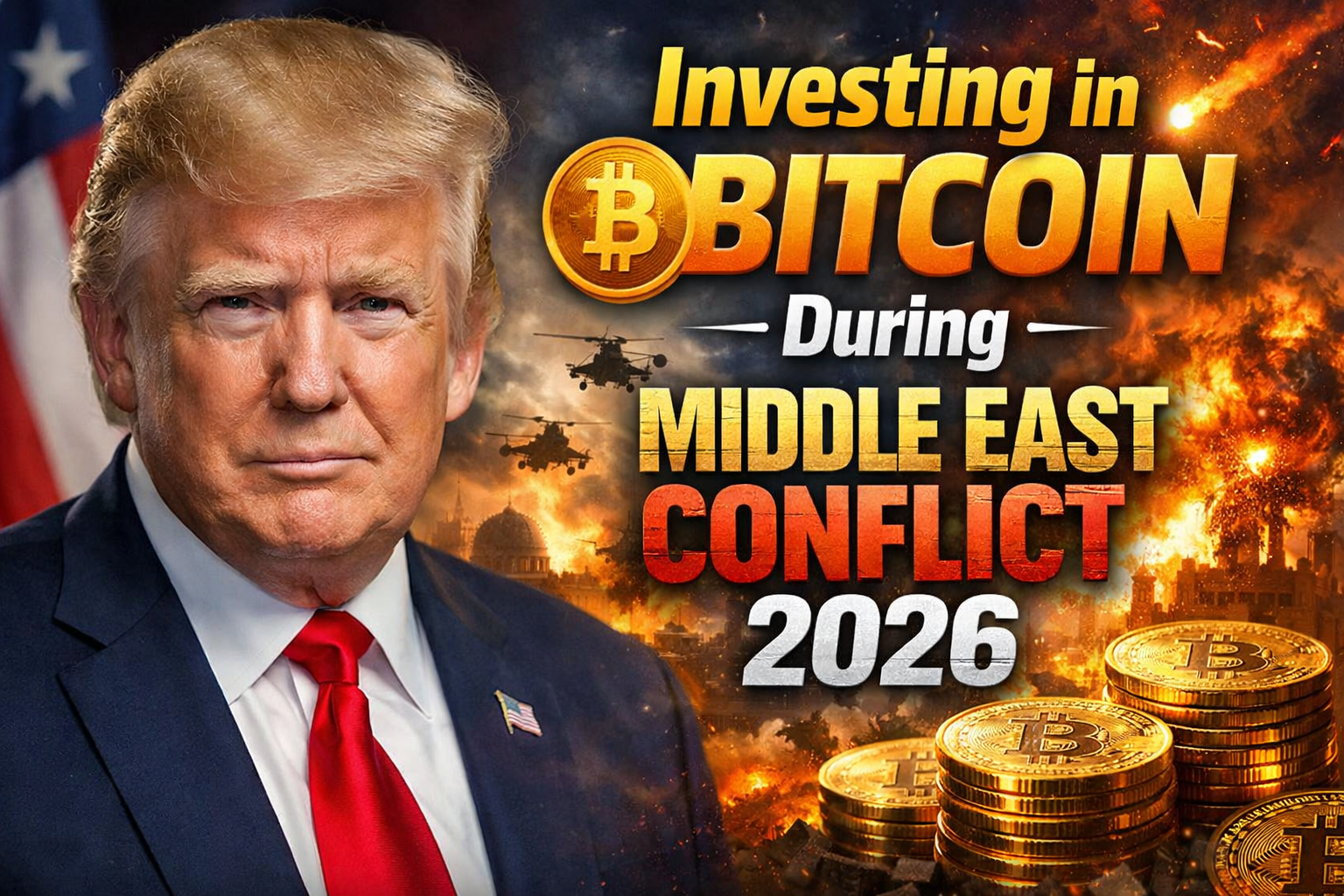
In 2026, global investors once again turned their attention to the Middle East as fresh escalations between major regional powers shook energy markets and rattled equity indices. Alongside oil, gold, and defense stocks, Bitcoin found itself in the spotlight as markets grappled with the question: is this digital asset still a store of value during war and crisis, or is it simply another volatile risk asset?
Historically, Bitcoin has been marketed as a form of “digital gold,” a neutral, borderless asset that can hedge against currency debasement and political instability. Yet each major geopolitical flare‑up tests that narrative in a new way. The 2026 Middle East conflict has forced investors to reassess what Bitcoin actually does when bombs, sanctions, and oil shocks dominate headlines.
How the 2026 Conflict Shook the Bitcoin Market
When hostilities intensified in early 2026, global markets tilted sharply into risk‑off mode. Traditional equities wobbled, oil prices spiked, and safe‑haven assets like gold and certain government bonds saw strong inflows. Bitcoin, far from fleeing to safety, initially sold off alongside other speculative instruments.
Reports from the period show the price dropping sharply from the mid‑six‑figure range into the low‑six‑figure band, with one notable drop pushing Bitcoin below 65,000 dollars amid combined Israeli‑Iran tensions and a broader global risk‑off sentiment. The rout cascaded through the wider crypto ecosystem, with Ethereum and major altcoins suffering even deeper percentage losses. Over one volatile 24‑hour window, tens of thousands of leveraged positions were liquidated, taking hundreds of millions of dollars in margin out of the market.
This behavior underlined a key takeaway: in the heat of a geopolitical shock, Bitcoin often behaves more like a risk asset than a safe‑haven instrument. Capital tends to flee toward proven havens first, leaving the more volatile digital assets exposed to forced selling.
Short‑Term Volatility vs Long‑Term Cycles
From an investor’s perspective, the most important distinction during the 2026 conflict was between short‑term noise and long‑term structural cycles. The selling pressure triggered by Middle East tensions was intense but, in many ways, temporary. Past episodes had already shown that after a geopolitical shock‑induced dip, Bitcoin frequently staged a partial or full recovery once the immediate panic subsided.
This pattern is consistent with the asset’s broader behavior around major macro events. Rather than sustaining permanent damage from a single conflict, Bitcoin tends to be compressed or re‑tested, after which it often re‑enters its existing trend—whether that is consolidation, accumulation, or a cyclical bull phase. For long‑term holders, the 2026 Middle East dip became less about the headline and more about the underlying price levels at which they were prepared to accumulate.
Technical and On‑Chain Signals of Recovery
As the initial shock of the conflict passed, a cluster of technical and on‑chain indicators began to hint at a floor forming beneath Bitcoin’s price. Analysts noted that after the selloff, the coin stabilized in a narrow trading range above the mid‑sixty‑thousands, with short‑term selling pressure easing. This suggested that panic‑driven liquidations were exhaustively played out, and that the market was shifting from forced selling to more deliberate positioning.
On‑chain metrics also painted a nuanced picture. Despite the drop, certain valuation ratios suggested that a meaningful portion of supply remained “underwater,” implying that many holders were still at a loss and had not yet capitulated. At the same time, there were signs of accumulation by more resilient players—entities that held through the downturn, quietly absorbing the coins sold by leveraged traders and short‑term speculators. This mix of weak holders panicking and strong holders accumulating is a classic pattern that often precedes a medium‑ to long‑term recovery phase.
Institutional Flows and ETF Influence
A key structural difference in 2026 compared with earlier crises was the presence of mature Bitcoin exchange‑traded funds and broader institutional infrastructure. Through the early‑year selloff, ETF flows remained a critical counterbalance to the liquidation wave. When retail and leveraged traders rushed for the exits, institutional buyers began to step in, viewing the Middle‑East‑driven dip as an opportunity rather than a reason to abandon the asset entirely.
This institutional participation helped stabilize the price and prevented the kind of free‑fall often associated with purely speculative markets. Analysts projecting Bitcoin’s 2026 trajectory pointed to the steady, if cautious, inflows into ETFs as a sign that long‑term conviction in Bitcoin as a balance‑sheet asset had not been erased by the conflict. The argument was that, even if short‑term volatility persisted, the underlying belief in Bitcoin as a store of value had not collapsed.
Bitcoin as “Digital Gold”: A Reality Check
The 2026 Middle East conflict served as a practical stress test for the “Bitcoin as digital gold” thesis. When tensions escalated, traditional gold rallied sharply, with demand rising as investors sought a proven safe haven. In contrast, Bitcoin’s reaction was more complex: it faced de‑leveraging, liquidation, and risk‑off outflows, underscoring that its status as a full‑fledged safe haven is still evolving.
This does not mean the narrative is dead; rather, it suggests that Bitcoin sits in a gray zone. In ordinary macro conditions, it can behave like a speculative growth asset. In select crises, it may show resilience or even act as a hedge, especially when traditional currencies or financial systems are under stress. However, in the immediate wake of a geopolitical shock, it often reacts more like a volatile risk asset than a classic safe‑haven.
Risk‑On vs Risk‑Off Behavior in Conflict
The 2026 episode highlighted how Bitcoin moves depending on the broader risk environment. When the Middle East flare‑up first hit, the dominant mood was risk‑off: investors sold assets that could be leveraged, volatile, or less liquid, and piled into safer instruments. During this phase, Bitcoin’s price correlation with equities and high‑beta assets rose, reinforcing its image as a speculative holding.
Once the initial shock settled, however, a different dynamic emerged. As oil prices stabilized and markets began to digest the geopolitical risk, Bitcoin showed signs of resilience. Reports from the period noted that after a brief 3–4 percent drop, the price held above the mid‑sixty‑thousand mark, with short‑term holders showing relatively low selling pressure. This suggested that the market had already priced in a significant portion of the conflict‑related risk, opening the door for a more measured recovery.
Key Entry Zones and Positioning Strategies
For investors willing to roll the dice during the 2026 Middle East turmoil, the focus shifted to identifying sensible entry zones rather than chasing headlines. Analysts proposed that the mid‑six‑figure band, just below previously broken support levels, could represent a strategic accumulation range. From this vantage point, investors could position for a recovery without trying to catch the exact bottom—a notoriously difficult task even in calm markets.
A common recommendation was to employ a tiered buying approach, spreading purchases across multiple price levels within the broader range. For example, an investor might allocate a portion of their capital at the lower end of the range, then add modest positions at higher levels if the market showed signs of stabilizing. This approach helped reduce the emotional toll of trying to time a perfect entry while still capitalizing on a conflict‑driven dip.
Managing Emotions During Geopolitical Dips
The psychological impact of investing in Bitcoin during a Middle East conflict cannot be underestimated. Images of war, rising oil prices, and global uncertainty can amplify fear and drive impulsive decisions. Many investors, seeing the coin’s price fall sharply amid news headlines, opted to sell out of discomfort, often locking in losses at the worst possible moment.
Those who maintained a long‑term perspective instead used the volatility as a reminder of Bitcoin’s unique behavior in a crisis. Rather than responding to daily headlines, they focused on their original thesis: whether they believed in Bitcoin as a multi‑year store of value and whether the longer‑term macro and adoption drivers remained intact. This mindset helped them avoid knee‑jerk reactions and position themselves for potential upside once the dust settled.
Diversification and Hedging Around Bitcoin
For investors already exposed to Bitcoin, the 2026 conflict raised the importance of diversification and hedging. Because Bitcoin can move unpredictably during geopolitical shocks, holding it in isolation exposes portfolios to outsized swings. Smart investors layered their exposure with other assets—gold, select equities, and even cash—so that a sharp drop in Bitcoin would not derail their overall financial plan.
Some more sophisticated players also explored hedging strategies, such as using options or stablecoins to temporarily reduce risk during periods of heightened volatility. These tools allowed them to stay engaged with the market while protecting against downside should tensions escalate further or new crises emerge.
The Bigger Picture for 2026–2027
Beyond the immediate drama of the Middle East conflict, the 2026 episode reinforced a broader narrative about Bitcoin’s place in the global financial system. Analysts continued to project that, if institutional adoption keeps growing and macro conditions stabilize, the coin could re‑enter a bull phase in the coming years. Early‑cycle models and long‑term valuation frameworks suggested that a return to new all‑time highs, and potentially much higher levels, remained within the realm of possibility by 2027.
From an investor’s standpoint, the key lesson was clear: geopolitical shocks are inevitable, and they will always generate short‑term panic. The real question is whether the long‑term drivers of Bitcoin—limited supply, increasing adoption, and growing institutional interest—remain intact. By focusing on those fundamentals rather than daily headlines, investors in 2026 could view the Middle East conflict not as a reason to abandon Bitcoin, but as a stressful but potentially rewarding chapter in its evolving story.

Abhinav Jain is a legal researcher and writer passionate about simplifying complex laws for everyday readers. With a keen interest in Indian constitutional, civil, and digital laws, he focuses on creating accessible, well-researched articles that promote legal awareness among students, professionals, and citizens alike.