
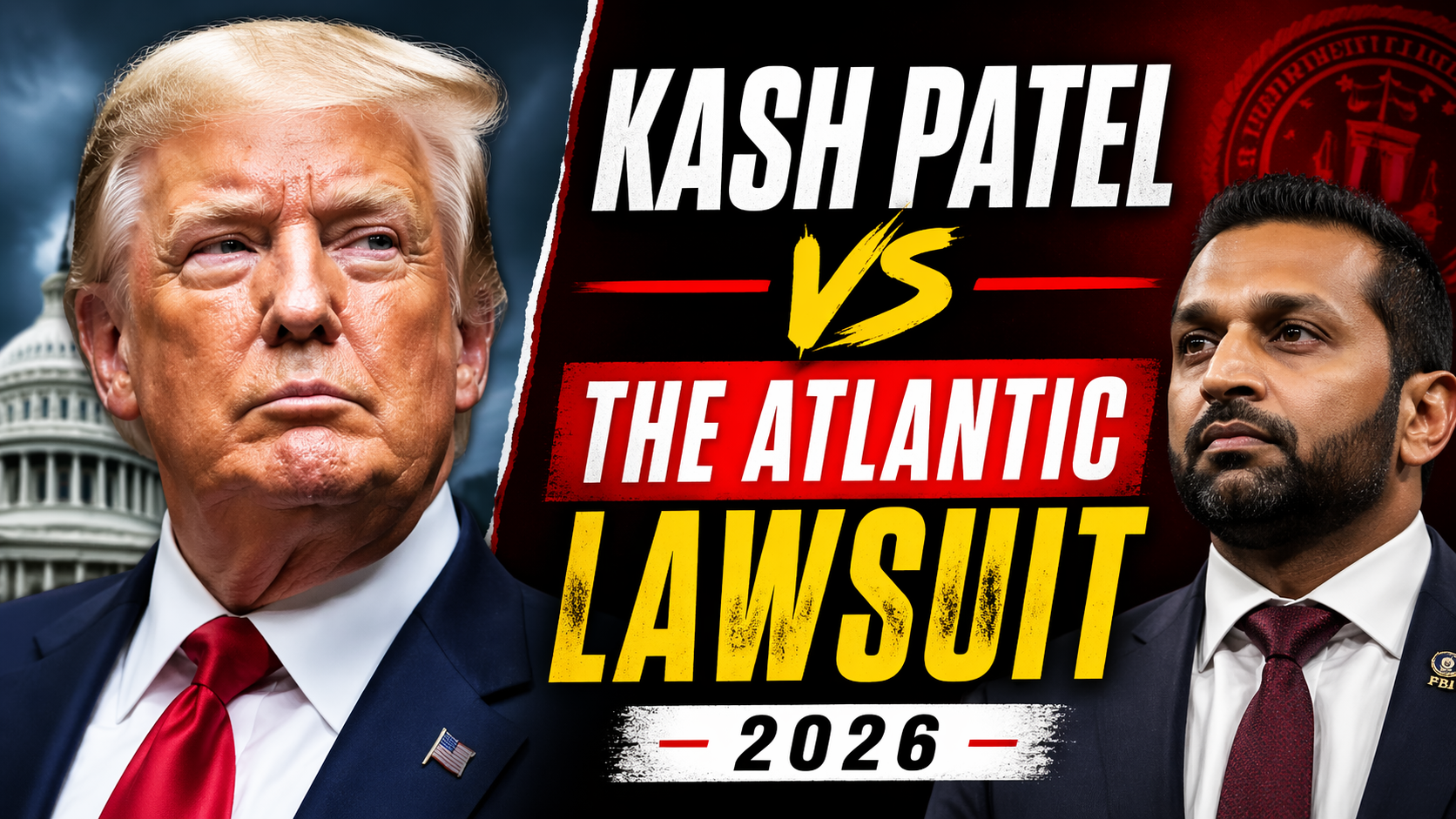
Kash Patel’s legal action targets The Atlantic as well as its lead reporter, framing the magazine’s piece as a politically motivated “hit piece” rather than legitimate journalism. The lawsuit argues that the publication weaponized a pattern of anonymous accounts to paint a picture of an erratic, unreliable FBI director, then published it with the intent of undermining Patel’s credibility and tenure.
At its heart, the case is a classic defamation dispute: one party claims false facts were published about them, to their professional harm, while the other insists the facts are true or at least backed by sufficient sourcing. What makes this case unusual is the subject’s position. As the head of the FBI, Patel is among the most powerful figures in the U.S. national‑security apparatus, so the stakes of any story about his behavior are inherently magnified.
The suit seeks a massive monetary award, signaling that Patel wants not only a public vindication but also material consequences for the publication. From the outset, his legal team has framed the filing as a shield against what they call a coordinated campaign to smear a sitting director through anonymous, unverified anecdotes.
What the Atlantic Reported
The article that sparked the lawsuit described Patel as a leader whose personal conduct has generated unease among a range of officials across the FBI and the broader Justice Department. According to the piece, dozens of current and former employees voiced concerns about his judgment, demeanor, and availability.
Key themes included:
- Unexplained absences from the bureau’s headquarters and key meetings, sometimes at moments of high operational sensitivity.
- Behavior described by some insiders as “erratic” or overly suspicious, with a tendency to jump to conclusions before full evidence is gathered.
- Repeated worries about alcohol use, with witnesses describing what they called bouts of excessive drinking linked in time to certain stretches of his leadership.
The report did not claim that Patel was constantly intoxicated at work, but it did suggest that his drinking had become a recurring concern across multiple agencies and that colleagues and security personnel had noticed patterns that alarmed them. For critics of the article, this framing is simply honest reporting; for Patel’s supporters, it is a damaging exaggeration built on hearsay.
Patel’s Counter‑Narrative
In interviews and public statements since the article appeared, Patel has categorically rejected the allegations. He has described the story as a fabrication, insisting that he has never allowed alcohol to interfere with his duties or compromise his performance as FBI director.
Selective excerpts from his remarks reveal a defiant tone. He has suggested that the timing of the article was politically convenient, aimed at weakening a bureau leader who has overseen high‑profile investigations and has enjoyed close alignment with the current administration. More pointedly, he has implied that some of the anonymous sources may have axes to grind or may be disgruntled former officials whose careers did not pan out under his leadership.
His legal filing amplifies this counter‑narrative: Patel argues that the magazine selectively quoted sources, omitted exculpatory details, and then presented a narrative that appears to be substantiated by “many” witnesses, when in reality those accounts either conflict with one another or cannot be independently verified. From his perspective, the article crossed the line from critique into calculated reputational damage.
Reputational and Legal Stakes
The reputational impact of a story like this on a federal law‑enforcement chief is difficult to overstate. The FBI’s effectiveness depends heavily on trust—both within the organization and among the public and political actors it serves. When a director is publicly associated with unexplained absences and alleged drinking problems, that trust can erode quickly, even if the allegations are later disputed.
Inside the bureau, the article may embolden factions that already questioned Patel’s leadership style or his policy choices. For career agents and analysts, the perception that the director is unreliable or volatile can affect morale, decision‑making, and internal cooperation. Conversely, for Patel’s allies, the article may be seen as part of a broader effort to discredit the president’s chosen leadership team across the security establishment.
Legally, the case occupies a sensitive space where the First Amendment meets the right to personal reputation. The Atlantic’s defense is likely to rest on the idea that the story was based on good‑faith reporting from multiple sources and that the magazine did not knowingly publish falsehoods. The real challenge for the court will be to reconcile Patel’s claim of harm with the publisher’s claim of journalistic integrity, without slipping into the kind of censorship that would chill investigative reporting.
Broader Context: The FBI Under Patel
Any attempt to understand the lawsuit in isolation misses the larger backdrop against which it is playing out. Patel’s tenure at the FBI has been marked by a series of headline‑grabbing decisions, high‑profile investigations, and a pronounced alignment with the administration’s priorities.
Under his watch, the bureau has overseen:
- Several politically charged probes involving figures from both major parties.
- A renewed emphasis on certain domestic‑security priorities, including scrutiny of specific protest movements and online radicalization.
- Tensions with some former colleagues and senior officials who have publicly criticized his management style or policy directions.
Against this backdrop, the article in The Atlantic can be read as part of a broader narrative about the politicization of the FBI. Critics of the piece argue that it selectively emphasizes anecdotes that fit that narrative, while downplaying or omitting data about the bureau’s operational successes and statistical improvements in key metrics such as clearance rates and cyber‑crime prosecutions.
| Aspect of the FBI’s Work | Before Patel’s Tenure | Under Patel’s Leadership |
|---|---|---|
| High‑profile investigations | Several major probes underway, but spread across multiple priorities | More concentrated focus on politically sensitive cases |
| Internal morale and turnover | Moderate, with pockets of concern in some units | Reports of rising tension and factionalism in certain divisions |
| Public‑perception metrics | Mixed, but generally stable trust levels | Sharply polarized perception along partisan lines |
| Focus on cyber and technical crime | Incremental growth in resources | Noticeable increase in budget and staffing for cyber units |
These directional shifts matter because they shape how observers interpret any story about Patel’s personal conduct. Supporters may see the article as an attempt to undermine an aggressive director enforcing the president’s agenda; critics may see it as a long‑overdue examination of behavior that could affect the integrity of the bureau.
The Role of Anonymous Sources
A central issue in the lawsuit is the magazine’s reliance on unnamed current and former officials. Investigative journalism often depends on confidentiality, particularly when sources fear retaliation or professional consequences for speaking candidly.
In this case, the article cites more than two dozen such individuals, a number that the defense may argue provides a degree of corroboration. However, the absence of names makes it difficult for readers to judge the motives or credibility of any single source. Patel’s filing likely seizes on this, arguing that a mosaic of anonymous accounts can be manipulated to create the appearance of consensus when the underlying evidence is far murkier.
The broader debate this touches on is whether the public interest in scrutinizing a powerful official outweighs the risk of anonymously sourced stories that may be incomplete or selectively interpreted. Publishers argue that shielding sources is essential for exposing misconduct; subjects of those stories often argue that anonymity can be a license for unverified grievance and character assassination. Patel’s legal team will almost certainly press a version of the latter argument in court.
Free Speech Versus Character Protection
The philosophical tension at the core of this case is not new, but it is freshly exposed by the stature of the plaintiff. On one side stand long‑held principles of free speech and press freedom: the idea that a robust democracy must tolerate harsh, even uncomfortable criticism of its leaders, especially when that criticism is based on reported facts.
On the other side sits the human dimension of reputation. Regardless of ideological leanings, few people would welcome a detailed, widely circulated narrative that associates them with substance‑abuse issues and professional unreliability, especially in a high‑pressure role such as leading the FBI. Patel’s case gives legal form to the instinct that there should be limits on how far a news outlet can go in portraying a person’s private behavior, even if that person is a public figure.
Courts will have to weigh whether the magazine’s rendition of events meets the legal standard for defamation—typically meaning that it published demonstrably false statements of fact with at least reckless disregard for the truth. If the article is upheld, it may embolden other outlets to pursue similarly aggressive profiles of powerful officials. If Patel prevails, it could chill future reporting that relies on sensitive, off‑the‑record accounts, particularly in the national‑security sphere.
What the Public Really Knows
Beyond the legal and political theater, one of the most important questions is how much the public actually knows versus how much it is being told through a highly selective prism. Investigative pieces of this kind often focus on the most dramatic or unsettling anecdotes, while the broader statistical picture of the bureau’s performance may receive less attention.
Reports from watchdog groups and internal metrics suggest that the FBI’s overall clearance rates for certain categories of violent and cybercrime have improved modestly under Patel’s leadership, even as high‑profile errors or controversies have drawn more media attention. Employee‑satisfaction surveys, however, show a more mixed picture: some divisions report higher confidence in leadership, while others express concern about morale and policy direction.
These data points matter because they remind readers that reputational stories about a single individual rarely capture the full reality of a complex institution. The lawsuit, therefore, is not just about the truth of Patel’s allegedly excessive drinking; it is about whether a narrative dominated by lurid anecdotes should be allowed to overshadow more nuanced, quantitative assessments of the bureau’s health and effectiveness.
The Road Ahead in Court
The case is likely to unfold over months, if not years, as lawyers dissect emails, deposition testimony, internal documents, and witness accounts. Both sides will try to frame the narrative before judges and, equally important, before the court of public opinion.
For Patel, the goal is clear: clear his name, secure meaningful damages, and deter similar stories in the future. For The Atlantic, the goal is to defend its reporting, preserve the right to publish investigative journalism, and avoid setting a precedent that makes it easier for powerful officials to sue their critics into silence.

Abhinav Jain is a legal researcher and writer passionate about simplifying complex laws for everyday readers. With a keen interest in Indian constitutional, civil, and digital laws, he focuses on creating accessible, well-researched articles that promote legal awareness among students, professionals, and citizens alike.