
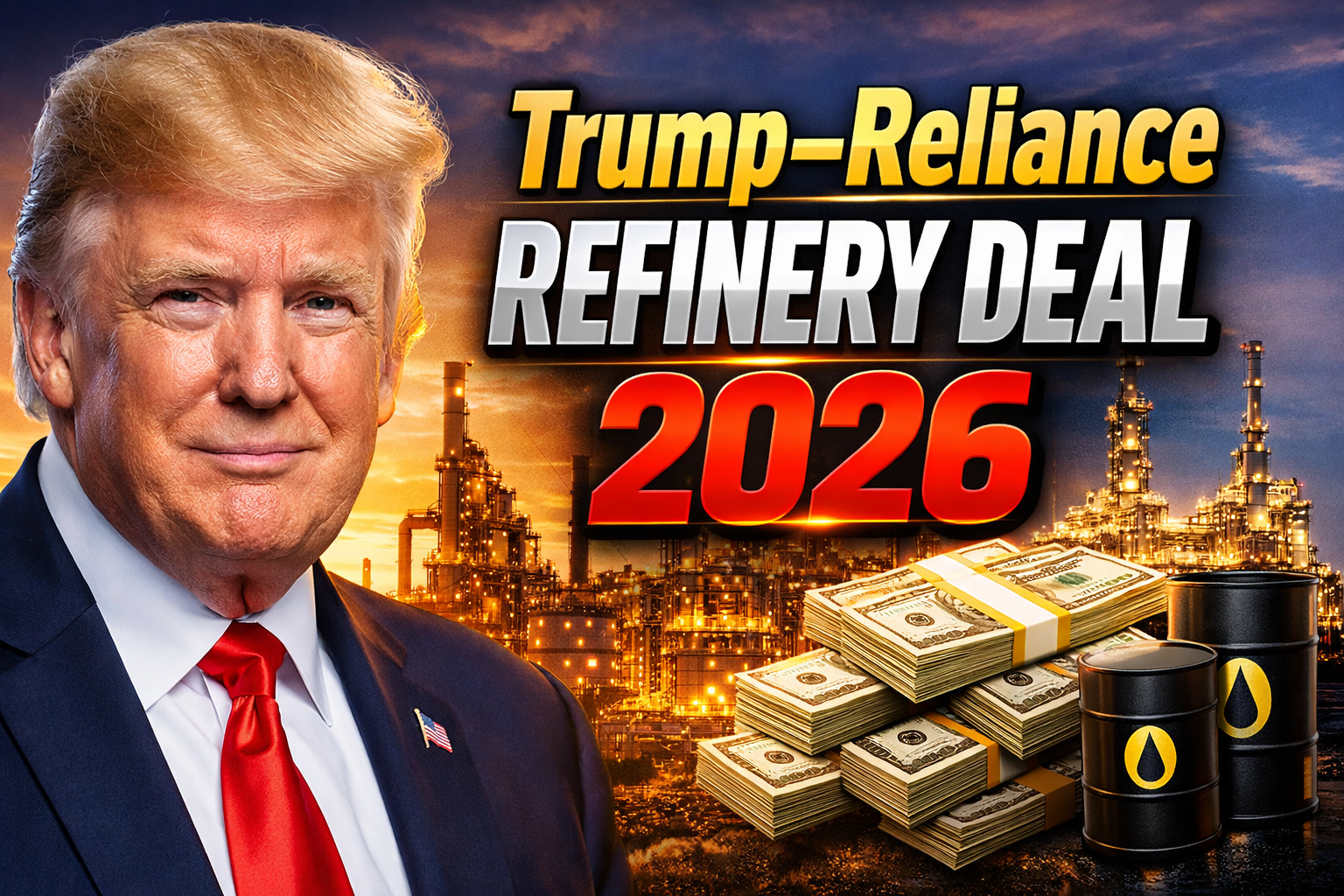
President Donald Trump has heralded a landmark partnership with India’s Reliance Industries to construct the first new oil refinery in the United States in over 50 years, positioning the project at the Port of Brownsville, Texas, as a cornerstone of American energy independence. Dubbed a $300 billion deal, the initiative promises to process vast quantities of domestic shale oil, create thousands of jobs, and shield the US from global supply shocks amid the ongoing Middle East crisis.
Deal Announcement and Key Details
Trump unveiled the agreement via Truth Social, praising Reliance—led by billionaire Mukesh Ambani—as key partners in what he called the “biggest deal in US history.” America First Refining, evolving from Element Fuels’ prior plans, will spearhead construction with Reliance’s backing. Groundbreaking targets the second quarter of 2026, with the facility designed to refine 160,000 barrels per day of US shale oil exclusively.
A 20-year offtake agreement secures Reliance’s commitment to purchase refined products worth billions, blending investment with market access. The refinery aims for “world’s cleanest” standards, incorporating advanced carbon capture and low-emission tech to process $125 billion in crude into $175 billion of fuels and petrochemicals over its life. Permits secured last year fast-track the timeline, bypassing decades of regulatory gridlock that stalled US refining expansions.
Historical Significance: Ending Five Decades of Stagnation
No major US refinery has broken ground since 1976, despite America becoming the world’s top oil producer via shale booms. Environmental lawsuits, NIMBY opposition, and shifting energy policies froze capacity at around 18 million barrels daily. Imports filled gaps, exposing vulnerabilities—Hormuz disruptions now spike jet fuel and diesel 50 percent.
This Texas project revives Gulf Coast ambitions, echoing postwar booms when refineries dotted Houston and Lake Charles. Brownsville’s location leverages proximity to Permian shale fields, deepwater ports, and pipelines, slashing transport costs 20-30 percent versus West Coast sites.
Strategic Partners: Trump and Reliance Synergies
Trump’s “energy dominance” doctrine—drill everywhere, refine domestically—meshes perfectly with Reliance’s global prowess. Ambani’s Jamnagar complex, the world’s largest at 1.24 million barrels daily, honed expertise in mega-refineries blending crude from diverse sources. Reliance seeks US shale’s light sweet oil for high-octane gasoline and jet fuel, diversifying from OPEC volatility.
The partnership blends politics and commerce: Trump’s pro-business deregulation fast-tracks approvals, while Reliance accesses premium markets. Analysts peg Reliance’s stake at $10-20 billion upfront, with offtake guarantees de-risking returns.
| Partner Role | Contribution | Benefits Gained |
|---|---|---|
| America First Refining | Site prep, US ops, permits | $300B lifetime revenue, 5,000 jobs |
| Reliance Industries | Investment, offtake deal, tech | Shale access, US market foothold |
| Trump Admin | Deregulation, tax incentives | Energy security, political win |
| Texas Local Gov | Infrastructure support | Economic boom, tax base growth |
This table outlines synergies driving the mega-project.
Economic Impact Projections
Job creation headlines: 5,000 construction roles peak by 2028, 1,200 permanent high-wage positions, plus 10,000 indirect multiplier effects in trucking, engineering, and services. Brownsville, already booming from LNG terminals, eyes GDP surge of $50 billion over a decade.
Nationally, 160,000 barrels daily equals 2 percent refining capacity boost, curbing imports by 10 million barrels yearly. Fuel prices could dip 10-15 cents per gallon long-term, critical amid $120 crude spikes. Petrochemical outputs feed plastics, aviation, and exports, capturing $20 billion annual value.
Texas wins big: Rio Grande Valley unemployment drops below four percent, schools fund via property taxes. Reliance’s US footprint grows, hedging India import risks.
Technical Specifications and Innovations
The refinery prioritizes shale: light crudes yield 60 percent gasoline/jet fuel versus heavy oil’s diesel tilt. Modular design—prefab units shipped in—slashes build time 30 percent versus 1970s behemoths. Carbon capture sequesters 90 percent CO2, qualifying for Biden-era credits Trump vows to expand.
Digital twins and AI optimize yields, targeting 98 percent uptime. Wastewater recycling hits 95 percent, minimizing Gulf impacts. Capacity rivals mid-sized plants like Philadelphia Energy Solutions pre-explosion.
Geopolitical Timing Amid Energy Crisis
Announcement lands amid Iran-US clashes blocking Hormuz, spiking diesel 80 cents per liter in California. US stockpiles dwindle to 20 days for jet fuel; new capacity hedges against prolonged disruptions. Trump’s deal counters China-Saudi refining dominance, securing allies like India.
Reliance hedges: Jamnagar processes Venezuelan heavy but craves shale stability. US shale output, 13 million barrels daily, floods markets—refining unlocks value chains.
Environmental and Regulatory Hurdles Cleared
Critics decry fossil lock-in, but backers tout “cleanest” credentials: hydrocracking cuts sulfur 99 percent, flare gas captures methane. Texas PUC approved amid streamlined NEPA reviews under Trump’s executive orders slashing timelines 70 percent.
Local opposition muted—Brownsville unions lobby support, LNG precedents ease fears. Water rights secured via Rio Grande desalination tie-ins.
Market Reactions and Skepticism
Reliance shares rallied two percent post-announcement, though executives stayed mum, fueling “Trump hype” whispers. Analysts question $300 billion tag—likely lifetime value, not upfront cash. Element Fuels’ pivot to America First raises eyebrows, but offtake sheet binds Reliance.
Wall Street cheers: Exxon, Chevron up three percent on refining renaissance signals. Oil futures eased two dollars, betting US capacity cools volatility.
Broader US Refining Renaissance?
Deal sparks copycats: Flint Hills eyes expansions, Phillips 66 scouts sites. Trump’s tax credits—45Q carbon, domestic content bonuses—incentivize. Stalled projects like California’s 300,000-barrel plant revive.
Capacity drought stemmed demand destruction—EVs nibble but jets, trucks endure. New plants future-proof aviation, military amid China tensions.
Workforce and Community Benefits
Brownsville transforms: vocational hubs train welders, engineers via community colleges. Hispanic-majority workforce gains pathways, union deals secure prevailing wages. Housing booms, schools upgrade via impact fees.
Reliance pledges supplier diversity, funneling contracts to minority firms.
Global Energy Market Shifts
US refining surge pressures Asia: Reliance’s US bet diversifies Jamnagar feeds. OPEC loses leverage as shale floods crackers. India gains energy security, Trump burnishes “America First” abroad.
Challenges Ahead: Execution Risks
Mega-projects falter: overruns plague 80 percent. Labor shortages loom—skilled welders scarce post-COVID. Shale volatility risks stranding assets if prices crash.
Regulatory reversals post-Trump? Unlikely with Texas fortress. Financing secured via offtake, but rates bite.
Reliance’s Strategic Play
Ambani’s empire—$250 billion market cap—eyes petrochemicals supremacy. US shale yields superior xylenes for plastics versus Middle East naphtha. Deal cements India-US ties amid Modi-Trump bromance.
Jamnagar’s scale—five times Brownsville—transfers know-how, cutting risks.
Trump’s Political Masterstroke
Midterm boost: Texas jobs rally base, energy independence counters inflation gripes. Deal showcases dealmaking, contrasts Biden stasis. Truth Social amplifies: “Energy dominance restored!”
Path to Completion and Legacy
Q2 groundbreaking eyes 2030 startup, ramping phased. First products: jet fuel amid shortages. Legacy: Brownsville joins Houston pantheon, US refining rebirth.
Skeptics watch details, but momentum builds. Trump-Reliance pact bets big on shale’s future, weaving geopolitics, tech, and jobs into energy epic. America refines anew, half-century drought ends—Brownsville rises.

Abhinav Jain is a legal researcher and writer passionate about simplifying complex laws for everyday readers. With a keen interest in Indian constitutional, civil, and digital laws, he focuses on creating accessible, well-researched articles that promote legal awareness among students, professionals, and citizens alike.