
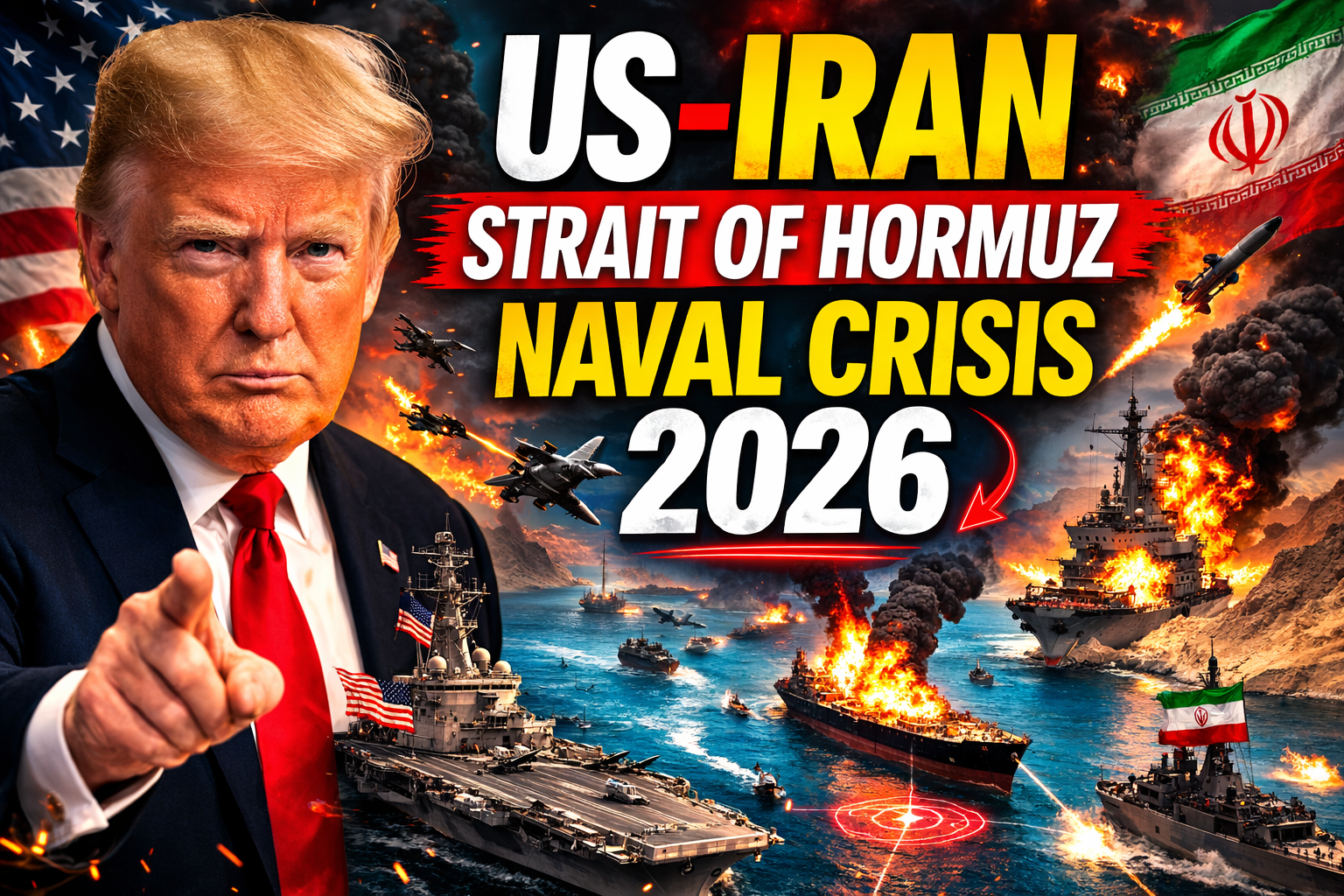
The Strait of Hormuz has erupted into a naval flashpoint as Iran escalates asymmetric warfare against US and allied shipping, effectively halting 70 percent of global oil traffic through the world’s most critical chokepoint. Operation Epic Fury, the US-led response involving airstrikes on Iranian mine-layers and military assets, marks a dangerous intensification following the February 28 assassination of Supreme Leader Ali Khamenei in joint US-Israeli strikes, plunging the region into open conflict.
Crisis Ignition: From Airstrikes to Blockade Threats
Tensions boiled over on February 28 when US and Israeli forces launched Operation Epic Fury, targeting Iran’s nuclear facilities, command centers, air defenses, and leadership bunkers. The strikes killed Khamenei, prompting immediate Iranian retaliation via missile barrages on US bases in Bahrain, Qatar, and the UAE, alongside rocket salvos from Hezbollah proxies into Israel. Iran’s Islamic Revolutionary Guard Corps (IRGC) swiftly warned vessels via VHF radio: no passage permitted, transforming threats into action.
By March 2, IRGC commander Ebrahim Jabari formally declared the strait “sealed,” vowing to “ignite” any transgressing ships. Though not a legal blockade, safety fears grounded fleets—ship trackers showed traffic plummeting from 100 daily transits to under 30. Iran hit the US-flagged Stena Imperative in Bahrain, sparking fires and killing a port worker, while drones struck the Iran-linked Athe Nova attempting illicit passage.
Iranian Tactics: Mines, Drones, and Swarm Attacks
Tehran’s strategy leverages asymmetric advantages: fast-attack boats from underground tunnel networks, loitering munitions like Shahed-136 drones, and naval mines seeded covertly. IRGC footage resurfaced showing missile-packed caverns, underscoring “hellscape” potential. Attacks targeted commercial vessels indiscriminately—three cargo ships struck off Oman, container blasts in the Gulf—to inflict economic agony without full naval engagement.
Mines pose gravest peril: cheap, stealthy, and devastating in narrow 21-mile straits carrying 20 percent of global oil and gas. Kuwait downed eight drones aimed at facilities, Saudi Arabia intercepted five near Shaybah fields, and UAE shuttered its massive Ruwais refinery after nearby hits. Iran’s pain-infliction aims to coerce US-Israeli halt via spiking energy prices—crude hit $130 per barrel early March.
| Attack Type | Incidents (Feb 28-Mar 11) | Targets Hit | Casualties/Damage |
|---|---|---|---|
| Drone Strikes | 10+ | Ships, oil fields, refineries | 1 killed, multiple fires |
| Missile Barrages | 5 | US bases (Bahrain, Qatar) | Bases damaged, no US deaths |
| Mine Threats | Suspected 16 vessels | Strait approaches | Shipping halted |
| Boat Swarms | 3 | Commercial tankers | Port worker killed |
This table captures verified escalations per open sources.
Operation Epic Fury: US Counteroffensive
US Central Command unleashed fury on March 11, releasing footage of airstrikes obliterating 16 Iranian mine-laying dhows near the strait. F/A-18s from USS Abraham Lincoln and destroyers like USS Thomas Hudner executed precision hits, neutralizing threats before full deployment. President Trump demanded immediate mine clearance via Truth Social, warning Tehran of “consequences never seen before.”
CENTCOM coordinates with UK Maritime Trade Operations (UKMTO), patrolling with Arleigh Burke-class destroyers equipped for mine countermeasures. Israeli corvettes reinforce Gulf patrols, while Saudi and UAE air defenses integrate. Epic Fury expands: B-52s struck IRGC tunnel complexes March 10, degrading launch capabilities.
Shipping Paralysis and Global Economic Fallout
Strait closure devastates: 21 million barrels daily oil transit stalled, LNG flows halved. Tankers anchor in Oman or divert via Bab el-Mandeb, chartering rates soaring 500 percent. Brent crude volatility spikes 15 percent weekly; diesel shortages cripple aviation worldwide.
Asia reels hardest—Japan, South Korea lose 80 percent oil imports. Europe taps reserves, US shale ramps but jet fuel pinches airlines. Stockpiles dwindle: global averages fall to 65 days, Iran’s play extracts pain without invasion.
Insurance premiums explode—war risk clauses activate, premiums hit $100,000 daily for transits. Maersk, Shell suspend Gulf calls; VLCCs idle off Fujairah.
Naval Forces Deployed: Stacked Decks
US Fifth Fleet masses: two carrier strike groups (Lincoln, Eisenhower), 20 warships including Aegis destroyers with SM-6 interceptors. Submarines lurk, ready for subsurface threats. UK HMS Diamond, French Charles de Gaulle join; Gulf Cooperation Council navies patrol shallows.
Iran counters with 1,000+ small boats, missile catamarans from Bandar Abbas. Fateh-class subs prowl, kiting larger foes. Asymmetric edge blunted by strikes—IRGC fleet down 20 percent.
| Coalition Force | Assets Deployed | Key Capabilities |
|---|---|---|
| US Navy | 2 carriers, 20 surface | Air superiority, mine-sweeps |
| UK/France | 2 destroyers, carrier | Missile defense, ISR |
| GCC Navies | 15 frigates/patrols | Coastal patrols, fast boats |
| Iran IRGC | 1,000 boats, subs | Swarms, mines, anti-ship missiles |
Coalition overwhelms numerically, but strait’s confines favor defenders.
Timeline of Key Events
- Feb 28: Operation Epic Fury kills Khamenei; Iran missiles US bases.
- Feb 28-Mar 1: VHF warnings halt 70 percent shipping.
- Mar 2: IRGC declares closure; Stena Imperative hit.
- Mar 9: Iran offers safe passage to anti-US states.
- Mar 10: Hezbollah rockets Israel; B-52s hit tunnels.
- Mar 11: US destroys 16 mine-layers; three ships struck.
Escalation ladder climbs, diplomacy stalled.
Geopolitical Ripples and Diplomatic Standoff
Trump’s bellicosity—”mines gone immediately”—rejects talks; Tehran demands strike cessation. Oman mediates quietly, China pressures via oil buys. Russia supplies Iran drones, UN Security Council deadlocks.
Israel strikes Lebanon preemptively, widening fronts. Gulf states evacuate expatriates, Aramco drills defenses.
Economic Warfare’s Sharp Edge
Iran’s calculus: choke straits, crash economies, force retreat. $130 oil adds $1 trillion global hit yearly; US inflation jumps 2 percent. Aviation grounds flights, trucking rations diesel.
Shale booms—US output hits 14 million bpd—but refining lags. Renewables irrelevant short-term; strategic reserves tap globally.
Military Analyses: Hellscape Realities
Ex-NATO commander James Stavridis warns mines turn straits into “kill zones”—clearance takes weeks, costs billions. Iran’s 6,000 stockpiled mines overwhelm sweepers. Swarms mimic Ukraine: cheap attrition grinds expensive fleets.
US advantages: air dominance, precision munitions. Risks: mine hits sink destroyers, spark wider war.
Humanitarian and Environmental Perils
Expat evacuations swell—100,000 from UAE. Refugee flows strain Oman, Pakistan. Oil spills loom: hit tankers risk Gulf ecocide akin Exxon Valdez times ten.
Fishing fleets grounded, desalination falters—water shortages brew.
Global Response and Contingencies
IEA releases 60 million barrels coordinated; India rations fuel. China stockpiles, Russia profits via Urals crude. SWIFT sanctions loom on IRGC banks.
NATO eyes Article 5 if straits threaten Europe; QUAD drills Pacific alternatives.
Path to De-escalation or Wider War?
Trump weighs full invasion—100,000 troops staged—versus blockade enforcement. Iran bleeds proxies, preserves regime. Oman backchannels test ceasefires.
Short-term: mines cleared, shipping trickles. Long-term: straits fortified, Iran contained or regime-changed.
Shipping Industry Adaptations
Tankers insure war risks, convoy under navy. LNG carriers pivot Mozambique route, premiums double. Dry bulk queues Fujairah, spot rates crash on reroutes.
Expert Voices and Predictions
Pentagon: “Epic Fury degrades threats 40 percent.” Analysts: closure unsustainable past weeks—Iran economy craters sans exports. Trump: “Iran blinks first.”
Straits’ crisis tests resolve: Epic Fury clears paths, but Hormuz remains tinderbox. Global arteries pulse tenuously, war’s shadow lengthens.

Abhinav Jain is a legal researcher and writer passionate about simplifying complex laws for everyday readers. With a keen interest in Indian constitutional, civil, and digital laws, he focuses on creating accessible, well-researched articles that promote legal awareness among students, professionals, and citizens alike.