
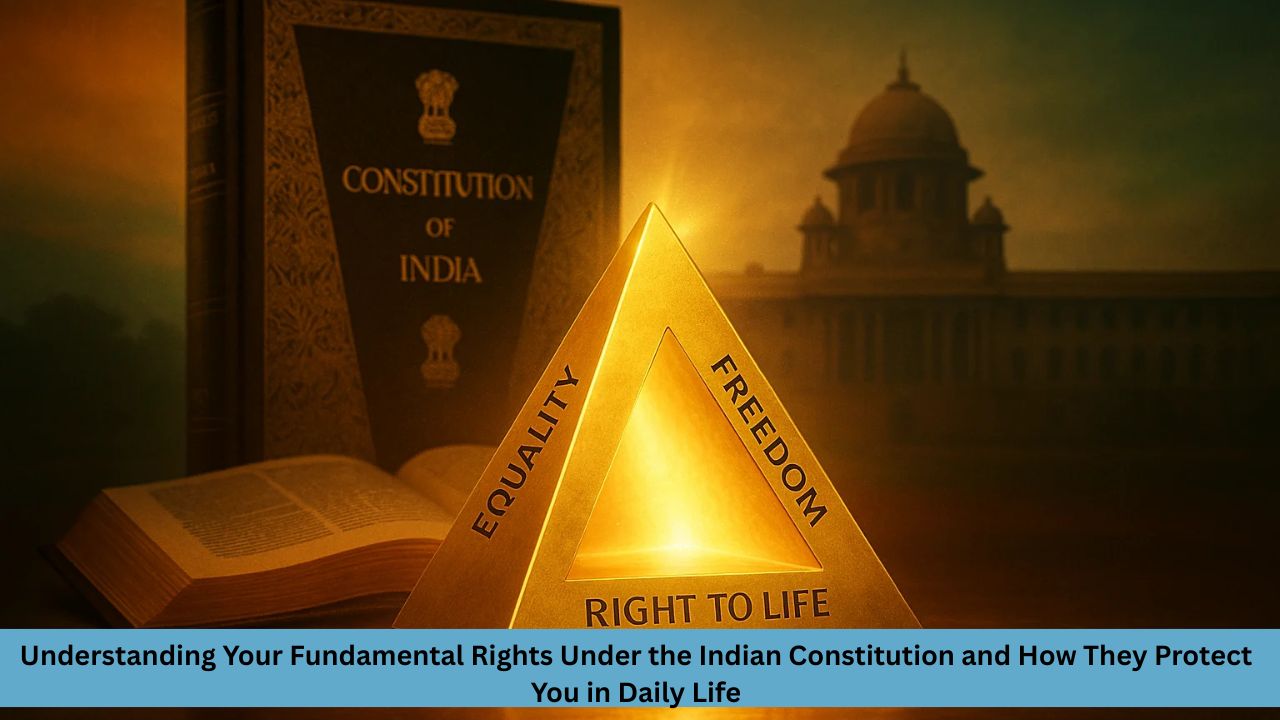
The Constitution of India enshrines a set of Fundamental Rights that are the foundation of democracy, equality, and justice in the country. These rights safeguard the liberty and dignity of every individual, ensuring protection against arbitrary actions by the state and guaranteeing freedoms essential for the development of every citizen. Understanding these rights is crucial not just for legal awareness but for practical empowerment in everyday life.
This article unpacks the six broad categories of Fundamental Rights under the Indian Constitution, explores their significance, and explains how they protect individuals in real-world situations.

What Are Fundamental Rights?
Fundamental Rights, found primarily in Part III (Articles 12 to 35) of the Indian Constitution, are basic human rights guaranteed to all citizens. These are justiciable rights, meaning citizens can approach courts directly for their enforcement if these rights are violated.
They impose a negative obligation on the State not to infringe or interfere with these freedoms, ensuring the rule of law and respect for human dignity.
The Six Fundamental Rights and Their Daily Impact
1. Right to Equality (Articles 14-18)
Essence: This right guarantees equality before the law and equal protection under laws without any discrimination.
Key Provisions:
- No discrimination on grounds of religion, race, caste, sex, or place of birth
- Equality of opportunity in public employment
- Abolition of untouchability and titles
How It Protects You Daily:
- Ensures fair treatment in education, employment, and public services
- Protects against caste-based discrimination in social and economic life
- Upholds women’s rights to equal opportunity, combating gender inequality
For example, no government office can deny you a job or service just based on race, caste, or gender due to this right.
2. Right to Freedom (Articles 19-22)
Essence: This cluster protects multiple individual freedoms essential to living a free life.
Key Freedoms:
- Speech and expression
- Peaceful assembly and association
- Movement throughout India
- Residence and settlement anywhere in India
- Practice of any profession or occupation
How It Protects You Daily:
- You can express your opinions openly, participate in peaceful protests, and join clubs or associations freely.
- You have the right to live and work in any state without restriction.
- Freedom to choose or change your profession protects livelihood choices.
Restrictions exist but must be reasonable, preventing misuse and balancing social order.
3. Right Against Exploitation (Articles 23-24)
Essence: Protects individuals from forced labor and human trafficking.
Key Provisions:
- Prohibition of trafficking and begar (forced labor)
- Prohibition of employment of children below 14 years in hazardous work
How It Protects You Daily:
- Safeguards laborers from exploitative practices and bond labor.
- Protects children from child labor, ensuring access to education and healthy development.
This right prevents human dignity from being violated by exploitation in workplaces or social setups.
4. Right to Freedom of Religion (Articles 25-28)
Essence: Ensures individuals have freedom of conscience and the right to profess, practice, and propagate religion.
Key Provisions:
- Freedom to practice and manage religious affairs
- Freedom from paying taxes for promotion of any particular religion
How It Protects You Daily:
- Guarantees you the liberty to choose or change religion without coercion.
- Protects religious minorities and communities to preserve their places of worship and cultural identity.
These provisions nurture India’s secular fabric, promoting harmony and pluralism.
5. Cultural and Educational Rights (Articles 29-30)
Essence: Protects the rights of minorities to preserve their language, culture, and establish educational institutions.
Key Provisions:
- Protection of linguistic and cultural minorities
- Right of minorities to administer educational institutions of their choice
How It Protects You Daily:
- Ensures cultural heritages and languages are preserved through education and community institutions.
- Minority communities can promote their culture and education without discrimination.
This supports India’s diverse social mosaic and fosters inclusive growth.
6. Right to Constitutional Remedies (Articles 32-35)
Essence: Provides the right to move the Supreme Court or High Courts directly for the enforcement of the above Fundamental Rights.
How It Protects You Daily:
- If any of your fundamental rights are violated, you can approach the judiciary directly for remedy, such as injunctions or compensation.
- Courts can enforce rights even against private persons or organizations violating constitutional freedoms.
This right is considered the “heart and soul” of the Constitution’s promise of justice and rule of law.
Practical Scenarios Illustrating the Protection of Fundamental Rights
- If you face discrimination at work due to your religion or caste, you can challenge the employer under the Right to Equality.
- If a local authority restricts your right to peaceful assembly, you can seek legal protection based on the Right to Freedom of Assembly.
- If a child labor practice is discovered in your community, the Right Against Exploitation empowers legal action to stop the abuse.
- Protection for minorities to run schools promotes cultural diversity in education, enriching the local community fabric.
- If your freedom of speech is curtailed unjustly (e.g., censorship without legal basis), you can petition courts based on Article 19 rights.
- Victims of unlawful eviction or denial of residence can claim the right to reside freely in India under Article 19.
Limits and Reasonable Restrictions
It is important to understand that Fundamental Rights are not absolute and can be subject to reasonable restrictions in the interest of:
- Sovereignty and integrity of India
- Public order and morality
- Security of the state
- Contempt of court and defamation
- Protection of health and decency
The Supreme Court plays a crucial role in reviewing these limitations to prevent misuse and ensure that restrictions are justified.
How to Enforce Your Fundamental Rights
- Constitutional Remedies: Approach the Supreme Court or High Courts by filing writ petitions for rights violations under Article 32 or 226.
- Public Interest Litigation (PIL): Citizens can file PILs for protecting others’ rights or public welfare.
- Legal Awareness and Support: Government agencies, legal aid cells, and NGOs can provide guidance on rights enforcement.
- Preventive Measures: Filing complaints with police or administrative bodies to enforce laws protecting rights, such as anti-discrimination laws.
The Role of Fundamental Rights in Daily Life and Democratic Governance
Fundamental Rights empower individuals against oppression by the state and other entities. They underpin democracy by fostering active citizenship, freedom of thought, expression, and participation. Societal peace depends on the effective guarantee of these rights for every citizen, ensuring inclusivity, respect, and shared prosperity.
Conclusion
The Fundamental Rights guaranteed by the Indian Constitution are powerful tools that protect every citizen’s dignity, freedom, equality, and cultural heritage. They safeguard you from discrimination, exploitation, and arbitrary state action while enabling you to express yourself, practice your religion, and pursue your livelihood freely. Knowing and exercising these rights is key to participating fully in India’s democratic society and holding authorities accountable.
By understanding your Fundamental Rights and how they operate, you are equipped not only to safeguard yourself but also to promote justice and equality for all, creating a more fair and harmonious India.

Abhinav Jain is a legal researcher and writer passionate about simplifying complex laws for everyday readers. With a keen interest in Indian constitutional, civil, and digital laws, he focuses on creating accessible, well-researched articles that promote legal awareness among students, professionals, and citizens alike.