
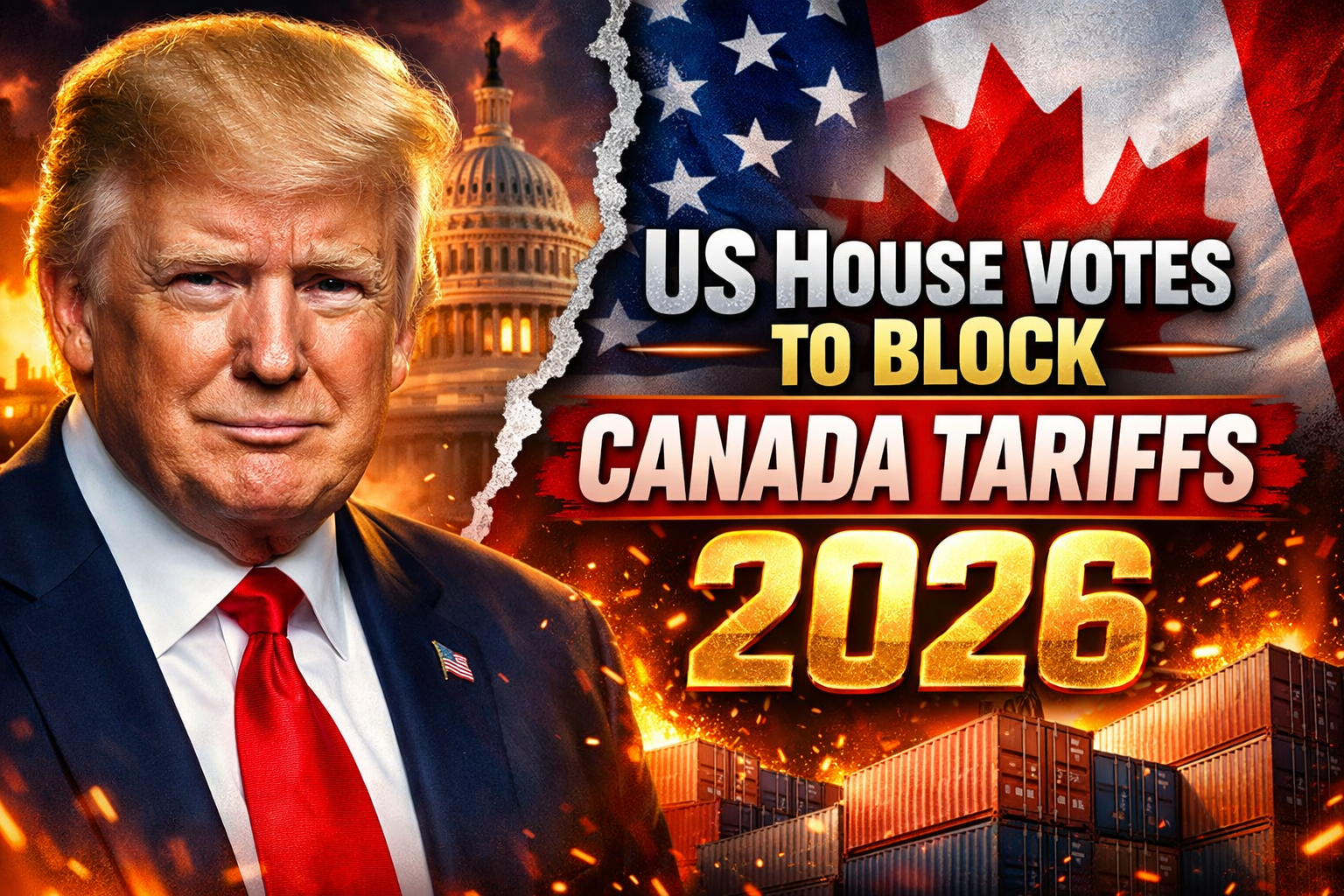
The US House of Representatives has taken a bold stand against President Donald Trump’s aggressive trade policies by passing a bipartisan resolution to block tariffs on Canada. This move highlights growing tensions within the Republican Party and underscores economic concerns as midterm elections loom.
Introduction
President Trump’s declaration of a national emergency to impose steep tariffs on Canadian imports has sparked fierce debate in Washington. The tariffs, aimed at protecting American industries, have instead strained ties with a key ally and raised fears of higher consumer prices. In a surprising turn, the House voted overwhelmingly to terminate this emergency power, with Republicans joining Democrats in a rare show of unity. This resolution challenges the administration’s trade war strategy and signals potential shifts in congressional support for Trump’s economic agenda.
The vote reflects broader anxieties about the costs of protectionism, especially with Canada retaliating through its own measures. Businesses along the border, from auto manufacturers to farmers, have voiced alarm over disrupted supply chains. As the bill heads to the Senate, it tests the limits of presidential authority under emergency laws. This development could reshape US-Canada relations and influence global trade dynamics in the coming months.
Background on the Tariffs
Origins of the Trade Dispute
The tariffs stemmed from Trump’s longstanding grievances with Canada’s trade practices, including dairy subsidies and border security issues. Last year, he invoked the International Emergency Economic Powers Act to slap a twenty-five percent duty on key Canadian goods like steel, aluminum, and lumber. This action bypassed traditional legislative oversight, allowing swift implementation amid threats of further escalation, including a potential one hundred percent tariff on all imports.
Canada responded forcefully, imposing counter-tariffs on US exports such as whiskey, maple syrup, and agricultural products. Prime Minister Mark Carney warned of a full-blown trade war that could harm both economies. The dispute escalated when Canada explored deeper ties with China, prompting Trump’s sharp rebuke on social media. These measures disrupted billions in bilateral trade, which normally exceeds half a trillion dollars annually.
Economic Impact So Far
American consumers have felt the pinch through rising prices on everyday items. For instance, car prices jumped due to higher costs for Canadian auto parts, affecting major manufacturers in states like Michigan and Ohio. Farmers in the Midwest reported losses from Canadian retaliation, with soybean exports dropping sharply. Economists estimate the tariffs have cost US households an average of several hundred dollars extra each year.
Business groups, including the US Chamber of Commerce, have lobbied heavily against the policy. They argue it undermines competitiveness in global markets. Cross-border trade, vital for energy and manufacturing, fell by double digits in affected sectors. This backdrop set the stage for congressional pushback, as lawmakers from trade-dependent districts grew weary of the fallout.
The Bipartisan House Vote
Key Details of the Resolution
The resolution, introduced by Democrats but backed by a handful of Republicans, sought to annul the national emergency declaration enabling the tariffs. It passed with a narrow yet significant margin, as six GOP members crossed the aisle to support it. House Speaker Mike Johnson attempted procedural maneuvers to delay the vote, citing an upcoming Supreme Court ruling on emergency powers. However, defections from his own party allowed the measure to advance.
The rebels included representatives from border states and trade-heavy districts, such as those in Nebraska, Kentucky, and Washington. Their decision defied Trump’s public warnings of political consequences, including primary challenges. This vote marked one of the few times the Republican-led House directly confronted the president’s trade agenda.
Notable Defectors and Their Rationale
Republicans like Don Bacon emphasized the need to protect local economies from unnecessary burdens. Thomas Massie highlighted constitutional concerns over executive overreach. Others pointed to constituent pressures from businesses facing higher costs. Democrats framed the bill as a defense of free trade principles and alliance solidarity. The coalition’s success demonstrated that economic realities can bridge partisan divides.
| Representative | State | District Focus | Stated Reason for Support |
|---|---|---|---|
| Don Bacon | Nebraska | Agriculture, Manufacturing | Protect farmers from retaliation |
| Thomas Massie | Kentucky | Libertarian Views | Oppose emergency power abuse |
| Brian Fitzpatrick | Pennsylvania | Industry Jobs | Safeguard supply chains |
| Kevin Kiley | California | Tech and Trade | Avoid consumer price hikes |
| Dan Newhouse | Washington | Timber and Energy | Border economic stability |
| Jeff Hurd | Colorado | Rural Exports | Balance national security claims |
This table illustrates the diverse motivations driving the bipartisan support, rooted in regional economic stakes.
Political Ramifications
Trump’s Response and Warnings
President Trump reacted swiftly on Truth Social, vowing repercussions for dissenting Republicans. He labeled the vote a betrayal and reiterated his commitment to tariffs as leverage against unfair trade. White House officials downplayed the resolution’s impact, noting it requires Senate approval and his signature—or a veto override. Trump’s rhetoric intensified pressure on GOP unity ahead of midterms.
The administration argues the tariffs address national security threats, from drug trafficking to economic dependence on Canada. Supporters claim they force better deals, pointing to past renegotiations like the USMCA. Yet critics see this as a pattern of using emergencies for policy goals beyond their intent.
GOP Internal Divisions
House leadership’s failed tactics exposed fractures within the party. Speaker Johnson’s rules change aimed to postpone action until summer, but it crumbled under procedural votes. This embarrassment could weaken his grip as midterm primaries approach. Moderate Republicans from swing districts feel emboldened, prioritizing voter concerns over loyalty.
Polls show trade skepticism rising among independents and even some conservatives. With inflation lingering, voters blame tariffs for cost-of-living pressures. This vote may encourage more defections on similar issues, like potential tariffs on Mexico or Europe.
Economic and Trade Implications
Short-Term Effects on Businesses
Immediate relief hinges on Senate action, but the House vote boosts morale for affected industries. Auto sector leaders predict stabilized parts pricing if tariffs lift. Energy firms, reliant on Canadian oil pipelines, anticipate smoother operations. Retailers warn of seasonal price spikes without resolution, especially for holiday goods.
Stats reveal the scale: Canada supplies over half of US crude oil imports and key minerals for batteries. Tariff removal could save billions in duties, flowing back to consumers. However, uncertainty persists, as Trump hints at new emergency justifications.
Long-Term Trade Policy Outlook
This challenge questions the sustainability of unilateral tariffs. The Senate previously passed a similar measure, suggesting possible alignment. A veto seems certain, but overriding it would require rare two-thirds majorities. Legal battles, including Supreme Court review, loom large.
Broader lessons emerge for US allies. Canada may accelerate diversification, strengthening EU and Asian pacts. For Trump, success depends on proving tariff wins, like job gains in steel towns. Failure risks eroding his economic narrative.
| Sector | Annual Trade Value (Billions) | Tariff Impact | Potential Savings if Blocked |
|---|---|---|---|
| Steel & Aluminum | 15 | +25% Duty | 3.75 |
| Automobiles | 100 | Parts Cost Rise | 10-15 |
| Energy (Oil/Gas) | 120 | Pipeline Disruptions | 5-8 |
| Agriculture | 30 | Retaliation Losses | 4 |
| Lumber | 10 | Construction Hikes | 2.5 |
These figures highlight stakes in major sectors, based on pre-tariff trade volumes.
International Reactions
Canada hailed the vote as a victory for common sense. Prime Minister Carney urged swift Senate passage, offering concessions on migration controls. Mexican officials watched closely, fearing spillover tariffs. European leaders saw it as encouragement to resist US protectionism.
Global markets dipped briefly on vote news, then rebounded on de-escalation hopes. Investors favor stable North American trade blocs for supply chain reliability.
What’s Next for the Bill
The resolution now faces Senate hurdles, where Republicans hold a slim edge. Leader John Thune may allow a vote to gauge party sentiment. If passed, Trump’s veto is expected, forcing a high-stakes override fight.
Congress could pursue standalone legislation targeting emergency misuse. Bipartisan talks on trade reform gain traction, blending security with economic prudence.
Broader Policy Challenges
This episode revives debates on presidential trade powers. Lawmakers push for reforms requiring congressional approval on tariffs. Trump’s strategy tests loyalty versus pragmatism in his party.
Midterms amplify stakes, with trade a top voter issue. Districts hit hardest by tariffs lean toward challengers promising relief.
Conclusion
The House’s bipartisan rebuke marks a pivotal moment in Trump’s trade war. It blends economic self-interest with institutional checks, potentially curbing executive excess. As Canada and US interests intertwine, resolution offers mutual gains. Watch the Senate for the next chapter in this high-stakes drama.

Abhinav Jain is a legal researcher and writer passionate about simplifying complex laws for everyday readers. With a keen interest in Indian constitutional, civil, and digital laws, he focuses on creating accessible, well-researched articles that promote legal awareness among students, professionals, and citizens alike.